








In a move that signals a transformative era for the integration of digital assets into the traditional financial fold, Circle Internet Financial, the issuer of the USDC stablecoin, has received final, unfettered approval from the Office of the Comptroller of the Currency (OCC) to establish a national trust bank. This milestone, announced on Friday, elevates Circle from a prominent fintech player to a federally regulated financial institution, granting it the authority to operate under the same regulatory umbrella as some of the nation’s most established fiduciary entities.
The newly formed "Circle National Trust" is slated to provide fiduciary digital asset custody services, with strategic plans to expand into reserve management in the near future. This development is not merely a corporate victory for Circle; it represents a pivotal moment for the broader cryptocurrency industry, which has long sought the "gold standard" of federal oversight to court institutional capital and ensure long-term stability.
Main Facts: The Scope of the National Trust Bank Charter
The granting of a national trust bank license is a distinct and rigorous process, separate from the traditional commercial banking charters that allow for deposit-taking and lending. As a national trust bank, Circle National Trust will be a limited-purpose institution. Its primary function will be to act as a fiduciary, holding and managing assets on behalf of its clients.
Services and Institutional Focus
Circle’s initial suite of services under this new charter will focus on digital asset custody. By providing a federally regulated environment for the storage of private keys and digital tokens, Circle aims to eliminate the "counterparty risk" that has historically deterred large-scale institutional investors from entering the blockchain space.
The company has indicated that its initial client base will be highly curated, comprising a limited number of institutional customers. This group includes traditional commercial banks, regulated derivatives organizations, and other high-level financial institutions. By focusing on these "gatekeepers" of the global economy, Circle intends to build the foundational infrastructure necessary for the next wave of decentralized finance (DeFi) and digital payments.
Reserve Management Ambitions
Beyond custody, Circle plans to leverage its charter to provide reserve management. This is particularly significant given Circle’s role as the issuer of USDC, the world’s second-largest stablecoin by market capitalization. Currently, the reserves backing USDC are managed through partnerships with various financial institutions and held in short-term U.S. Treasuries and cash. Transitioning these functions to its own national trust bank would allow Circle to verticalize its operations, potentially increasing efficiency and transparency while coming under the direct supervision of the OCC.
Chronology: The Road to Federal Oversight
The journey to this full approval has been characterized by regulatory hurdles, shifting political winds, and a persistent push by Circle to be viewed as a "compliance-first" organization.
The BitLicense Era (2015)
Circle’s quest for regulatory legitimacy began nearly a decade ago. In 2015, it became the first company to receive a "BitLicense" from the New York Department of Financial Services (NYDFS). At the time, the BitLicense was the most stringent regulatory framework for crypto businesses in the world. This early adoption of oversight set a precedent for Circle’s strategy: rather than avoiding regulation, the company sought to shape it.
The OCC’s "Fintech Charter" Push (2020–2021)
The window for national trust bank charters for crypto firms opened wider under the leadership of former Acting Comptroller of the Currency Brian Brooks, and continued under subsequent leadership. In December 2021, the OCC issued conditional approvals to a handful of firms, including Circle, Ripple, Paxos, BitGo, and Fidelity. These "conditional" approvals meant the firms had to meet specific capital, management, and risk-management benchmarks before being granted the "unfettered" right to operate.
Achieving Final Approval (Present)
While several firms received conditional nods, the path to final approval proved difficult. BitGo was the first to secure its unconditional charter shortly after the initial announcement. Circle has now joined this elite group, leaving other major players like Ripple and Paxos still working through the OCC’s rigorous finalization process. The "unfettered" nature of Friday’s approval suggests that Circle has satisfied the OCC’s stringent requirements regarding its internal controls, cybersecurity protocols, and capital adequacy.
Supporting Data: Market Reaction and Economic Context
The announcement of the OCC approval sent ripples through the financial markets, though the long-term impact remains a subject of intense debate among analysts.
Stock Performance
Immediately following the news, Circle’s share price experienced a significant surge. According to data from Yahoo Finance, the stock (trading under the ticker CRCL) jumped 15.6% in intraday trading. However, as the broader market digested the news and weighed it against macroeconomic headwinds, the price leveled off, finishing the day with an adjusted gain of 5.7%. This volatility reflects the market’s dual perception of Circle: a high-growth fintech leader and a company operating in a still-maturing and volatile asset class.
USDC Market Position
At the time of the approval, Circle’s flagship product, USDC, held a market value of approximately $73.2 billion, according to CoinGecko. Despite this massive footprint, USDC has faced stiff competition. The total market capitalization of stablecoins has fluctuated, and the entry of new competitors, such as the "Open USD" initiative and the dominance of Tether (USDT), has placed pressure on Circle’s market share.
Comparative Analysis
The approval places Circle in a unique competitive position. While most crypto exchanges and custodians operate under a patchwork of state-level money transmitter licenses, Circle National Trust now holds a federal mandate. This allows the company to "passport" its services across state lines more easily and provides a level of prestige that state-regulated entities cannot match.
Official Responses: Optimism vs. Skepticism
The news of the charter has elicited a range of responses from industry leaders, regulators, and financial analysts, highlighting the polarized view of "crypto-banking."
The View from Circle
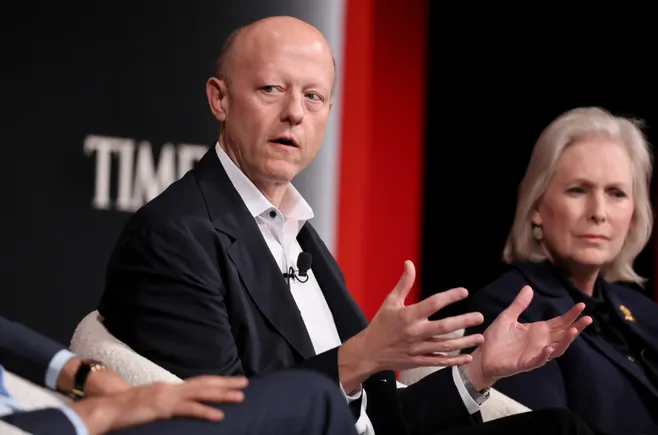
Jeremy Allaire, CEO of Circle, framed the approval as a watershed moment for the U.S. financial system. "Federal oversight of our trust bank sets a new standard for transparency, governance, and scale for Circle’s infrastructure," Allaire stated. He emphasized that this move "unlocks a new phase of adoption, where leading financial institutions can build on public blockchains with clarity and confidence." Allaire’s vision is one where USDC serves as the "federally regulated digital dollar infrastructure" for global payments and capital markets.
The Analyst Perspective: A Cautious Note
Not all observers share Allaire’s unbridled enthusiasm. Mizuho Securities analyst Dan Dolev issued a note to investors describing the market’s initial reaction as "likely overly optimistic." Dolev argued that while the charter is a positive step, it "does not resolve fundamental issues that have been hurting the stock of recent." He specifically pointed to the falling market value of USDC relative to its peak and the increasing "commoditization" of stablecoins as major players like BNY Mellon and Stripe explore the space.
Regulatory and Political Pushback
The OCC’s decision to grant these charters has faced significant opposition from traditional banking trade groups. Organizations such as the Bank Policy Institute (BPI) and the Independent Community Bankers of America (ICBA) have been vocal in their criticism.
- The "Shadow Banking" Argument: The National Community Reinvestment Coalition (NCRC) has argued that granting trust charters to stablecoin issuers blurs the statutory boundaries of what constitutes a bank. They contend that these entities enjoy the prestige of a federal charter without the obligations of the Community Reinvestment Act (CRA), which requires banks to meet the credit needs of the communities in which they operate.
- Deposit Insurance Concerns: The ICBA has raised alarms regarding the lack of FDIC insurance for trust banks. They argue that if a trust bank were to become insolvent, the lack of a federal safety net could lead to consumer "confusion and harm," potentially destabilizing the broader financial system.
Implications: The Future of the Digital Dollar
The full approval of Circle National Trust has profound implications for the future of finance, both in the United States and globally.
1. Strengthening the U.S. Dollar’s Digital Dominance
By bringing a major stablecoin issuer under federal supervision, the OCC is effectively integrating the U.S. dollar into the blockchain era. As other nations explore Central Bank Digital Currencies (CBDCs), the U.S. appears to be leaning toward a "public-private partnership" model. In this model, private issuers like Circle provide the technology and innovation, while the government provides the regulatory guardrails.
2. Institutional On-Ramping
The existence of a federally chartered trust bank for digital assets removes one of the final "check-box" hurdles for institutional compliance officers. Large pension funds, insurance companies, and endowment funds that were previously restricted from dealing with state-regulated crypto firms may now find a path to entry through Circle National Trust.
3. A Precedent for Regulatory Clarity
The OCC’s move sets a "regulatory floor" for what is expected of digital asset firms. To achieve a similar charter, other companies will likely need to match Circle’s level of transparency, capital reserves, and governance. This could lead to a "flight to quality," where only the most compliant firms survive, potentially weeding out the "wild west" elements of the industry.
4. The Blurring of Fintech and Traditional Banking
The approval of Circle and Sony’s recent conditional approval suggest that the OCC, under Jonathan Gould’s talent pipeline and leadership, is increasingly comfortable with non-traditional entities entering the trust banking space. This evolution suggests that the future of banking may not be defined by who takes deposits, but by who can most efficiently move and secure value in a digital-first world.
Conclusion
Circle’s receipt of an unfettered national trust bank license is a landmark achievement that bridges two worlds. For the crypto industry, it is a validation of the technology’s permanence and potential. For the traditional financial sector, it is a signal that the "blockchain-ification" of the dollar is no longer a distant possibility, but a regulated reality. While challenges remain—ranging from market competition to political opposition—Circle National Trust stands as a cornerstone of a new, hybrid financial architecture that seeks to combine the speed of the internet with the stability of federal oversight.