









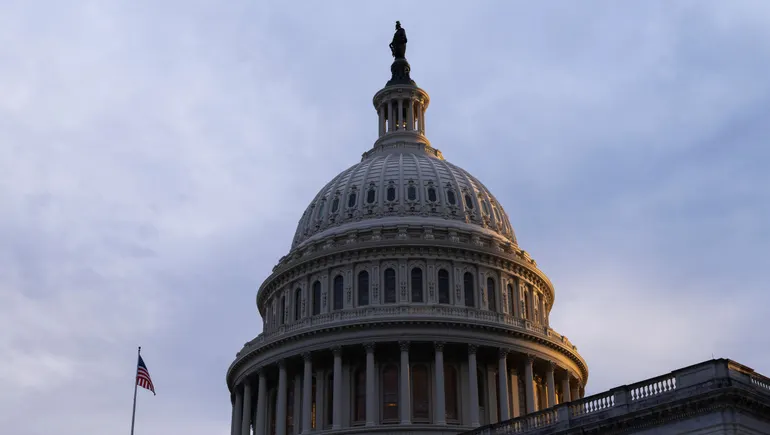
In a decisive blow to the digital asset industry’s hopes for a comprehensive legislative framework, the United States Senate blocked consideration of the "Clarity Act" on Tuesday. The failed motion, which resulted in a 50-49 vote, effectively stalls the Republican-led initiative to codify a federal roadmap for regulating cryptocurrencies, stablecoins, and associated blockchain enterprises.
The defeat of the bill—which required a 60-vote threshold to proceed—underscores the deep partisan divide and the intricate, often conflicting interests regarding the integration of decentralized finance (DeFi) into the established American banking system. As Washington prepares for the impending mid-term elections, the failure of the Clarity Act leaves the future of digital asset oversight in the hands of federal regulators and the judicial system, rather than the halls of Congress.
The Legislative Chronology: A Path of Attrition
The journey of the Clarity Act has been marked by fierce, behind-the-scenes negotiation and shifting goalposts. While a version of the bill managed to secure passage in the House of Representatives last year, its transition to the Senate was fraught with complexity.
The Stablecoin Conflict
As early as June, the legislative focus was dominated by the debate over "stablecoin yield." Critics of the initial draft argued that allowing crypto firms to offer interest-bearing rewards on stablecoin balances would inevitably siphon liquidity out of the traditional banking system, potentially destabilizing community banks.
In response, Senators Thom Tillis (R-NC) and Angela Alsobrooks (D-MD) drafted language aimed at barring crypto firms from issuing rewards that were deemed "economically or functionally equivalent" to interest-bearing bank deposits. A compromise was eventually floated: the Treasury Secretary would be granted the authority to restrict such rewards if data indicated measurable "deposit flight" from community banks. This safeguard was intended to be a temporary measure, expiring after 18 months, yet even this middle-ground approach failed to appease the bill’s detractors.
The Ethics Controversy
In the final weeks leading up to the vote, the discourse shifted from technical banking policy to high-level ethics. With President Donald Trump reporting substantial income—estimated at $1.4 billion—from family-linked cryptocurrency ventures, Democratic lawmakers intensified their push for stringent conflict-of-interest protections.
The resulting Republican-backed ethics rules would have empowered state attorneys general to prohibit public officials from issuing, sponsoring, or holding significant financial stakes in digital assets. Furthermore, the bill included penalties for crypto exchanges that listed assets connected to public figures in violation of these rules. However, the legislation contained significant exemptions, notably failing to extend restrictions to the President’s adult sons, who currently oversee the family’s crypto business. This oversight became a focal point for critics, who labeled the entire legislative package a "charade."
Supporting Data and Institutional Opposition
The failure of the Clarity Act was not solely a result of partisan friction; it was also the product of a coordinated lobbying effort by state-level regulators and advocacy groups concerned about the erosion of investor protections.
The Regulatory Pushback
On Monday, a coalition led by New York Attorney General Letitia James and more than a dozen other state attorneys general sent a formal letter to the Senate Banking Committee. The signatories argued that the federal preemption inherent in the Clarity Act would strip states of their primary tool: the ability to investigate and prosecute crypto fraud and scams at the local level.
Advocacy Concerns
The advocacy group Democracy Defenders Action expressed strong opposition, specifically targeting the ethics portion of the bill. In their view, the legislative language contained "wide loopholes" that would have provided President Trump and his associates with ample time to restructure their business entities to continue extracting profits, effectively rendering the ethics safeguards toothless.
Senator Richard Blumenthal (D-CT) amplified these sentiments on the Senate floor, dismissing the bill as a hollow attempt at reform that prioritized industry interests over public accountability.
Official Responses and Political Fallout
The vote breakdown revealed the precarious nature of the bill’s support. No Democrats crossed the aisle to support the measure, and a key group of Republicans—including Senators Josh Hawley (MO), Susan Collins (ME), Jerry Moran (KS), and Thom Tillis (NC)—voted against it, citing various concerns ranging from regulatory reach to specific ethics provisions.
The "Failure of Leadership"
Patrick Witt, the executive director of President Trump’s council of advisers for digital assets, characterized the outcome as a "major disappointment" and a "failure of American leadership." Posting on the social media platform X, Witt warned that the lack of U.S. legislative action creates a vacuum that will inevitably be filled by foreign powers. "It increases the risk that the standards that global financial markets adhere to in the future will be those of Brussels or Beijing, rather than Washington and New York," he stated.
Implications: A Future Defined by Regulators and Courts
With the Clarity Act sidelined—and with the Senate scheduled to break for the mid-term elections—it is highly unlikely the bill will see the floor again this session. This reality leaves the regulatory landscape in a state of suspended animation, with significant long-term consequences for the fintech sector.
The Return of "Regulation by Enforcement"
In the absence of a legislative mandate, the Securities and Exchange Commission (SEC) and the Commodity Futures Trading Commission (CFTC) are now tasked with setting the rules of the road.
The SEC recently proposed new rules intended to provide a pathway for startups to raise capital through tokens without triggering the full weight of traditional securities regulation. Simultaneously, the CFTC chair has signaled that the agency will leverage its existing authority to codify oversight for digital commodities. However, as Austin Campbell, an adjunct professor at New York University, noted in an interview with Bloomberg, these agency-level rules lack the stability and permanence of federal law.
Judicial Overreach
The void left by Congress will likely be filled by the judiciary. The ongoing debate over what qualifies as a "security"—a central theme in various Biden-era enforcement actions—remains unresolved. Without a clear legislative definition, crypto firms and regulators are destined to continue their disputes in federal courts, where judges will, by default, become the architects of American crypto policy.
The Investor Perspective
Despite the setback, some industry proponents remain optimistic about the long-term outlook. Brian Dixon, CEO of Off the Chain Capital, argued that the primary question facing the industry is one of timing, not outcome. "We are going to get regulatory clarity; it’s just the timeline," Dixon told Bloomberg.
Nevertheless, for the immediate future, the legislative stumble represents a cooling effect on the sector. Acquisitions of crypto-native businesses are expected to slow as investors and companies await a more stable political environment. The Clarity Act was intended to provide that stability, but for now, the industry must prepare for a period of ongoing legal ambiguity, where the standard for compliance remains as fluid as the digital assets themselves.