






For years, air travelers have endured a specific, maddening phenomenon known as the "rolling delay." You sit at the gate, checking your watch, only to see the departure time pushed back by 15 or 30 minutes, again and again, in a cycle that feels both endless and opaque. For many, this has been the defining frustration of flying with American Airlines. However, fresh reports suggest that the tide may finally be turning. American Airlines has reportedly launched an internal initiative designed to bring much-needed realism and transparency to how it manages these cascading scheduling failures.
The Core Problem: The Psychology of the Rolling Delay
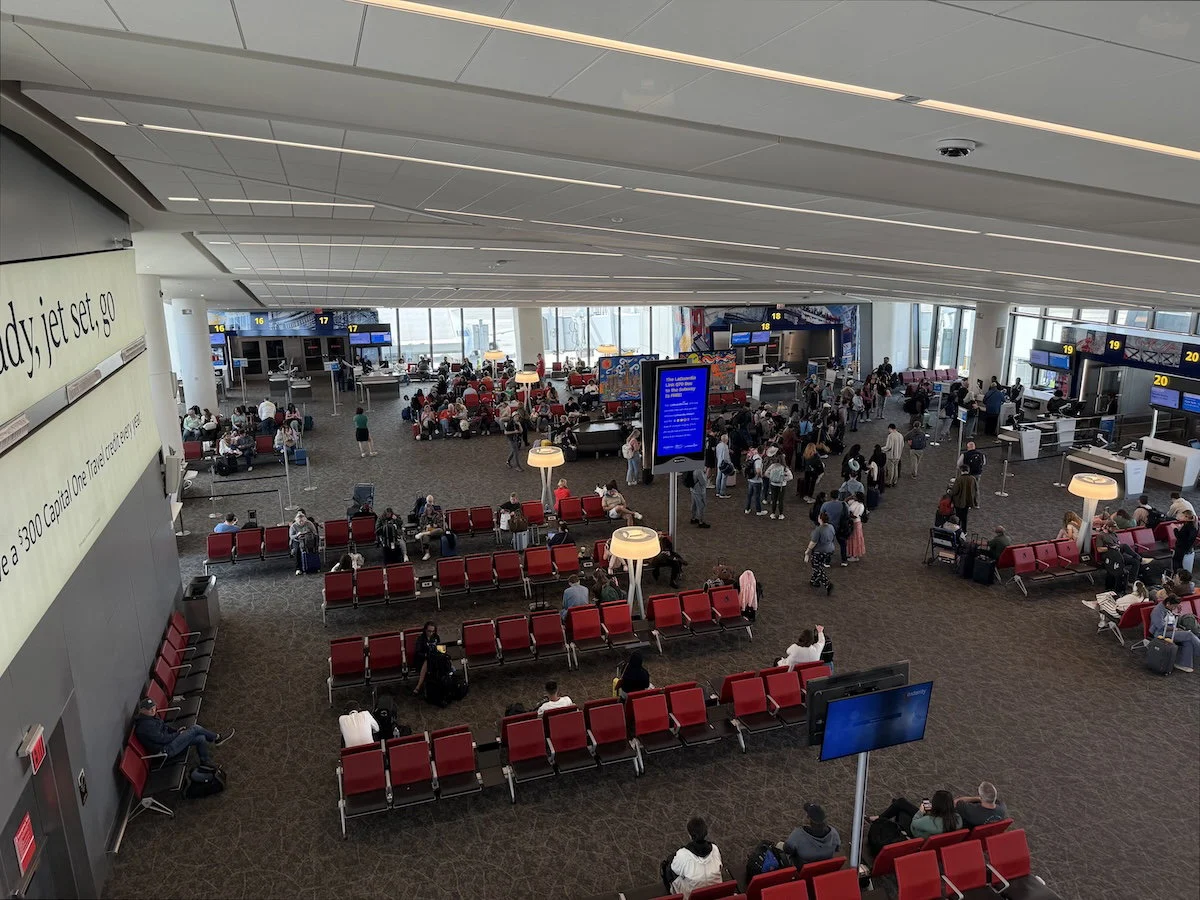
A "rolling delay" occurs when an airline, rather than canceling a flight or providing an accurate long-term estimate, pushes the departure time back in small increments. While the practice is intended to keep the flight "live" and ready to depart as soon as conditions improve, it often serves to keep passengers anchored to the gate area, unable to leave for food or rest, under the false impression that they might be departing shortly.
For the savvy traveler, this has necessitated the use of third-party tracking tools like Flightradar24. By monitoring the inbound aircraft—the plane currently flying the route that will become your departing flight—passengers have long been able to predict delays with more accuracy than the airline itself. If the inbound plane is still three states away, the airline’s claim that a flight will depart in 20 minutes is not just an optimistic projection; it is a mathematical impossibility.
A New Strategy: The Charlotte Pilot Program
Industry insider JonNYC recently broke the news that American Airlines is finally moving to address these "shenanigans." The proposed solution is, at its core, remarkably simple: the airline will align its boarding time estimates with the actual, real-time arrival data of the inbound aircraft.
By integrating the inbound flight’s location and estimated time of arrival (ETA) into the automated communication stream, American hopes to provide passengers with a departure time that reflects physical reality rather than bureaucratic hope. This initiative is currently slated for a pilot program at Charlotte Douglas International Airport (CLT), one of the carrier’s most significant hubs. If the trial succeeds in reducing passenger frustration and improving gate-area flow, the airline is expected to roll out the system across its entire domestic network.
Chronology of a Customer Service Crisis
The path to this realization has been anything but swift. For the better part of a decade, American Airlines has struggled with a reputation for poor communication during irregular operations.
- 2015–2020: The "Era of Opaque Scheduling." During this period, the airline frequently utilized automated systems that provided generic "delayed" notifications without specific reasoning or updated boarding times. Customer sentiment plummeted as frequent flyers turned to independent tracking apps.
- 2021–2024: A period of digital transformation. American began investing heavily in its mobile app and website, finally allowing passengers to see the specific reasons for delays (e.g., "crew availability," "maintenance," "weather") and improving self-service rebooking capabilities.
- 2025: The pressure mounts. As competitors improved their own transparency metrics, the disparity in the "customer experience" at American became a frequent talking point among industry analysts and high-status frequent flyers.
- September 2026: The announcement of the CLT pilot program. This marks the first major policy shift specifically aimed at the psychological and practical burden of the rolling delay.
Supporting Data and the Digital Shift
While the airline has historically been reluctant to disclose the "why" behind delays, the modern traveler is more informed than ever. Aviation analysts note that the rise of "informational parity"—where passengers have access to the same tracking data as gate agents—has forced the hand of legacy carriers.
According to recent industry satisfaction surveys, communication is the single most important factor in how passengers rate their travel experience during a delay. When an airline fails to be honest about a delay, the passenger feels trapped. Conversely, when an airline provides an accurate, realistic estimate—even if that estimate is for a three-hour delay—the passenger is empowered to make informed decisions about their time.
The shift at American reflects an internal realization that "self-loading freight" is no longer a sustainable business model. In an era where social media allows for the instantaneous broadcasting of poor service, the cost of an angry, misinformed passenger base is higher than the cost of implementing a more transparent scheduling system.

The Implications for Passengers and Staff
For the average traveler, this policy change could mean the difference between a miserable afternoon spent on a hard terminal chair and a productive few hours spent in a restaurant or lounge. If the system functions as promised, an automated alert might notify a passenger that their flight is delayed until 6:00 PM because the inbound aircraft has yet to depart from its origin, allowing them to relax rather than hover near the boarding desk.
However, the implications for ground staff are equally significant. Gate agents are often the ones who bear the brunt of passenger frustration when a flight is delayed. Currently, they are frequently hamstrung by corporate policies that prevent them from giving honest answers, or by systems that automatically reset to overly optimistic departure times. Providing staff with a tool that calculates a realistic boarding time could significantly reduce the friction and hostility they face during irregular operations.
Leadership and Cultural Criticism
While the news of the pilot program is objectively positive, it has been met with a mix of relief and cynicism. Critics point out that this "innovation" is essentially basic honesty—a practice that should have been standard long ago.
The prevailing sentiment among long-time American loyalists is one of "too little, too late." There is a palpable sense that the current management team is finally correcting errors that were ignored for years while the company focused on other financial priorities. The question remains: why did it take until 2026 for a major global carrier to decide that being honest with customers was a viable business strategy?
The answer, perhaps, lies in the culture of legacy airlines, which often struggle to pivot away from outdated processes. While the move to fix rolling delays is a welcome step, it highlights a larger, persistent issue: the gap between customer expectations and the speed at which major corporations are willing to evolve.
Conclusion: A Step Toward Modernity
The move to integrate real-time inbound flight data into customer communications is a sign that American Airlines is finally beginning to prioritize the passenger journey over the convenience of legacy scheduling systems. By piloting this program in Charlotte, the airline is testing a way to rebuild trust with a customer base that has felt neglected for years.
The success of this initiative will be measured not just by the accuracy of the new departure times, but by how quickly it can be scaled. If American can successfully implement this across its network, it will represent a significant, albeit overdue, improvement in the daily lives of millions of travelers.
Ultimately, the airline is learning a fundamental lesson of the modern aviation age: in a world where information is free and accessible, the most valuable commodity an airline can offer is the truth. Whether this change is the start of a broader cultural shift or merely a reaction to falling competitive standards, one thing is certain: the era of the "rolling mystery" must come to an end. Travelers deserve to know where they stand, and for the first time in a long time, it looks like American is finally ready to tell them.