









The U.S. housing market stands at a fascinating crossroads. Amid widespread consumer anxiety, high interest rates, and cooling summer sales, America’s largest financial institution has made a monumental statement of confidence. JPMorgan Chase has announced a staggering $750 billion capital deployment strategy targeted at the housing sector through 2035—shattering its previous decade-long commitments by roughly 40%.
As prospective buyers sit on the sidelines waiting for a dramatic price correction that may never come, institutional heavyweights are moving aggressively. To unpack what this monumental bet means for everyday buyers, flippers, and long-term investors, real estate experts Henry Washington, James Dainard, and Kathy Fettke recently broke down the data, offering a vital market pulse check.
Main Facts: A Paradigm Shift in Real Estate
The real estate ecosystem is currently defined by stark contradictions. While national home sales have slowed down, major capital is flowing into specific pockets of the market, driven by changing consumer affordability constraints.
- JPMorgan’s $750 Billion Commitment: Through its expanded American Dream Initiative, JPMorgan Chase is channeling $750 billion through 2035 into housing development, mortgage originations, and affordable housing funds.
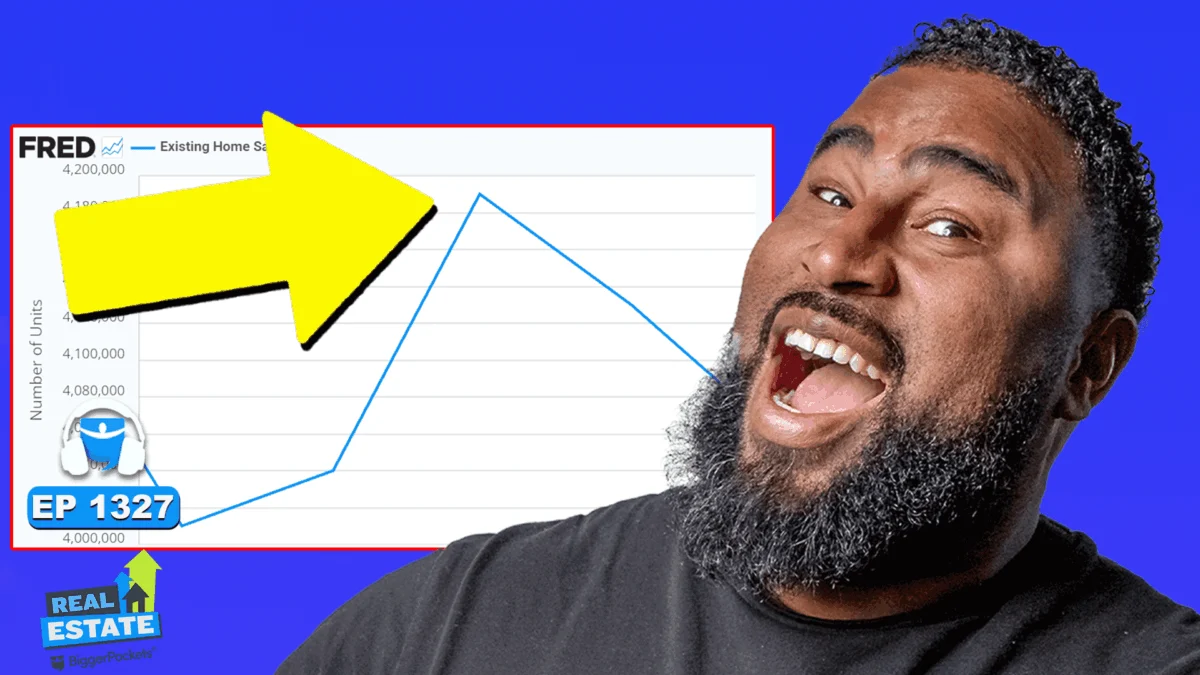
- Existing Home Sales Dip: Existing home sales fell by 1.7% in July to a seasonally adjusted annual rate of 4.06 million, according to U.S. News & World Report.
- Relentless Price Growth: Despite falling sales volume, the national median existing home price rose 2% year-over-year to $434,000 in July—marking the 37th consecutive month of annual price gains.
- Inflation Cooled, Temporarily: The Consumer Price Index (CPI) report revealed a modest 0.1% rise for the month, pulling annual inflation down to 3.4% and bringing core CPI to 2.5%, its slowest pace since the post-pandemic surge.
Chronology: How the 2026 Summer Market Unfolded
Real estate is hyper-local, but the macro narrative of mid-2026 has been characterized by shifting momentum, unexpected buyer behavior, and reactive monetary policy.
- Early Summer (May–June 2026): Interest rates hovered near multi-month peaks, squeezing entry-level buyers out of the market and heavily depressing traditional house-flip velocities. Investors reported that highly renovated, pristine flips began sitting on the market much longer than anticipated.
- Mid-Summer (July 2026): Existing home sales officially dipped by 1.7%, signaling that the traditional summer selling season was cooling off much faster than expected. Concurrently, a bifurcation in the market became glaringly obvious: entry-level and mid-tier homes struggled with affordability, while luxury homes—fueled by stock market gains—sold in under 30 days.
- August 12, 2026: The Bureau of Labor Statistics released the July CPI inflation report. Showing a minimal 0.1% increase, the data injected a dose of optimism into the financial markets, drastically lowering expectations of an immediate Federal Reserve rate hike.
- Late August / Labor Day 2026: Institutional maneuvers dominated headlines. Following broader trends of corporate investment in housing (such as Berkshire Hathaway-backed builders and foreign acquisitions), JPMorgan Chase formalized its massive capital injection, resetting the long-term outlook for developers, lenders, and investors alike.
Supporting Data: Unpacking the Micro-Markets
To truly understand the health of the 2026 housing market, investors must look past national headlines and examine localized velocity and consumer affordability metrics.
The Rise of the "Dated" Home
With purchasing power severely constrained, buyer preferences have pivoted away from high-end cosmetic flips. Investors like Henry Washington noted a bizarre trend in their local markets: unrenovated, clean, and livable homes—colloquially known as "grandma’s house"—are drastically outperforming heavily flipped properties.
"Homes that are unrenovated, but livable and clean, have far less days on market than homes that are flipped and look super pristine. I think that’s just the affordability," Washington explained.
Instead of spending $60,000 on a luxury renovation to chase a higher price point, smart operators are shifting to a "Plan B" strategy: spending minimal capital ($3,000 to $5,000 for deep cleaning and landscaping) to sell at a lower, more accessible price point, achieving comparable profit margins with significantly reduced holding costs.
Zip Code Velocity
James Dainard emphasized that national trends mean very little without hyper-local data tracking.
- Price Point Brackets: In high-cost markets like Seattle, a $1.5 million home on a desirable street sells on its first weekend. However, push that exact same property to $1.7 million, and market times stretch past 100 days.
- The 10% Rule: Successful operators are breaking markets down into 10% price blocks to identify exact pockets of velocity, allowing them to price aggressively where demand is alive and pull back where stagnation occurs.
Official Responses: What the Experts and Institutions Say
The dichotomy between institutional optimism and consumer pessimism highlights the complexity of the current economic environment.
The Wall Street Perspective
JPMorgan Chase’s decision to commit $750 billion through 2035 sends a powerful message to skeptics. The initiative is broken down into three core buckets:
- Developer Lending: Financing the construction of new multi-family and apartment units to alleviate inventory shortages.
- Mortgage Origination: Expanding access to credit and easing lending pathways for everyday and first-time home buyers.
- Affordable Housing Funds: Direct equity and debt investments into dedicated affordable housing vehicles.
Kathy Fettke pointed out the historical parallels to this institutional behavior: "You’ve got massive companies like Berkshire Hathaway investing in builders, JPMorgan Chase upping what they’re going to be lending… They see this demand coming, they see this lack of housing, and they are all in. Do you think JPMorgan Chase might know a thing or two? Listen to them."
The Federal Reserve and Consumer Strain
While the July CPI report offered breathing room—with the CME FedWatch tool indicating a roughly 62% probability that rates would remain steady—underlying economic pressures remain very real.
Fettke emphasized that while the rate of inflation has slowed down, cumulative price increases have left the average consumer heavily stretched. Energy costs remain 14% higher than they were a year prior, forcing hourly wage earners and those on fixed incomes to prioritize basic survival and rental costs over homeownership.
Furthermore, the Federal Reserve’s internal vote to hold rates steady was notably tight (9–3, with three dissenters voting for a hike), signaling that the threat of higher borrowing costs has not entirely vanished.
Implications: Actionable Advice for Real Estate Investors
For active investors navigating a flat, confusing market, the overarching takeaway is clear: do not let fear drive your decisions, but adapt your strategies to the data.
1. Stop Trying to Time the Bottom
History proves that market participants who pull completely out of real estate to "wait it out" often miss the window of opportunity and re-enter when prices have already rebounded. Consistent, disciplined capital deployment through economic cycles yields better long-term averages than trying to time perfection.
2. Mitigate Carrying Costs and Debt Bleed
With velocity slowed down in certain sectors, holding costs can erode profit margins rapidly. James Dainard advises investors to actively manage their debt structure: "The bleed and the expense of the debt is what’s really beating up deals because it’s taking a lot longer to sell. Look at how you can get your monthly debt down—refinance your flips into DSCR loans to knock points off your interest carry."
3. Pivot Toward Builder Distress and Value-Add Opportunities
Traditional flipping strategies require tight operational adjustments, but opportunities are emerging elsewhere. With many new construction developers facing inventory logjams, savvy buy-and-hold investors are negotiating bulk discounts or rate-buy-down incentives directly with distressed builders. Buying brand-new construction below replacement cost eliminates future capital expenditure (CapEx) and lowers insurance risks—particularly in climate-sensitive regions like Florida.
4. Master the Fundamentals
The era of buying any deeply discounted property, executing a standard cosmetic overhaul, and watching it fly off the shelf is over. Today’s successful investors rely on rigorous local data analysis, identifying exactly who is transacting in their specific zip codes and tailoring their product to meet that exact consumer demand.
As Washington aptly summarized: "People are making money out here in real estate, but the people making money are the ones studying the data, studying their market, and seeing who the customers are that are actually transacting."