







By Financial Markets and Regulatory Desk
September 20, 2026
Main Facts
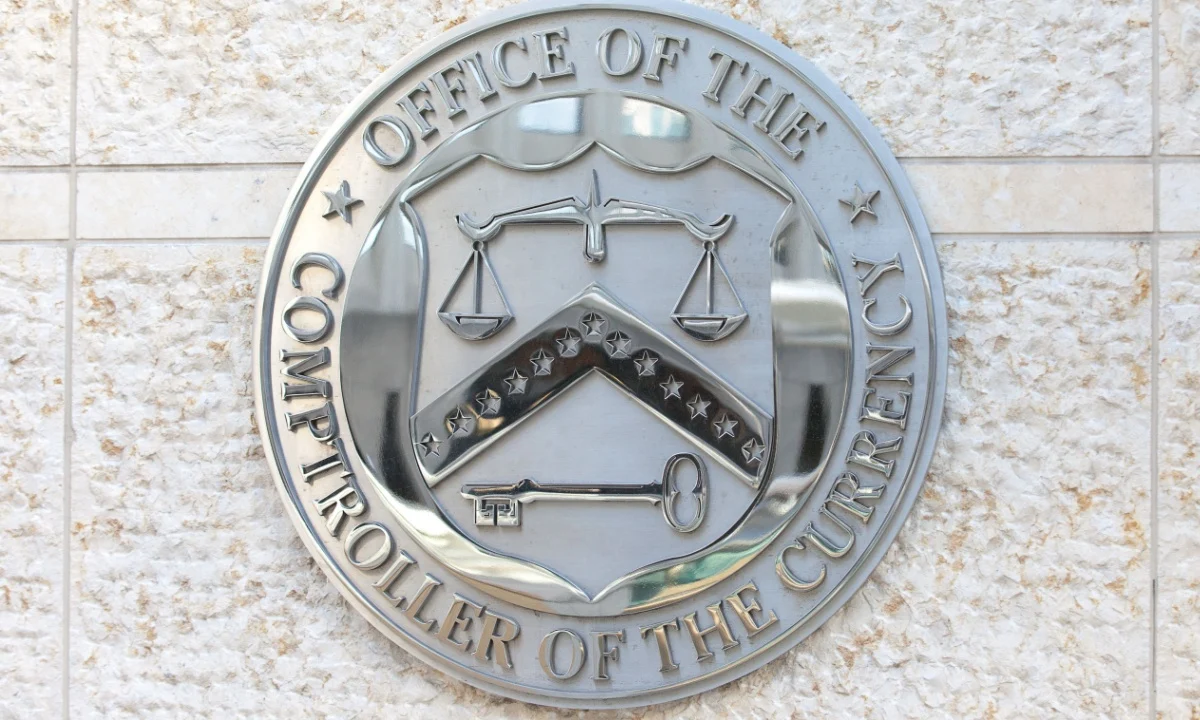
In a landmark regulatory development that bridges traditional banking with cutting-edge financial technology, the Office of the Comptroller of the Currency (OCC) has granted conditional approvals for three new national trust banks. Announced on Friday, September 18, 2026, the decisions mark a decisive regulatory pivot toward accommodating the structural evolution of modern finance—specifically targeting blockchain infrastructure, enterprise-grade stablecoin issuance, and autonomous artificial intelligence financial management.
The regulatory greenlight impacts three distinct entities at the vanguard of financial innovation:
- Agora National Trust Bank
- Catena Trust Bank
- Bastion Platforms Trust Company (which successfully secured authorization for its conversion into a national bank)
These conditional approvals do not represent fully operating institutions just yet; rather, they signify that the applicants have met the rigorous preliminary standards set by the federal regulator and are cleared to build out the operational, risk-management, and compliance frameworks necessary to open their doors. However, the message from Washington is unmistakable: federal regulators are increasingly willing to bring innovative digital asset and software-driven financial platforms under the umbrella of direct federal supervision.
The entry of Agora, Catena, and Bastion into the federal charter pipeline highlights a fundamental realignment in how fintech firms view regulatory compliance. Moving away from the era of "renting the rails" through partner banks or relying on state-level licensing alone, these companies are positioning themselves as federally regulated institutional counter-parties capable of serving the largest financial heavyweights in the United States and globally.
Chronology
The path to the September 18 OCC announcement has been paved by a surge in regulatory applications and strategic corporate maneuvers over the past several years, culminating in an intense period of review through 2025 and 2026.
- 2011–2024 (The Regulatory Drought): For over a decade, the U.S. banking sector experienced a profound slowdown in de novo (newly formed) bank charters. Across a 14-year span, the OCC received a meager total of 48 applications, reflecting a post-financial crisis regulatory climate characterized by heightened caution, stringent compliance burdens, and significant friction for digital-first entrants.
- April 2026 (Agora’s Formal Push): Agora formally applied for its national trust bank charter. Recognizing the limitations of operating without a direct federal bridge, company leadership emphasized that a U.S. federal charter was the essential regulatory layer required to scale its digital dollar and stablecoin operations.
- August 2026 (The De Novo Boom Revealed): The OCC released data indicating a massive resurgence in industry interest, revealing that it had received 40 de novo bank applications in the preceding 18 months alone. This staggering statistic underscored a dramatic shift in market demand, nearly matching the total application volume of the previous 14 years in a fraction of the time.
- September 18, 2026 (Conditional Approvals Granted): The OCC formally issued its conditional approvals for Agora National Trust Bank and Catena Trust Bank, while simultaneously greenlighting the structural conversion of Bastion Platforms Trust Company into a national bank.
Supporting Data
To fully understand the magnitude of the OCC’s September 18 announcements, one must examine the broader data trends characterizing the contemporary financial regulatory environment:
- The 18-Month Surge: The OCC’s receipt of 40 de novo bank applications over an 18-month window (spanning late 2024 to mid-2026) points to an unprecedented renaissance in charter applications. Analysts note that unlike previous eras dominated by traditional community bank startups, this recent wave is heavily populated by technology-forward firms, digital asset custodians, and specialized payment platforms.
- Stablecoin Transaction Efficiency: Industry metrics cited by market participants indicate that corporate adoption of stablecoins is accelerating due to fundamental friction reductions. While traditional wire transfers can take hours or days and incur substantial fees, blockchain-based settlement rails enable 24/7/365 transactions at a fraction of a cent per transfer.
- Institutional Demand: The convergence of traditional financial institutions (TradFi) and decentralized finance (DeFi) has created a structural bottleneck. Major global banks managing trillions in assets require federally regulated custodians and issuers to legally deploy capital into tokenized deposits, digital commercial paper, and enterprise-grade stablecoins.
Official Responses and Industry Perspectives
The announcement drew immediate reaction from executives across the fintech, banking, and regulatory landscapes, highlighting the strategic necessity of obtaining a federal imprimatur.
Nassim Eddequiouaq, Chief Executive Officer of Bastion, highlighted the absolute necessity of institutional trust in an interview with The Wall Street Journal following the announcement.
"If you are a bank, you cannot rely on simple fintech unless they are federally regulated," Eddequiouaq stated. "We can now be that regulated partner for all of the largest financial institutions in and outside of the U.S., who want to launch products here."
Eddequiouaq further elaborated on the operational pressures facing modern banking institutions, predicting a seismic shift in client expectations regarding transaction speed and cost.
"There’s going to be this expectation that banks can actually transact 24/7 for a fraction of a cent," he noted.
Nick van Eck, CEO and Co-Founder of Agora, previously articulated the strategic rationale behind seeking a federal banking presence in a corporate blog post:
"The charter is the regulatory layer that makes all of that possible at scale. Operating without a U.S. federal charter means renting the rails in the world’s most important financial market."
Agora’s business model centers around its AUSD stablecoin and the development of an expansive financial operating system designed for multinational corporations. This system integrates settlement infrastructure, treasury management, fiat currency connectivity, and native tools designed to streamline corporate interaction with digital dollars.
Meanwhile, Catena Trust Bank represents a distinct evolutionary branch of financial infrastructure: banking built specifically for the age of artificial intelligence. According to the company’s official documentation, Catena is constructing financial systems native to AI agents—handling automated accounts, programmatic payments, complex treasury workflows, and rigorous controls over autonomous financial decision-making.
"We’re not bolting AI requirements onto a legacy platform," Catena’s development philosophy states. "We’re building from the ground up: deterministic policy enforcement, immutable audit trails, and verifiable agent identity."
Regulatory analysts observing the OCC’s recent posture have noted that the agency’s willingness to process these diverse applications signals a pragmatic recognition of structural market trends. As PYMNTS noted in recent commentary:
"The OCC’s 40 applications show the renewed demand for federal charters. The services attached to those charters show which parts of banking the new entrants want to control."
Implications
The conditional approval of national trust bank charters for Agora, Catena, and Bastion carries profound implications for the future of the American and global financial systems.
1. The Death of "Renting the Rails"
For years, fintech firms and crypto-native enterprises were forced to operate through a fragile chain of intermediary sponsor banks. This arrangement—often criticized as "renting the rails"—exposed fintechs to sudden partner bank terminations, regulatory crackdowns, and compliance arbitrage. By securing direct OCC charters, these institutions become direct participants in the federal financial safety net. They gain direct access to Federal Reserve master accounts, removing third-party dependencies and drastically reducing systemic counterparty risk.
2. Institutionalization of Stablecoins
Bastion and Agora’s integration into the national banking system marks a turning point for stablecoins. No longer viewed strictly as speculative instruments for retail crypto traders, white-label stablecoins are rapidly maturing into core enterprise settlement mechanisms. When federally regulated national banks issue and custody stablecoins, risk-averse corporate treasurers gain the legal clarity and security assurances required to move billions of dollars onto blockchain rails. This threatens to disrupt legacy payment networks like SWIFT and ACH by offering instant, round-the-clock global settlement.
3. Autonomous AI Finance Comes of Age
Catena’s focus on financial infrastructure for AI agents points toward an emerging reality where software algorithms, rather than human treasurers, execute complex financial transactions, manage liquidity pools, and allocate capital. Providing these autonomous agents with federally compliant bank accounts, deterministic policy enforcement, and immutable audit trails solves the primary barrier to AI-driven commerce: trust and accountability. If an AI agent can legally and securely hold funds, execute payments, and operate within strict regulatory guardrails, the velocity of corporate finance will increase exponentially.
4. A Resurgence in Federal Chartering
The dramatic influx of de novo applications reported by the OCC demonstrates that federal banking regulators are no longer viewed solely as gatekeepers blocking innovation, but rather as necessary partners in scaling modern financial technology. As Agora, Catena, and Bastion work to fulfill their conditional requirements and transition to fully operational status, their success—or failure—will likely set the blueprint for dozens of other fintech and digital asset firms looking to trade state-level licensing for the gold standard of a U.S. federal charter.