







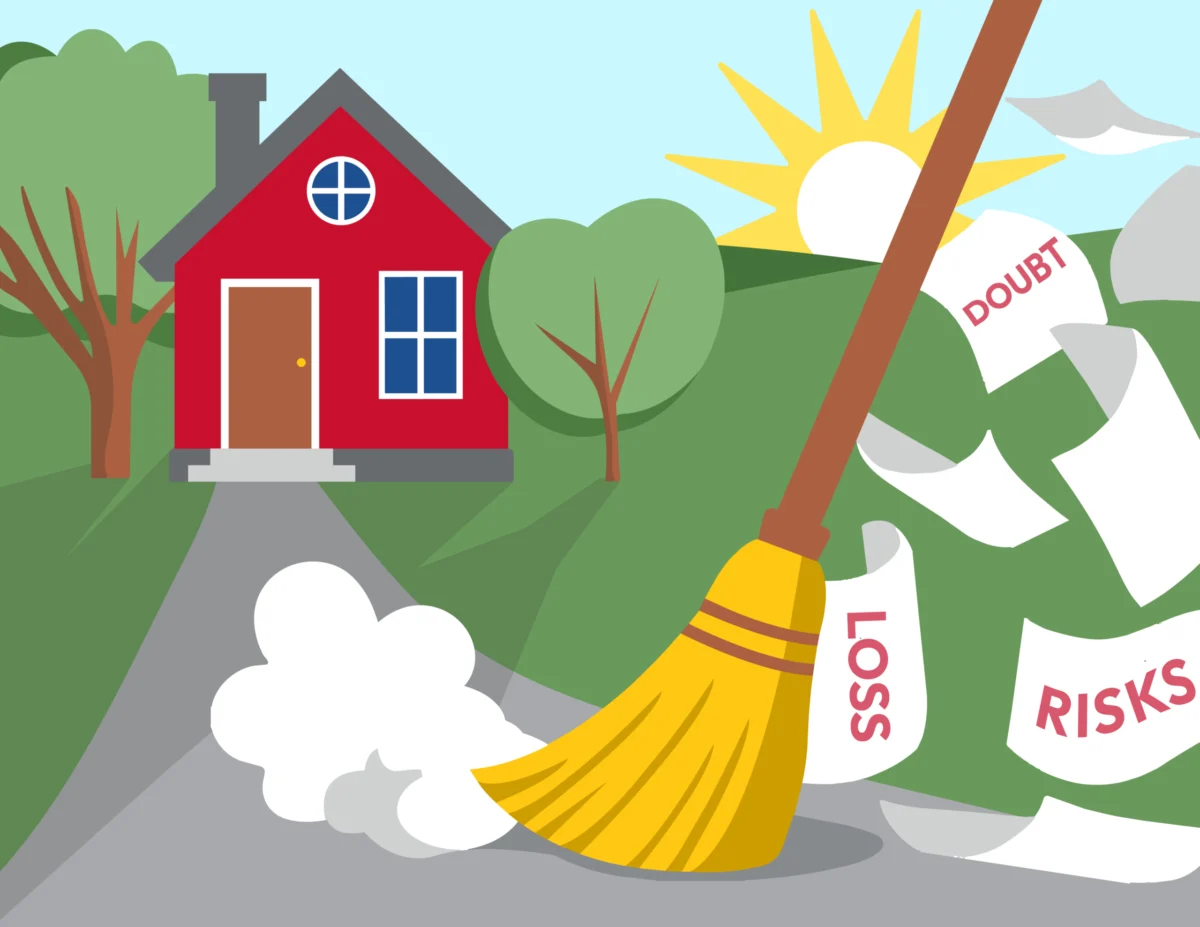
WASHINGTON, D.C. — September 1, 2026 — For millions of families across the United States, the family home represents more than just shelter; it is the cornerstone of generational wealth and a repository of history. Yet, for a significant number of Black families in the South and low-income households nationwide, this foundation is increasingly fragile. Often, property is passed down informally without the benefit of a completed probate proceeding, resulting in a legal status known as "heirs property."
This status leaves families in a precarious "legal limbo," where they may live in a home for decades but lack the formal documentation required to prove ownership. Without a clear title, these families are frequently blocked from accessing government-funded property tax relief, disaster recovery assistance, home repair grants, and even essential utility services.
A new report, Clearing a Path: How Heirship Affidavits Help Families Document Inherited Property, released today by the National Consumer Law Center (NCLC) in partnership with the Initiative for Land, Housing, and Property Rights (ILHPR) at Boston College Law School, highlights a transformative, yet underutilized, legal tool: the heirship affidavit. By simplifying the process of documenting ownership, this mechanism offers a vital lifeline to families fighting to preserve their land and heritage.
The Crisis of Heirs Property: A Barrier to Equity
The phenomenon of heirs property is deeply rooted in historical inequities. In many instances, families have avoided formal probate due to the prohibitive costs of legal fees, a lack of access to legal representation, or a simple lack of awareness regarding the necessity of formal court proceedings.
When a homeowner dies without a will—or with a will that is not probated—the property often passes to all living heirs as tenants-in-common. Over successive generations, the number of legal owners can balloon, creating a "tangled title" that makes it nearly impossible to sell the land, refinance the property, or qualify for government programs that require proof of sole or clear ownership.
The consequences are severe. When disaster strikes—such as a hurricane or flood—families living in heirs property are often denied Federal Emergency Management Agency (FEMA) assistance because they cannot produce a deed in their name. Similarly, they are often excluded from property tax exemptions for seniors or veterans, leading to mounting tax debts that can ultimately trigger a tax sale, resulting in the permanent loss of the family home.
What is an Heirship Affidavit?
An heirship affidavit is a sworn, notarized document that identifies the heirs of a deceased property owner and the relationships that connect them to the land. While it is not a substitute for a full probate court judgment, it serves as a powerful, flexible, and relatively inexpensive way to provide "proof of ownership" to agencies and institutions that require it.
In essence, the affidavit allows families to state, under penalty of perjury, the history of the property’s inheritance. When government programs and service providers accept these affidavits as evidence, it effectively removes the "gatekeeping" barrier that has historically marginalized heirs property owners.
Key Findings from the NCLC and ILHPR Report
The Clearing a Path report is the result of extensive data collection, including surveys, interviews, and focus groups with legal practitioners, housing advocates, and property owners. The findings reveal a significant "knowledge gap" that continues to impede the adoption of this tool.
1. Widespread Confusion Among Practitioners
Perhaps the most striking finding is the level of uncertainty within the legal community. The study found that approximately 25% of attorneys surveyed were unsure whether heirship affidavits could be utilized in their jurisdiction or were entirely unfamiliar with the process.
"The information we gained from practitioners shows how useful heirship affidavits can be when attorneys are aware of how they can be used," said Jill T. Apter, policy associate at the Initiative on Land, Housing & Property Rights at Boston College Law School and co-author of the report. "Heirship affidavits are an essential tool that should be more widely adopted to preserve and protect the owners of inherited homes and land."
2. Barriers to Adoption
The report identifies several factors that hinder the use of affidavits, including:
- Inconsistent State Laws: The validity and requirements of heirship affidavits vary significantly by state, creating a confusing patchwork of regulations.
- Institutional Resistance: Many government agencies and utility providers remain tethered to rigid, traditional proof-of-ownership requirements, such as a formal court-ordered deed or title insurance, ignoring the realities of families who cannot afford such processes.
- Lack of Public Awareness: Many families simply do not know that they have legal options to document their property interest outside of expensive, long-term litigation.
Expert Perspectives: A Call for Policy Reform
Sarah Bolling Mancini, managing director of advocacy at the National Consumer Law Center and co-author of the report, emphasized the human impact of these policy failures.
"Heirship affidavits have the potential to alleviate some of the most significant risks of loss faced by heirs property owners—people who have inherited the family home outside the formal legal process," Mancini noted. "Heirs are far more likely to be able to protect and preserve their homes and land when government programs accept heirship affidavits as flexible proof of ownership, and the heirs have the same access to government programs as any other homeowner."
The authors argue that the solution lies in a two-pronged approach: professional education and policy standardization.
The Role of Housing Advocates
The report suggests that housing advocates must take a more proactive role in state-specific outreach. By creating regional networks for attorneys to share best practices and "template" affidavits, advocates can demystify the process. If a specific jurisdiction has successfully integrated heirship affidavits into its tax relief programs, those templates can serve as models for others.
Governmental Responsibility
Local, state, and federal governments have a clear mandate to reduce unnecessary administrative burdens. The report calls for:
- Standardization: Governments should formally recognize heirship affidavits as sufficient documentation for homestead exemptions, property tax relief, and home repair funding.
- Interagency Coordination: Agencies involved in disaster recovery should adopt uniform standards that prioritize home retention over rigid document requirements.
- Public Information Campaigns: States should proactively inform property owners about the risks of failing to probate estates and provide resources for those who need to file affidavits to secure their titles.
The Path Forward: Implications for Generational Wealth
The implications of this research extend far beyond the legalities of property deeds. For many families, the family home is the primary vehicle for wealth accumulation. When that home is lost due to an inability to prove ownership, that wealth is erased, often triggering a cycle of poverty that affects subsequent generations.
By lowering the barrier to entry for government services, the widespread adoption of heirship affidavits can act as a "stabilizer." It allows families to make necessary home repairs—increasing the property’s value—and to apply for tax relief, which makes the cost of homeownership sustainable.
As the Initiative on Land, Housing & Property Rights continues its mission to address systemic inequality, the Clearing a Path report serves as both a roadmap and a call to action. The tools to prevent the loss of family land already exist; the challenge now lies in ensuring that those who need them most have the legal support and the institutional access to use them.
About the Authors and Contributing Organizations
The report was a collaborative effort between two leading organizations dedicated to economic and property justice:
- The National Consumer Law Center (NCLC): Since 1969, the NCLC has worked to protect the rights of low-income consumers, focusing on issues of housing, credit, and bankruptcy. Their advocacy efforts often center on removing the barriers that prevent marginalized populations from achieving financial stability.
- The Initiative on Land, Housing & Property Rights (ILHPR) at Boston College Law School: Established in 2022, the ILHPR is a specialized research center that addresses the systemic inequalities embedded in the laws and policies governing property ownership. Through interdisciplinary research, legal reform, and community training, the initiative works to ensure that property rights are accessible to all, particularly those in disadvantaged communities.
As the country faces an aging population and a growing housing affordability crisis, the findings of this report provide a timely intervention. By acknowledging the validity of informal property arrangements through heirship affidavits, policymakers can ensure that the "American Dream" of homeownership remains a reality for all families, regardless of their legal or financial starting point.
For those seeking to implement these changes, the report provides a detailed analysis of state-by-state variations and recommended language for policy changes, serving as a comprehensive resource for legal aid organizations and government policymakers alike.