









Main Facts
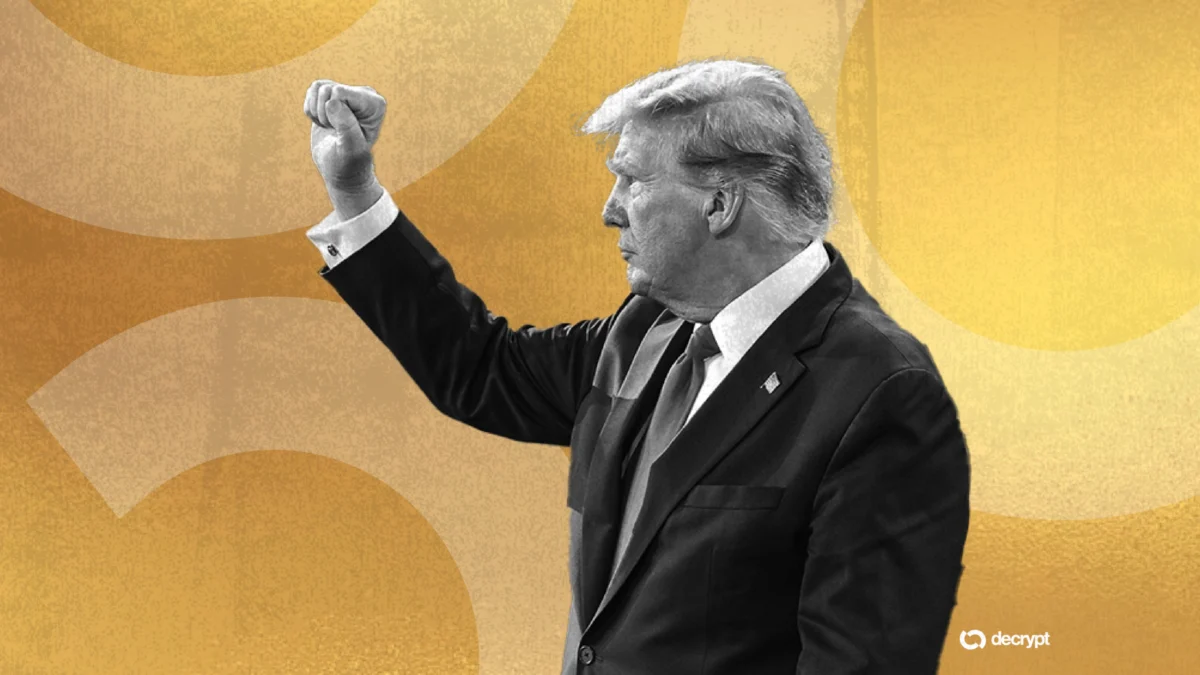
The architecture of Washington’s artificial intelligence policy is undergoing a profound structural shift. In a Sunday announcement on Truth Social, President Donald Trump unveiled the creation of the "Super Intelligence Force"—a high-level federal task force designed to streamline, coordinate, and spearhead the United States’ strategy to maintain global dominance in artificial intelligence.
At the center of this newly minted agency is a figure well-known to the technology and financial sectors: Jay Clayton. Serving primarily through his role as Director of National Intelligence, Clayton is widely recognized as the administration’s de facto "AI czar."
The task force is not operating in a vacuum. It is stacked with heavy hitters from across the federal apparatus, including Federal Trade Commission (FTC) Chairman Andrew Ferguson, Under Secretary of War for Research and Engineering Emil Michael, and Office of Personnel Management Director Scott Kupor. According to the administration’s guidelines, the group will report directly to President Trump and White House Chief of Staff Susie Wiles.
Its core operational mandate involves coordinating federal engagement across a broad spectrum of American society. This includes opening official channels with consumers, public interest groups, religious organizations, critical infrastructure providers, and the foundational companies driving the AI boom.
The launch of the Super Intelligence Force follows closely on the heels of what the White House has termed the "Historic White House Accord on Super Intelligence." In this agreement, leaders from major tech juggernauts—including OpenAI, Google, and Nvidia—met with the president at the White House to formally acknowledge and outline their "responsibilities to the American people."
However, for those tracking regulatory policy over the past decade, Clayton’s pivot from digital assets to artificial intelligence represents a fascinating and potentially controversial transition. The man now tasked with unlocking the future of American technological ingenuity is the very same official who kicked off Washington’s multi-year regulatory onslaught against the cryptocurrency industry.
Chronology: The Evolution of Jay Clayton’s Regulatory Career
To understand the weight of Clayton’s new appointment, it is necessary to examine his trajectory through the upper echelons of government and the private sector, tracing a path defined by sharp regulatory turns.
2017–2020: The SEC Chairmanship and the Birth of Crypto Enforcement
Appointed by Donald Trump during his first presidential term, Jay Clayton took the helm of the U.S. Securities and Exchange Commission (SEC) in May 2017. While he entered office with a reputation as a Wall Street-friendly corporate lawyer, his tenure marked a foundational shift in how the federal government viewed digital assets.
Under Clayton, the SEC initiated a strict regulation-by-enforcement philosophy regarding blockchain technology. Rather than establishing clear compliance frameworks for token issuers, the agency deployed its enforcement division. By the time Clayton departed the SEC at the end of 2020, the agency had brought 57 distinct enforcement actions against crypto firms, initial coin offerings (ICOs), and blockchain networks—a statistic he frequently highlighted as a testament to his protection of retail investors.
December 2020: The Ripple Lawsuit
Clayton’s final act as SEC chairman remains one of the most consequential moments in cryptocurrency history. In December 2020, just days before stepping down, the SEC filed a sprawling $1.3 billion lawsuit against Ripple Labs, alongside executives Brad Garlinghouse and Christian Larsen. The commission alleged that Ripple’s distribution of XRP constituted an unregistered securities offering.
This lawsuit served as a regulatory template and blueprint. It paved the way for his successor, Gary Gensler, to launch an aggressive barrage of lawsuits against major cryptocurrency exchanges, token issuers, and decentralized finance (DeFi) protocols in the years that followed.
2021–2024: The Private Sector Pivot
Following his departure from government service, Clayton’s relationship with the digital asset ecosystem underwent a surprising transformation. In 2021, he joined One River Asset Management—a firm pivoting heavily into digital currencies—as an elite crypto adviser. He also took a seat on the advisory board of Fireblocks, a prominent digital asset custody and infrastructure platform. This era demonstrated a pragmatic flexibility, as a former chief prosecutor of the industry sought to help navigate its institutional adoption.
2025: Return to Government and the SDNY
Clayton’s return to public service continued in 2025 when President Trump appointed him as the interim U.S. Attorney for the Southern District of New York (SDNY). During his tenure in this high-profile prosecutorial seat, the office continued high-stakes financial and technological prosecutions, notably pushing forward with the legal case against Roman Storm, the co-founder of privacy-focused cryptocurrency mixing protocol Tornado Cash.

Late 2025/2026: Stepping into the AI Era
Now, Clayton transitions from prosecuting blockchain privacy tools and digital token sales to steering the regulatory and strategic architecture of artificial intelligence. As Director of National Intelligence and head of the newly formed Super Intelligence Force, Clayton sits at the intersection of national security, economic competition, and technological acceleration.
Supporting Data and Institutional Framework
The establishment of the Super Intelligence Force is underpinned by specific quantitative and structural metrics that highlight the administration’s urgency regarding the AI race:
- Task Force Leadership Hierarchy: The group reports directly to President Donald Trump and White House Chief of Staff Susie Wiles, bypassing traditional bureaucratic bottlenecks.
- Key Members:
- Jay Clayton (Director of National Intelligence / Lead AI Czar)
- Andrew Ferguson (Federal Trade Commission Chairman)
- Emil Michael (Under Secretary of War for Research and Engineering)
- Scott Kupor (Office of Personnel Management Director)
- Historical Crypto Record under Clayton: 57 formal enforcement actions initiated against crypto firms and blockchain startups during his 2017–2020 SEC tenure.
- The Landmark Ripple Filing: A $1.3 billion lawsuit filed in December 2020 targeting XRP, establishing the legal precedent for subsequent digital asset classification disputes.
- Corporate Alignment: Immediate participation from leading AI titans—including OpenAI, Google, and Nvidia—who signed the "Historic White House Accord on Super Intelligence" ahead of the task force’s formal launch.
Official Responses and Stakeholder Reactions
The announcement of the Super Intelligence Force and the elevation of Jay Clayton have drawn diverse reactions from across the political, corporate, and technological spectrum.
The White House has framed the initiative as a necessary measure to ensure American primacy in a technology that will define global economic and military power for the next century. By bringing together the Department of National Intelligence, the FTC, the Department of Defense (via Research and Engineering), and personnel management, the administration is positioning the task force to act as a unified command center.
Major tech companies, having recently participated in the White House Accord, have adopted a cooperative tone. Industry leaders recognize that clear, centralized federal coordination—even if it comes with regulatory oversight—is preferable to a fragmented patchwork of state-level rules and conflicting agency mandates.
Conversely, civil liberties groups, open-source AI advocates, and cryptocurrency veterans have expressed cautious skepticism. Within the digital asset community, Clayton’s appointment is viewed through a complex lens. While some market participants remember him as the architect of the war on tokens—starting the legal battles that cost the industry billions in capital and legal fees—others view him as a sophisticated, traditional institutionalist who understands how to negotiate high-stakes regulatory frameworks without resorting to populist grandstanding.
Civil society organizations have raised questions regarding the lack of explicit details concerning the task force’s mandate, timeline, and accountability metrics. With national security officials and antitrust regulators driving the initiative, watchdogs worry that safety, transparency, and consumer privacy could take a back seat to a pure geopolitical "arms race" against global competitors like China.
Implications: What the Super Intelligence Force Means for the Future
The creation of the Super Intelligence Force and the appointment of Jay Clayton carry profound implications for the domestic technology sector, international competitiveness, and the broader regulatory landscape.
1. A Shift from Regulation-by-Enforcement to Strategic Coordination
Under Clayton’s watch at the SEC, digital assets suffered from a lack of clear legislative definitions, leading to reactive lawsuits that stifled innovation domestically while pushing capital overseas. In the realm of artificial intelligence, the administration appears eager to avoid repeating that mistake. By establishing a central task force that coordinates directly with tech companies rather than immediately litigating them, Washington may be signaling a more collaborative, albeit strictly managed, approach to emerging technology.
2. National Security Meets Commercial Innovation
The inclusion of Emil Michael (Under Secretary of War for Research and Engineering) and Director of National Intelligence Jay Clayton highlights the Department of Defense and the intelligence community’s growing footprint in commercial AI. As frontier models scale in capability, AI is no longer viewed merely as a consumer product or enterprise software tool, but as a critical national security asset. The Super Intelligence Force will likely serve as a bridge, ensuring that America’s leading AI labs align their developments with national defense and intelligence objectives.
3. Regulatory Clarity or Centralized Gatekeeping?
While the tech industry has called for regulatory clarity, centralization under a high-powered task force reporting directly to the White House chief of staff creates a potent gatekeeping mechanism. Startups and open-source developers may find it difficult to navigate an ecosystem where national security agencies and the FTC hold direct oversight over consumer engagement and infrastructure deployment.
4. A Precedent for Future Tech Interventions
Clayton’s career trajectory—moving from Wall Street lawyer to crypto prosecutor, to financial crimes prosecutor at SDNY, and finally to national intelligence and AI czar—demonstrates how the federal government recycles trusted legal operators to manage disruptive technologies. If the Super Intelligence Force succeeds in solidifying U.S. leadership in AI, Clayton’s playbook could become the permanent model for how Washington handles future paradigm-shifting innovations, from quantum computing to biotechnology.
As the task force begins its operations, all eyes will be on Clayton to see whether his past reputation as a rigid enforcement chief translates into an authoritarian regulatory approach for AI, or if his private-sector experience advising tech and crypto firms has equipped him to foster a balanced, pro-innovation ecosystem.