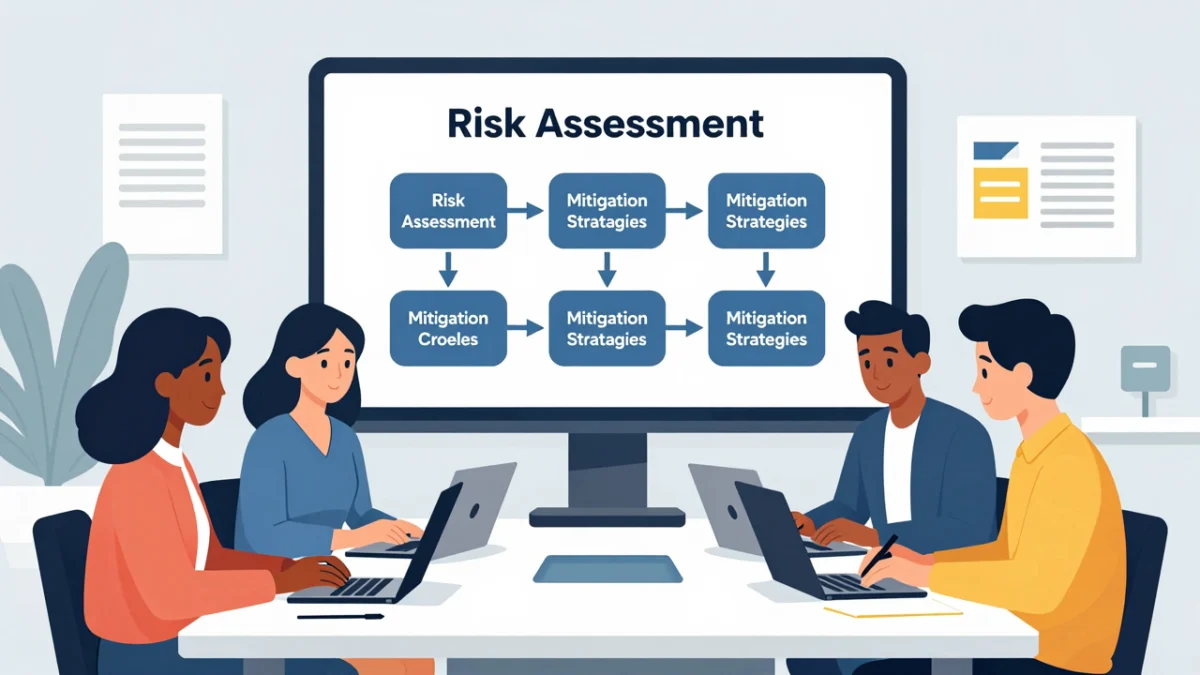










In an era defined by rapid digital transformation and volatile market conditions, the difference between a thriving enterprise and one struggling with inefficiency often comes down to a single factor: process documentation. Far from being a mere administrative chore, documenting business processes is the bedrock of organizational clarity, operational scalability, and institutional resilience. By transforming tribal knowledge into a structured, accessible roadmap, businesses can protect themselves against the high costs of turnover and inefficiency while empowering their workforce to perform with unprecedented consistency.
Main Facts: The Strategic Necessity of Documentation
At its core, process documentation is the systematic recording of how tasks are performed within an organization. It serves as a "living" guidebook that outlines step-by-step procedures, defining the "who, what, when, where, and why" of every business activity.

For many organizations, the absence of this structure creates a silent drain on resources. Research indicates that knowledge gaps and inefficient hand-offs can cost large companies up to $47 million annually. By documenting processes, leadership teams achieve three critical objectives:
- Operational Standardization: Ensuring that every team member follows the same path to reach the desired outcome, regardless of who is performing the task.
- Risk Mitigation: Safeguarding institutional knowledge so that the departure of a key employee does not result in the loss of critical operational intelligence.
- Scalability: Creating a foundation that allows for seamless onboarding and the ability to replicate success as the business grows.
Chronology: The Eight-Step Implementation Framework
Implementing a culture of documentation requires a disciplined approach. To ensure maximum adoption and clarity, organizations should follow this proven eight-step methodology:

1. Define and Name the Process
Every process must have a distinct identity. Choosing a name that is descriptive and aligns with organizational goals is the first step toward discoverability. A title like "Client Onboarding Workflow" is far more effective than "New Doc 1."
2. Establish Process Boundaries
A common failure in documentation is scope creep. Clearly define the starting trigger (e.g., "Customer signs contract") and the terminal objective (e.g., "Account is active in the CRM"). This prevents ambiguity regarding where one process ends and the next begins.

3. Identify Inputs and Outputs
Document the resources required to initiate the process (inputs) and the final deliverables (outputs). This mapping helps identify potential bottlenecks—such as waiting on data from another department—before they stall production.
4. Break Down Sequential Activities
Deconstruct the process into logical, sequential steps. Use active voice and imperative verbs to make instructions actionable. For example, "Verify client details" is superior to "The client details are verified by the staff."

5. Organize Logically
A process is only as good as its readability. Use a logical structure—chronological order is usually best—and incorporate headers, bullet points, and numbered lists to reduce cognitive load for the reader.
6. Review and Revise
A static document is a dying document. Processes change as businesses evolve. Establish a quarterly review cycle where team members are invited to critique the documentation, ensuring it reflects current "real-world" practices.

7. Assign Roles and Responsibilities
Accountability is the engine of execution. Clearly label who is responsible for each step. Using a RACI (Responsible, Accountable, Consulted, Informed) matrix can provide clarity in complex cross-departmental workflows.
8. Visualize with Flowcharts
Text-heavy guides can be daunting. Complement your documentation with visual flowcharts. Tools like Gliffy or Draw.io allow teams to see the decision-making logic at a glance, highlighting critical decision points where a "Yes" or "No" path determines the next action.

Supporting Data: The ROI of Clarity
The economic impact of well-documented processes is quantifiable. When businesses prioritize the creation of a centralized knowledge base, they witness a dramatic shift in productivity metrics.
| Objective | Benefit | Impact |
|---|---|---|
| Enhance Efficiency | Standardized, clear guidelines | Up to 30% reduction in task time |
| Clarify Roles | Minimized overlap/confusion | 25% increase in team productivity |
| Preserve Knowledge | Mitigates turnover impact | Saves millions annually in retraining |
| Data-Driven Decisions | Easier identification of waste | 20% improvement in quality metrics |
| Foster Adaptability | Swift response to market shifts | Enhanced compliance and agility |
These figures underscore that documentation is not an expense; it is a capital investment in human capital. By reducing the time spent searching for information or correcting errors, employees gain the "cognitive surplus" required for innovation and higher-level problem solving.

Addressing the Barriers: Knowledge Hoarding and Time Constraints
Despite the clear benefits, organizational friction often hinders the documentation process. Two primary obstacles frequently arise: knowledge hoarding and time constraints.
The Culture of Transparency
Knowledge hoarding occurs when employees withhold information, often out of a misguided belief that being the "only one who knows how to do this" provides job security. Leaders must counter this by fostering a culture where knowledge sharing is rewarded. Recognition programs, performance incentives, and team-wide acknowledgments of contributors can shift the paradigm from "my knowledge" to "our intelligence."

Overcoming the Time Crunch
The most common excuse for poor documentation is, "I’m too busy to write it down." The irony is that the time spent on rework and answering repetitive questions far exceeds the time required to document the process once. To mitigate this, documentation should be integrated into the workflow rather than treated as an afterthought. Encourage "micro-documentation"—the practice of capturing a process step while it is being performed—to ensure high-fidelity records without disrupting the workday.
Implications: The Long-Term Strategic Edge
What happens when a company fully embraces documentation? The implications extend far beyond simple efficiency.

Enhanced Agility
When processes are documented, they become modular. If market conditions change or a new technology emerges, it is significantly easier to update a specific, documented module than it is to retrain an entire workforce based on word-of-mouth instructions.
Improved Compliance
For industries subject to regulatory oversight, documentation is non-negotiable. It provides the audit trail necessary to prove that the company is adhering to industry standards and legal requirements, effectively insulating the organization from litigation and regulatory fines.

A Stronger Foundation for Growth
As businesses look toward 2026 and beyond, the ability to scale hinges on "systems thinking." Documenting processes allows leadership to transition from being "operators" who are caught in the day-to-day grind to "architects" who can focus on strategy, innovation, and expansion.
Conclusion: Taking Action
The path to operational excellence is paved with clear, accessible, and updated documentation. By following the eight-step framework—naming, scoping, mapping, sequencing, organizing, refining, assigning, and visualizing—organizations can transform their internal chaos into a well-oiled machine.

The "4 C’s of Documentation"—Clarity, Consistency, Completeness, and Collaboration—should be the guiding principles for any team embarking on this journey. Start today by identifying one critical process that is currently causing friction, involve the stakeholders who know it best, and commit to documenting it. The return on this investment will be measured not just in saved dollars, but in a more confident, autonomous, and productive team.
In the final analysis, your business is only as strong as your processes. If your processes are locked in the minds of your employees, they are vulnerable. By extracting that knowledge and placing it into a central repository, you are not just documenting a task; you are securing the future of your enterprise.