







For the ambitious small business owner, the transition from leasing workspace to owning it represents a pivotal milestone. It is a shift from being a tenant to being an investor in one’s own success. However, the capital-intensive nature of commercial real estate often creates a formidable barrier to entry. Enter the SBA 504 Loan Program, a government-backed financing vehicle specifically engineered to bridge the gap between small business aspirations and institutional lending requirements. By offering long-term, fixed-rate funding, this program serves as a cornerstone for growth, modernization, and long-term financial stability.
Main Facts: The Anatomy of the SBA 504 Loan
At its core, the SBA 504 loan is a public-private partnership designed to foster economic development. Unlike traditional commercial loans that may require significant capital outlays or carry volatile variable interest rates, the 504 program provides a structured, predictable path to property ownership.

The program is uniquely characterized by its "three-legged" structure:
- The Bank (50%): A conventional lender provides the first mortgage, which is secured by the property. This lender holds a senior lien position.
- The Certified Development Company (40%): A CDC—a nonprofit organization regulated by the Small Business Administration—provides a second mortgage funded by government-guaranteed debentures.
- The Borrower (10%): The business owner provides a modest 10% down payment, significantly lower than the 20% to 30% often required in private commercial lending.
This structure allows businesses to finance up to 90% of total project costs—including the purchase price, renovations, and even "soft costs" like appraisals and professional fees—while preserving working capital.

A Chronology of the Application Process
Securing an SBA 504 loan is not an overnight endeavor. It is a process of methodical preparation that typically spans 30 to 60 days. Understanding the sequence of events is vital for business owners who need to align financing with their operational timelines.
Phase 1: Pre-Qualification and Documentation (Weeks 1–2)
Before approaching a lender, the business must gather a comprehensive financial dossier. This includes:

- Historical Performance: Three years of business and personal tax returns.
- Financial Health: Current profit and loss statements and balance sheets.
- Personal Commitment: Personal financial statements from all owners with 20% or more equity.
- The Project Plan: A detailed summary of the real estate or equipment to be acquired, including appraisals and environmental reports.
Phase 2: The CDC Partnership (Weeks 3–4)
The CDC acts as your advocate and guide. They assess your eligibility based on the SBA’s size standards and the "public policy" goals of the program (such as job creation or energy efficiency). Once the CDC confirms viability, they help package the application for the bank and the SBA.
Phase 3: Underwriting and Approval (Weeks 5–8)
The bank reviews the creditworthiness, while the SBA reviews the loan’s adherence to government mandates. Once authorized, the loan moves to the closing phase, where legal documents are executed, and the funds are disbursed to complete the acquisition or project.

Supporting Data: The Financial Impact
The strength of the SBA 504 program lies in its mathematical advantage for the borrower. With interest rates historically competitive—often trailing prime commercial rates due to the government backing of the CDC debentures—businesses can lock in costs for 10, 20, or even 25-year terms.
Key Financial Metrics:

- Loan Limits: Up to $5.5 million per project (and up to $6.5 million for manufacturing or energy-efficient projects).
- Occupancy Requirements: The business must occupy at least 51% of an existing building or 60% of new construction.
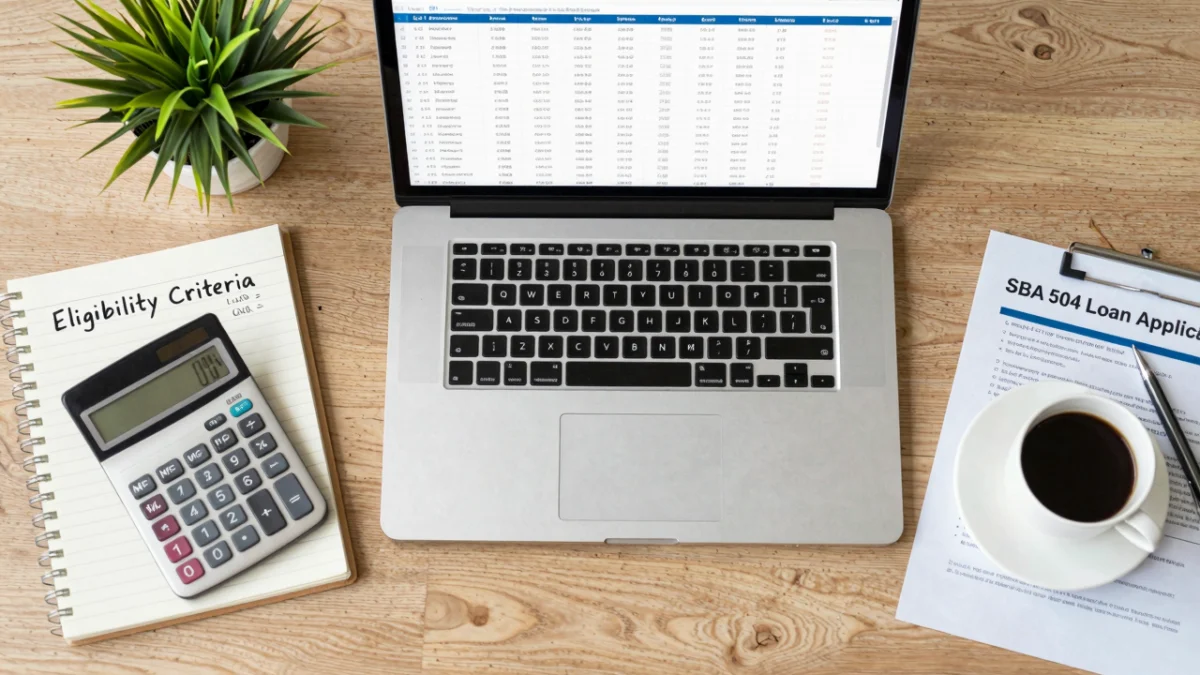
- Eligibility Thresholds: A tangible net worth of $20 million or less, and an average net income of $5 million or less after federal taxes over the preceding two years.
These metrics ensure the program remains focused on its target demographic: small and mid-sized enterprises that are vital to the national economy but lack the deep balance sheets of large corporations.
Official Perspectives: The Role of the SBA and CDCs
According to the Small Business Administration, the 504 program is designed to fulfill a dual purpose: providing small businesses with "long-term, fixed-rate financing to acquire major fixed assets for expansion or modernization" and stimulating economic development within communities.

Certified Development Companies (CDCs) are the engine of this program. They are not merely conduits for loans; they are economic development partners. Their role is to ensure that the loan benefits the local economy, often measured by job creation. For every $90,000 in debenture funds, the project is generally expected to create or retain one full-time job. This focus on "public policy goals" is what distinguishes the 504 from standard commercial lending and why it is a favored instrument for municipal and state economic planners.
Implications for Future Growth
The decision to utilize an SBA 504 loan has profound implications for a company’s trajectory.

Financial Predictability
In an era of economic fluctuation, the fixed-rate nature of the 504 loan acts as a hedge against inflation. By stabilizing one of the largest overhead costs—real estate—business owners can accurately project their cash flow for decades. This predictability allows for more aggressive strategic planning in other areas, such as R&D, staffing, or marketing.
Asset Building
Every mortgage payment made on an SBA 504 loan is, in effect, a transfer of wealth from a landlord’s pocket to the business owner’s equity. Over time, this transforms the business’s balance sheet, providing collateral that can be leveraged for future lines of credit or business expansion.

Operational Freedom
When a business owns its space, it gains the freedom to customize the environment to fit its specific operational needs. Whether that means installing heavy machinery, creating specialized labs, or designing a customer-centric retail layout, ownership removes the constraints imposed by commercial lease agreements.
Navigating Challenges: Prepayment and Rigor
While the benefits are significant, the SBA 504 is not without its hurdles. The most notable is the prepayment penalty. Because the loans are funded through a debenture pool, they are designed to be long-term instruments. If a borrower pays off the loan significantly early, they may encounter a declining prepayment premium. This is a critical consideration for owners who anticipate selling the property within a few years of purchase.

Furthermore, the "hard" requirements—such as the 51% occupancy rule—mean that the 504 is not a vehicle for passive real estate investors. It is strictly for owner-operators who are deeply integrated into the business occupying the space.
Conclusion: Is the SBA 504 Right for You?
The SBA 504 loan program is more than just a financing tool; it is a strategic asset for the small business owner. By lowering the barriers to real estate ownership, it empowers entrepreneurs to anchor their operations, build equity, and focus on long-term growth rather than short-term rent cycles.

For the business owner in a growth phase, the combination of a low down payment, long-term fixed rates, and expert guidance from a CDC makes this program an unparalleled choice. While the process requires diligence, the reward—a permanent, cost-effective base of operations—is a cornerstone upon which thriving, resilient businesses are built. If your business is ready to transition to ownership, the SBA 504 program offers the most robust path to achieving that vision, ensuring your company is not just renting its future, but owning it.