









By Sarah Lewis | July 1, 2026
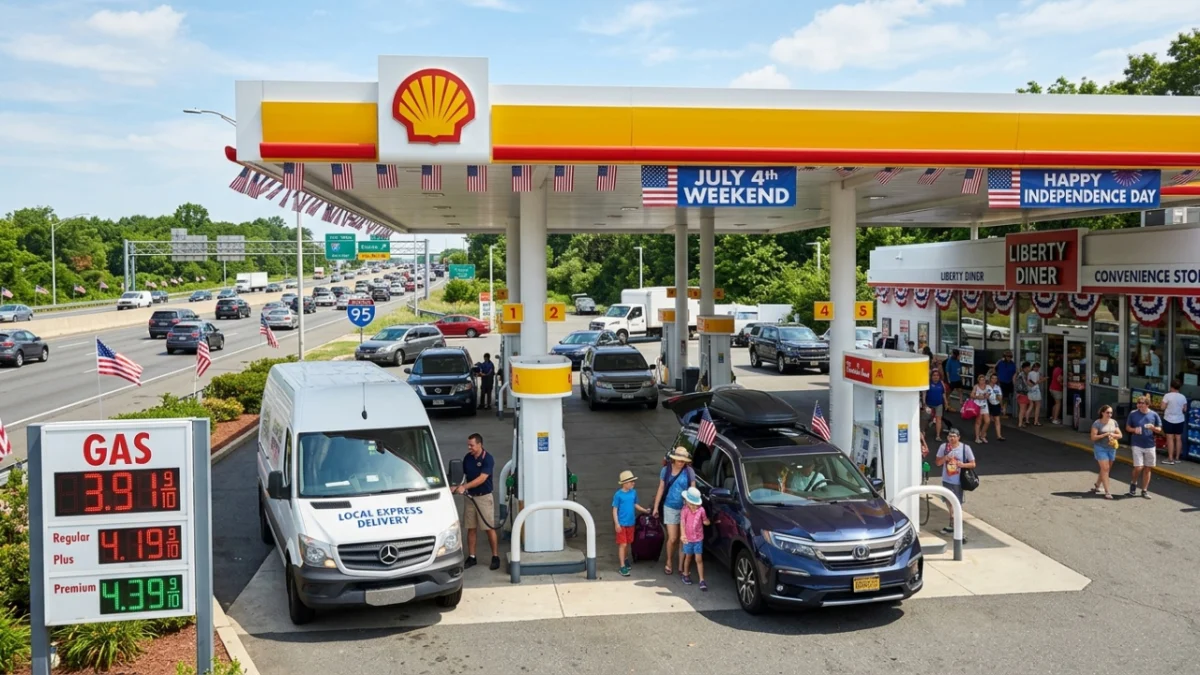
As the United States barrels toward the height of the summer travel season, American motorists are receiving a welcome reprieve at the pump. For the fifth consecutive week, national gasoline prices have maintained a downward trajectory, offering a significant fiscal buffer for families and small business owners alike. With the Independence Day holiday approaching—an event historically marked by massive surges in domestic travel—this decline in fuel costs arrives at a pivotal moment for the national economy.
The current national average sits at $3.91 per gallon. While this figure is a marked improvement from last month’s average of $4.51, it remains a complex landscape when measured against the $3.23 recorded during the same period last year. For entrepreneurs, this volatility is not merely a number on a roadside sign; it is a critical variable in the equation of overhead, logistics, and consumer discretionary spending.
Main Facts: The Current Fuel Landscape
The recent cooling of fuel prices is largely attributed to a recalibration of supply and demand. Industry data indicates that gasoline demand slipped from 9.21 million barrels per day to 8.77 million last week. Simultaneously, domestic fuel supplies have seen a moderate increase, effectively alleviating the supply-side constraints that often drive panic-induced price spikes.
For the small business sector, the impact of these figures is two-fold. First, there is the direct benefit of reduced operating costs for businesses that rely on delivery fleets, field service vehicles, or regular travel. Second, and perhaps more importantly, there is the "disposable income effect." As households spend less on the daily commute and holiday road trips, that capital is often redirected toward retail, dining, and entertainment sectors—the lifeblood of local small businesses.
Chronology: A Season of Flux
To understand the current economic environment, one must look at the progression of the last few months.

- Late Spring (May 2026): Fuel prices peaked as seasonal demand began to ramp up, with national averages hovering near $4.50. This period created significant strain on small businesses already grappling with inflation in raw materials and labor.
- Early June 2026: A steady decline began as refinery output stabilized and market speculation regarding crude oil prices eased.
- Late June 2026: The market saw a consistent weekly drop, bringing the average below the $4.00 threshold—a psychological milestone for American consumers.
- July 1, 2026: As we enter the Independence Day week, the price holds at $3.91, providing a stabilized backdrop for the busiest travel weekend of the summer.
Supporting Data and Regional Disparities
The national average is, by nature, an aggregate that obscures the stark realities of regional economic divergence. The cost of doing business varies wildly across state lines, a factor that multi-state operators and logistics-heavy small businesses must navigate with precision.
In regions like Hawaii and California, consumers and business owners are still contending with prices exceeding $5.00 per gallon. Conversely, states in the Midwest and South, such as Indiana and Texas, are seeing prices closer to the $3.30 mark. These regional variances are driven by a combination of state-specific fuel taxes, proximity to refineries, and localized environmental regulations. For a small business owner, these disparities mean that a "one-size-fits-all" pricing strategy is insufficient. Those operating across state lines must account for these geographic fuel-cost fluctuations in their regional pricing models.
Official Responses and Expert Analysis
Industry experts, including analysts from the American Automobile Association (AAA), have highlighted the significance of this trend. "The fall in prices is a much-needed respite for both consumers and business owners alike," a spokesperson for AAA noted. "With travel set to increase dramatically, it is significant for businesses that rely on high foot traffic. The current stability provides a window of opportunity for business owners to capture the surge in consumer sentiment."
However, experts also offer a word of caution. The energy market remains highly sensitive to geopolitical tensions and shifts in crude oil production. While the immediate outlook is positive, the potential for rapid reversal exists if supply chains are disrupted or if global demand unexpectedly spikes in the late summer months.
Implications for Small Businesses: Beyond the Pump
For the small business owner, lower gas prices are not a panacea for all economic woes. While the reduction in fuel costs is favorable, it must be balanced against broader inflationary pressures that continue to affect the cost of goods and services.
Leveraging the Holiday Surge
With approximately 85% of Americans planning to travel by car for the July 4th weekend, the consumer landscape is primed for engagement. Businesses in the travel, hospitality, and retail sectors should consider:

- Promotional Timing: Aligning sales and special offers with the peak travel windows.
- Enhanced Customer Experience: Capitalizing on the increased foot traffic by ensuring service levels are high to convert transient visitors into loyal, repeat customers.
- Operational Efficiency: Using the savings from reduced fuel expenditures to reinvest in staff training or inventory management, rather than simply absorbing the savings into general cash flow.
The Rise of the Electric Vehicle (EV)
The narrative of fuel costs is no longer confined to internal combustion engines. The market for electric vehicles continues to influence how businesses approach energy management. Public charging station costs have stabilized at roughly 41 cents per kilowatt-hour. For businesses that are transitioning their fleets to electric or those providing charging infrastructure to their customers, this stability is a significant competitive advantage.
Promoting sustainability is no longer just a corporate social responsibility initiative; it is an economic strategy. As more consumers adopt EVs, businesses that provide accessible, stable-priced charging options are better positioned to attract a growing demographic of eco-conscious, high-spending customers.
Strategic Planning: Staying Vigilant
While the current trend is favorable, the long-term outlook requires a proactive stance. Small business owners should integrate fuel price monitoring into their monthly strategic planning. Relying on current price levels for long-term budget forecasting can be dangerous in an energy market known for sudden volatility.
Tips for Managing Fuel Exposure:
- Route Optimization: Utilize software to streamline delivery routes, reducing total mileage and fuel consumption regardless of price.
- Energy Audits: Just as businesses monitor gas prices, they should audit their energy consumption—both for vehicles and facilities—to identify waste.
- Dynamic Pricing: In industries where fuel is a primary cost, consider incorporating fuel surcharges that adjust based on market conditions, ensuring that your margins are protected without alienating customers.
Conclusion: A Window of Opportunity
The decline in gas prices leading into this July 4th weekend provides a rare moment of fiscal relief in an otherwise challenging economic climate. It is a time for small business owners to be aggressive in their pursuit of market share, utilizing the extra disposable income currently held by their customer base.
However, the savvy entrepreneur will treat this as a temporary, albeit welcome, advantage. By focusing on operational efficiency, understanding regional cost differences, and preparing for the inherent volatility of the energy sector, small businesses can ensure that they remain resilient, no matter which direction the pumps turn next. As the nation prepares to celebrate, the focus for the business community remains clear: stay informed, stay agile, and stay prepared for the road ahead.
For further insights into fuel trends and their impact on the national economy, visit the AAA Gas Prices report.