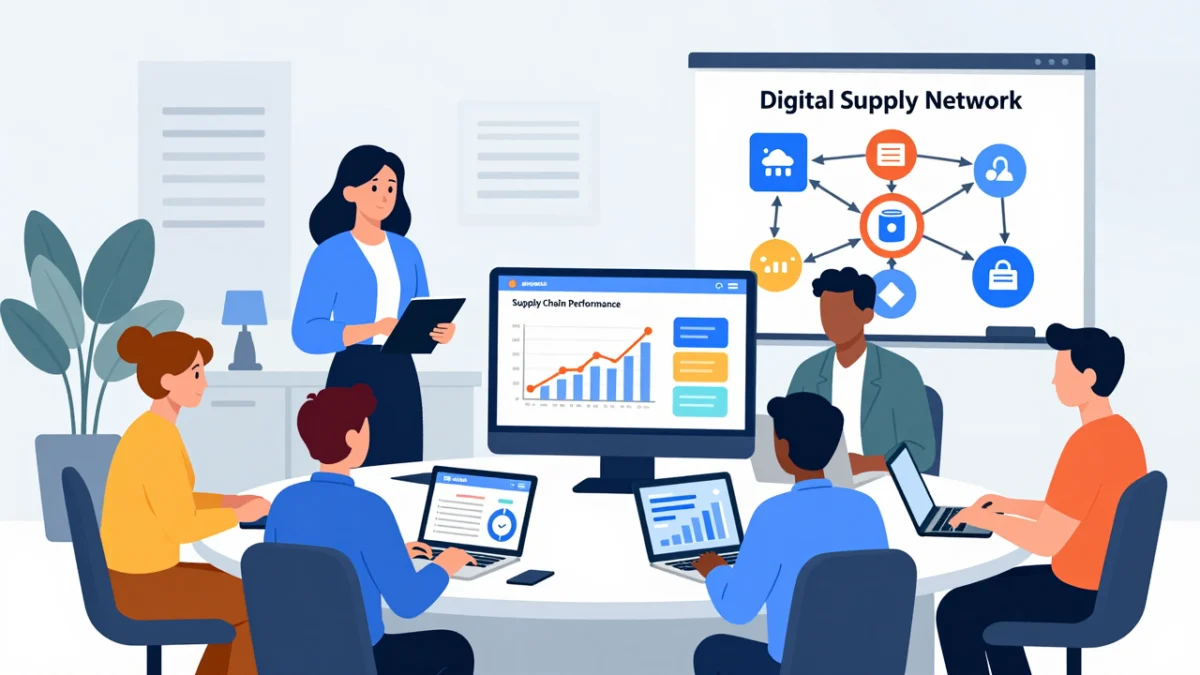








In an era defined by volatile market fluctuations, geopolitical instability, and shifting consumer expectations, the global supply chain has become the primary battleground for business survival. For small and medium-sized enterprises (SMEs), these disruptions are not merely inconveniences—they are existential threats. Recognizing the acute need for agility, Oracle has officially announced the launch of four new Fusion Agentic Applications integrated directly into its Fusion Cloud Supply Chain & Manufacturing (SCM) platform.
These AI-powered tools represent a significant leap forward in autonomous operations, designed specifically to help businesses transition from reactive "firefighting" to proactive, data-driven orchestration. By embedding intelligence into the very fabric of supply chain management, Oracle aims to democratize access to high-level operational efficiency, previously the exclusive domain of multinational corporations.
The Core Innovation: Moving Toward Autonomous Supply Chains
At the heart of Oracle’s announcement is the shift toward "agentic" technology. Unlike traditional software that requires constant human intervention to trigger workflows, agentic applications act as intelligent assistants that perceive, decide, and act upon supply chain disruptions in real-time.
S.Y. Shenoy, Senior Vice President of Fusion SCM development at Oracle, highlights the strategic imperative driving this innovation: “Supply chain leaders are under increasing pressure to improve service levels, control costs, and respond faster to disruption amid ongoing economic and operational uncertainty. Our new tools aim to ease these challenges by proactively identifying issues and prioritizing actions.”
By leveraging these agents, organizations can effectively offload repetitive, data-heavy tasks to the software, allowing human talent to focus on high-level strategic decision-making.
Detailed Breakdown of the Four Fusion Agentic Applications
Oracle’s suite of new applications targets four critical pillars of the supply chain: inventory management, supplier relations, production readiness, and replenishment strategies.
1. The Inventory Planning Command Center
Manual inventory tracking is a perennial pain point for SMEs. The Inventory Planning Command Center replaces spreadsheets and reactive monitoring with an automated, intelligent hub. It monitors stock levels against real-time demand signals, automatically flagging potential stockouts before they occur. By shifting from manual entry to a business-driven workflow, small businesses can drastically reduce the human error associated with stock replenishment.
2. The Supplier Qualification Workspace
Managing a diversified supplier base is complex, particularly regarding compliance and risk management. The Supplier Qualification Workspace simplifies the onboarding process by transforming fragmented data into a unified, risk-based dashboard. It ensures that businesses remain compliant with regulations while expediting the time-to-market for new supplier partnerships. This is particularly vital for SMEs that rely on lean, global supply chains but lack the manpower to conduct deep-dive audits manually.
3. The Production Readiness Workspace
Setup errors are a leading cause of production delays and wasted materials. The Production Readiness Workspace redesigns traditional, static checklists into dynamic, proactive workflows. By identifying missing components or setup discrepancies before production begins, the tool prevents the "domino effect" of delays that can erode profitability.
4. The Kanban Administrative Workspace
Efficiency in production flow is often dependent on replenishment precision. The Kanban Administrative Workspace shifts the burden of inventory replenishment from periodic manual reviews to an exception-based, autonomous system. This ensures that production lines remain adequately stocked without the burden of overstocking, thereby optimizing cash flow and warehouse space.
Advanced Inventory Optimization: A Technical Deep Dive
Beyond the agentic applications, Oracle has introduced sophisticated Multi-echelon Inventory Optimization (MEIO) capabilities. For many businesses, the challenge is not just how much to order, but where to position inventory across a complex, multi-site network.
Strategic Positioning
MEIO allows planners to calculate recommended safety stock targets based on historical and predictive demand fluctuations. By strategically placing inventory at various "echelons" of the supply chain, companies can maintain high service levels while reducing overall capital tied up in excess stock.
Interactive Visualization and Predictive Alerts
The introduction of interactive network visualization tools allows planners to "see" their supply chain dependencies. If a node in the network is failing, the Inventory Optimization Advisor Agent triggers a proactive alert, highlighting the potential impact on customer service. This level of transparency is transformative for SMEs, providing the "big picture" visibility typically reserved for enterprise-level logistics software.
Supporting Data: Why SMEs Need AI Integration
The necessity for these tools is backed by current market realities. According to industry analysis, supply chain disruptions cost the average business significant portions of their annual revenue, with SMEs suffering disproportionately due to lack of redundant systems.
- Operational Efficiency: AI-driven automation can reduce manual inventory processing time by up to 30%.
- Cost Control: Predictive analytics tools are estimated to reduce excess inventory holding costs by 15-20% within the first year of implementation.
- Risk Mitigation: Companies utilizing automated supplier compliance tracking are 40% less likely to face regulatory or quality-related supply chain interruptions.
Official Responses and Strategic Implications
Oracle’s commitment to this segment of the market signals a broader shift in the tech landscape. By integrating these tools into the Fusion Cloud SCM, Oracle is positioning itself as the "operating system" for the modern, resilient business.
"The goal is to marry advanced technology with practical, user-friendly applications," notes the Oracle development team. By reducing the barrier to entry, Oracle enables smaller firms to compete on a level playing field, leveraging the same predictive capabilities as global logistics giants. This is not just about adopting new software; it is about adopting a new mindset where the supply chain becomes a competitive advantage rather than a cost center.
Challenges and Considerations for Adoption
Despite the clear benefits, small business owners must approach implementation with a realistic perspective. The transition to an agentic, AI-driven environment involves several hurdles:
- Complexity of Integration: Integrating Oracle’s suite with existing legacy ERP or accounting systems can be an intensive process requiring specialized IT support.
- The "Human" Factor: Technology is only as good as its users. Adopting AI requires a cultural shift where staff must learn to trust and interpret the output of autonomous agents rather than defaulting to manual intuition.
- Financial Investment: While the ROI is significant, the initial cost of licensing and training represents a notable expenditure for an SME. Business owners must conduct a thorough cost-benefit analysis before deployment.
- Data Quality: AI models are dependent on the quality of data fed into them. If an SME has poor historical data hygiene, the "insights" generated by the AI may be flawed, requiring a period of "data cleaning" before the tools become fully effective.
Looking Ahead: The Future of SME Supply Chains
As global markets remain unpredictable, the integration of agentic applications is moving from a "nice-to-have" luxury to a strategic necessity. By utilizing tools like the Inventory Planning Command Center and the Supplier Qualification Workspace, SMEs can build a defensive moat around their operations.
The integration of AI into supply chain management is not merely a trend—it is a foundational change in how businesses interact with the global market. Oracle’s latest offerings provide a clear pathway for businesses to enhance their responsiveness, reduce waste, and ultimately, survive and thrive in an age of uncertainty.
For business leaders looking to stay ahead of the curve, exploring these new capabilities is a critical step. Detailed information regarding the full suite of Fusion Agentic Applications and their technical specifications can be found at Oracle SCM.
In conclusion, the marriage of Oracle’s robust cloud infrastructure with autonomous agentic intelligence empowers smaller organizations to operate with the precision of a global enterprise. The path forward for SMEs is clear: prioritize resilience, embrace automation, and leverage data to turn supply chain complexity into a scalable business asset.