








In the hyper-competitive landscape of 2026, the difference between a scaling enterprise and a stagnant one often comes down to a single technological pillar: the Customer Relationship Management (CRM) system. No longer just a glorified digital address book, modern sales CRM software has evolved into the central nervous system of the modern business. By centralizing data, automating mundane administrative burdens, and providing predictive insights, these platforms allow sales teams to pivot from reactive task-management to proactive revenue generation.
This guide explores the essential criteria for selecting the right CRM, analyzes the leading platforms defining the market in 2026, and provides a framework for integrating these tools into your long-term business strategy.

The Core Necessity: What Is Sales CRM and Why Does It Matter?
At its fundamental level, sales CRM software is a strategic tool designed to manage, analyze, and optimize interactions with current and potential customers. In the past, small businesses often relied on a fragmented ecosystem of spreadsheets, sticky notes, and disparate email threads. This "analog" approach is no longer viable in an era where data velocity is the primary driver of market share.
Centralization and Data Integrity
By consolidating customer data into a single source of truth, businesses can track the entire lifecycle of a lead—from the initial touchpoint to the final contract signature. This visibility ensures that no lead goes cold and that every interaction is informed by previous communication, fostering a more personalized and effective customer experience.

Automation as a Productivity Catalyst
The primary value proposition of modern CRM software is the removal of friction. By automating repetitive tasks—such as logging phone calls, scheduling follow-up emails, and updating deal statuses—teams can reclaim hours of their work week. This shift allows sales professionals to focus on what they do best: building relationships and closing high-value deals.
Data-Driven Decision Making
The integration of advanced analytics and reporting tools within CRMs allows managers to move beyond "gut feeling." With real-time forecasting and performance dashboards, leaders can identify bottlenecks in the pipeline, assess the efficacy of specific sales strategies, and allocate resources where they will yield the highest return on investment (ROI).

A Chronology of CRM Evolution: From Database to Intelligence Hub
To understand the current state of CRM, one must look at how these tools have transformed over the last decade.
- The Foundational Era (2010–2015): CRM platforms were primarily static databases. Their main function was to store contact information and provide basic reporting on sales activities.
- The Integration Era (2016–2020): Focus shifted toward connectivity. CRMs began to integrate seamlessly with email clients, calendars, and marketing automation software, breaking down the silos between departments.
- The Intelligence Era (2021–2025): The introduction of AI-driven features, such as lead scoring, predictive analytics, and automated content generation, marked a turning point. CRMs began to "suggest" the next best action for a sales rep.
- The Hyper-Automated Era (2026 and Beyond): We are currently in a phase where AI acts as an autonomous administrative assistant. Modern CRMs now proactively analyze communication sentiment, automate entire outbound campaigns, and provide real-time coaching to sales teams.
Comparative Overview: The Top Sales CRM Contenders for 2026
Choosing a platform requires balancing cost, technical maturity, and user adoption rates. Below is a breakdown of the primary players currently dominating the market.

Pipedrive: The Master of Visual Pipeline Management
Pipedrive is widely recognized for its intuitive, Kanban-style interface. It excels in environments where visual deal management is paramount. By allowing users to drag and drop deals through customizable stages, it provides instant clarity on where a project stands.
- Best for: Small to mid-sized businesses that prioritize visual workflows.
- Key Advantage: Exceptional activity reminders and follow-up scheduling.
HubSpot: The User-Friendly All-Rounder
HubSpot has set the gold standard for ease of onboarding. Its "all-in-one" approach, which includes marketing, sales, and service hubs, makes it ideal for companies that want a unified growth platform.

- Best for: Startups and SMEs that need a fast, low-friction setup.
- Key Advantage: A highly robust "Free Forever" tier that allows small teams to scale without immediate capital expenditure.
Salesforce: The Enterprise Powerhouse
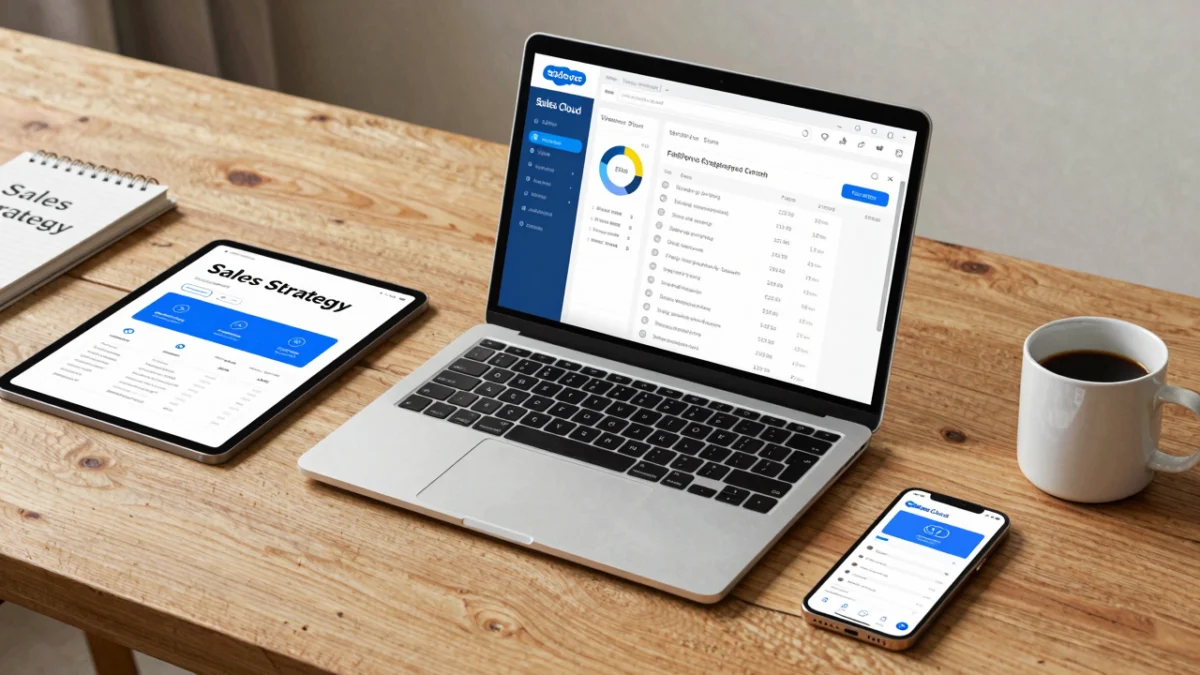
Salesforce remains the industry leader for complex, large-scale operations. Its Sales Cloud offers unparalleled customization, advanced workflow automation, and AI-powered forecasting capabilities.
- Best for: Large organizations with complex sales cycles and global teams.
- Key Advantage: Deep, multi-layered integration capabilities and a massive ecosystem of third-party apps.
Copper: The Google Workspace Specialist
For companies that live entirely within the Google ecosystem, Copper is the obvious choice. It integrates natively with Gmail and Google Calendar, requiring almost no data entry as it pulls information directly from your existing workspace.

- Best for: Google-centric agencies and service-based businesses.
Supporting Data: How CRM Implementation Impacts Performance
Industry research from 2025-2026 indicates that companies utilizing integrated CRM platforms see significant improvements across three key KPIs:
- Sales Productivity: Sales representatives spend 25-30% less time on manual administrative tasks, leading to a measurable increase in time spent on active selling.
- Conversion Rates: By utilizing AI-driven lead scoring, companies have reported a 15-20% improvement in lead-to-opportunity conversion rates.
- Customer Retention: Businesses that use CRM data to provide personalized, timely follow-ups see a 10% increase in customer lifetime value (CLV) due to improved engagement and relationship management.
Official Industry Perspectives: The Shift Toward "Smart" Sales
Industry experts and technology leaders emphasize that the future of CRM is no longer about "managing" data, but "acting" on it.

- The AI Mandate: According to industry analysts, AI-powered forecasting is no longer a "nice-to-have" feature; it is an expectation. Businesses that fail to adopt AI-driven analytics will find themselves at a distinct disadvantage compared to competitors who can predict market trends and buyer behavior in real-time.
- The Security Imperative: As CRMs become the repository for an organization’s most valuable asset—customer data—security has moved to the forefront of procurement discussions. Enterprises are prioritizing platforms that offer advanced data encryption, SOC2 compliance, and granular, role-based access controls.
Implications for Your Business Strategy
Selecting a CRM is not a one-time purchase; it is a long-term commitment to a specific workflow. The implications of this choice are profound:
Scalability and Future-Proofing
When evaluating a platform, ask: Will this software still serve us in three years? A platform that fits a team of five may buckle under the weight of a team of fifty. Ensure your chosen CRM offers flexible pricing tiers and the ability to add modules (such as project management or advanced marketing automation) as you grow.

The Human Element: Training and Adoption
The most sophisticated CRM in the world is useless if the team refuses to use it. When implementing your chosen software, prioritize a "people-first" rollout. Invest in training sessions, create internal documentation, and celebrate "quick wins" where the software demonstrably saved a team member time.
Integration Strategy
Your CRM should be the hub, not an island. Evaluate how easily your CRM connects with your email provider, accounting software, and project management tools. A seamless data flow between these applications prevents the re-emergence of data silos and ensures that your sales team has a 360-degree view of the customer.

Conclusion: Making the Right Move in 2026
The search for the "best" CRM is, in reality, a search for the best fit for your unique organizational structure. Whether it is the visual simplicity of Pipedrive, the all-encompassing power of Salesforce, or the seamless Google-integration of Copper, the market offers a solution for every business model.
To succeed in 2026, you must treat your CRM as a strategic asset rather than an administrative expense. By evaluating your specific needs, focusing on automation, and ensuring that your team is fully equipped to leverage the platform’s analytical capabilities, you can build a sales engine that is resilient, scalable, and highly efficient.

Start by identifying your most pressing bottleneck—be it lead follow-up, reporting, or inter-departmental communication—and select the tool that addresses that challenge first. From there, you can scale your operations, secure your data, and turn your sales process into a consistent, repeatable machine for growth.