







In the high-stakes world of international aviation, the battle for the premium passenger is often won or lost on the margins. While airlines typically compete through hard product innovations—such as lie-flat seats, sliding privacy doors, and expansive entertainment screens—the "soft product" remains the final frontier of service differentiation. Lufthansa, Germany’s flag carrier, has recently embarked on an ambitious overhaul of its long-haul passenger experience, codenamed "FOX."
However, this elevation of the culinary arts has introduced an unexpected logistical friction: on specific aircraft types, including the Boeing 787 Dreamliner, one of the two dedicated business-class lavatories is now being cordoned off during the primary meal service. This decision, while seemingly minor, highlights the complex trade-offs inherent in modern airline operations, where the physical constraints of the galley often clash with the elevated expectations of premium cabin service.
The Genesis of the Change: The "FOX" Initiative
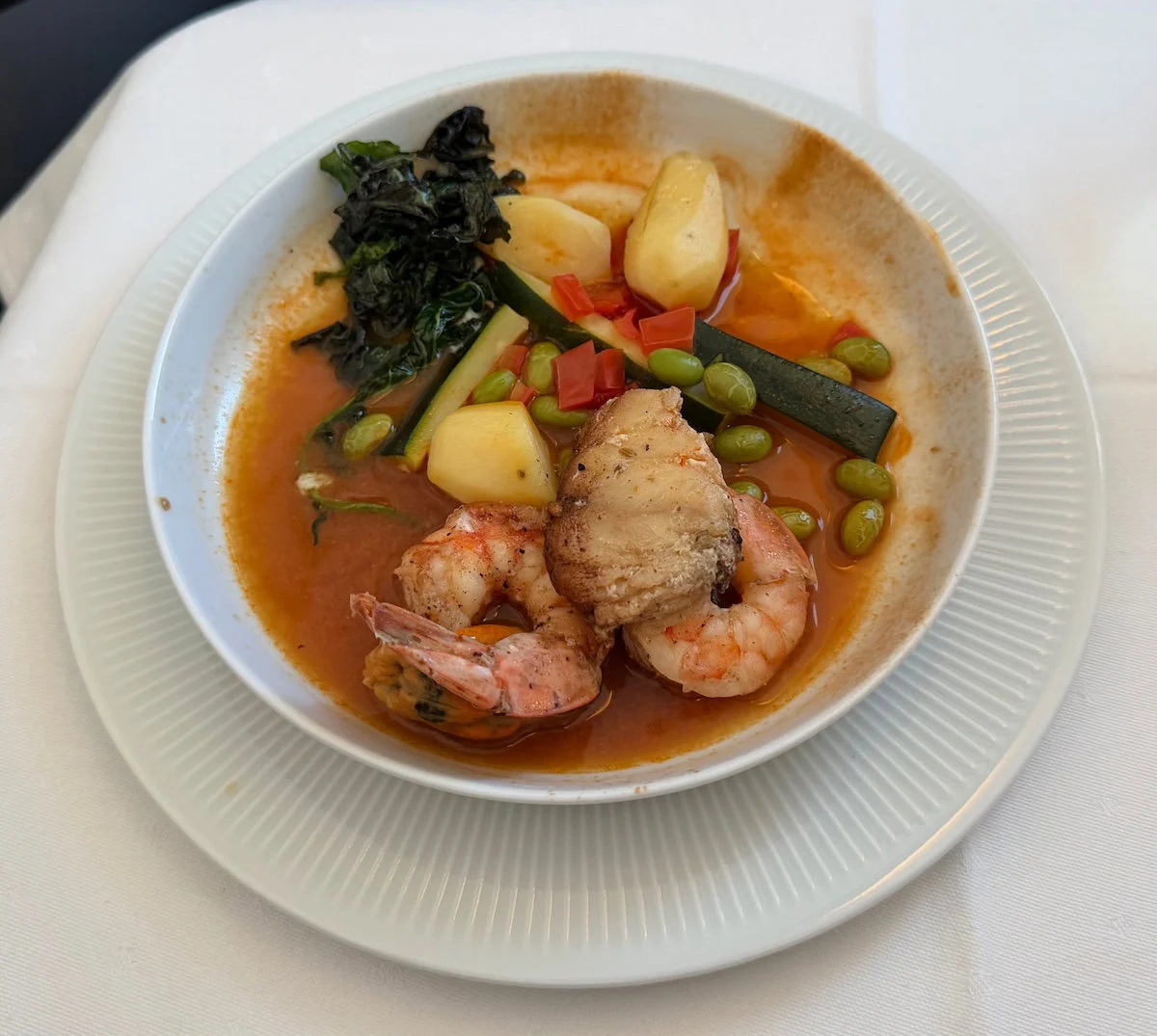
Lufthansa’s strategic shift, referred to internally as the "FOX" onboard experience, is a comprehensive effort to revitalize its brand image. Central to this initiative is a total reimagining of the business-class dining experience. Historically, international business-class catering has faced a persistent criticism: the "nuked" meal. Because ovens on commercial aircraft are primarily designed for reheating, food often loses its textural integrity, arriving at the seat with the aesthetic appeal of mass-produced institutional catering.
To combat this, Lufthansa has mandated a shift toward artisanal presentation. Under the new guidelines, flight attendants are instructed to prioritize the visual appeal of dishes, utilizing garnishes and precise plating techniques that transform a standard tray service into a restaurant-style experience. This shift represents a significant investment in crew training and service protocol, signaling a move toward a more "premium" feel that aligns with their new Allegris cabin interiors.
The Spatial Paradox: Galley Constraints vs. Culinary Ambition
The core of the issue lies in the rigid architectural constraints of the modern aircraft galley. The Boeing 787 Dreamliner, while technologically advanced, was not designed with the extra space required for a white-tablecloth service model.
When a cabin crew shifts from a standard "heat and serve" model to a more labor-intensive, aesthetic-focused plating process, the galley becomes a bottleneck. To achieve the level of presentation required by the FOX initiative, flight attendants must utilize rolling carts as makeshift workbenches. These carts, when positioned in the galley to allow for the assembly of refined dishes, effectively occupy the majority of the floor space.
This creates a logistical "Catch-22": to provide a superior meal, the crew requires more room; to create that room, they must minimize foot traffic in the galley area. By closing one of the business-class lavatories—typically the one situated near the forward galley—the airline effectively creates a "secure" staging area, preventing passengers from moving through the narrow workspace during the critical period when meals are being prepared and garnished.

Chronology of a Disruption: A Passenger’s Perspective
The shift in policy was first noted by seasoned travelers who observed inconsistencies in lavatory availability shortly after takeoff. For those familiar with the standard layout of the 787—which typically features two lavatories in the business cabin—the sudden closure of the forward facility during the first service wave came as a surprise.
The experience is consistent: passengers heading forward to freshen up shortly after the seatbelt sign is turned off are politely redirected by cabin crew toward the rear lavatories. The forward unit, despite appearing vacant on the digital signage, remains locked for the duration of the initial service. This ensures that the crew, who are occupied with the intricate assembly of plates, garnishes, and course-by-course staging, can work without the constant interruptions of passengers navigating the narrow aisles of the galley.
Official Stance and Operational Logic
Lufthansa has acknowledged the policy, confirming that it is currently in effect on specific aircraft types, including the 787 Dreamliner. The airline’s justification is rooted in service efficiency and safety.
From an operational standpoint, the move is a pragmatic attempt to reconcile the "soft product" upgrades with the physical limitations of the aircraft. By restricting access to one facility, the airline ensures that the meal service—a major selling point of the business-class ticket—is delivered with the intended level of care.
When asked about passenger feedback, the airline maintains that the impact on the customer experience has been negligible. Because the majority of passengers are engaged in eating or watching in-flight entertainment during the primary service window, the demand for lavatory access is statistically lower than at other points in the flight. By consolidating the flow of traffic toward the mid-cabin or rear facilities, the airline argues that it maintains a necessary, if slightly inconvenient, balance.
Implications for the Future of Premium Air Travel
This situation serves as a microcosm of the challenges facing legacy carriers. As airlines attempt to bridge the gap between "standard" business class and "first-class-lite" experiences, they often run into the immovable reality of aircraft design.
1. The Conflict Between Hard and Soft Products
The friction between the new Allegris cabin and the galley space suggests that "upgrades" cannot be viewed in isolation. When an airline upgrades its seating and catering, it must also consider how those changes impact the fundamental workflow of the crew. If the aircraft architecture cannot support the new service model, the result is an awkward compromise—like the locking of a lavatory—that detracts from the overall perceived luxury.

2. The Passenger Experience Trade-off
For the frequent flyer, the question becomes one of value: is the improved presentation of a main course worth the inconvenience of restricted access to facilities? While most passengers may not complain about a short-term lockout, it creates a subtle shift in the cabin atmosphere. The presence of a "restricted zone" in the galley can change the dynamic of the cabin from a shared, comfortable space into one that feels utilitarian and constrained.
3. Crew Burden and Service Quality
The policy also raises questions about the labor intensity of the new catering model. If the crew must sacrifice workspace to accommodate better plating, the burden of service delivery increases significantly. For the flight attendants, the new protocol is a double-edged sword: it offers the tools to provide a better service, but it also creates a high-pressure, confined environment where the margin for error in the galley is reduced.
Conclusion: A Balancing Act
Lufthansa’s decision to block a business-class lavatory during meal services is a fascinating, if minor, case study in aviation logistics. It demonstrates that even in the most refined cabins, the laws of physics—specifically, the square footage of a galley—still hold sway.
While the change is unlikely to cause a mass exodus of business-class passengers, it serves as a reminder that the "premium experience" is often an exercise in compromise. As airlines continue to chase the next evolution of comfort and culinary excellence, they will be forced to choose between the physical constraints of their existing fleets and the high-flying ambitions of their marketing departments. For now, the takeaway for the frequent traveler is simple: if you find yourself on a Lufthansa Dreamliner, it is best to visit the lavatory before the meal service begins, or be prepared to take a walk to the back of the cabin.
In the pursuit of the perfect plate, even the smallest of amenities may be subject to the demands of the galley, proving that in the skies, the most significant upgrades are often limited by the most basic of spatial realities.