







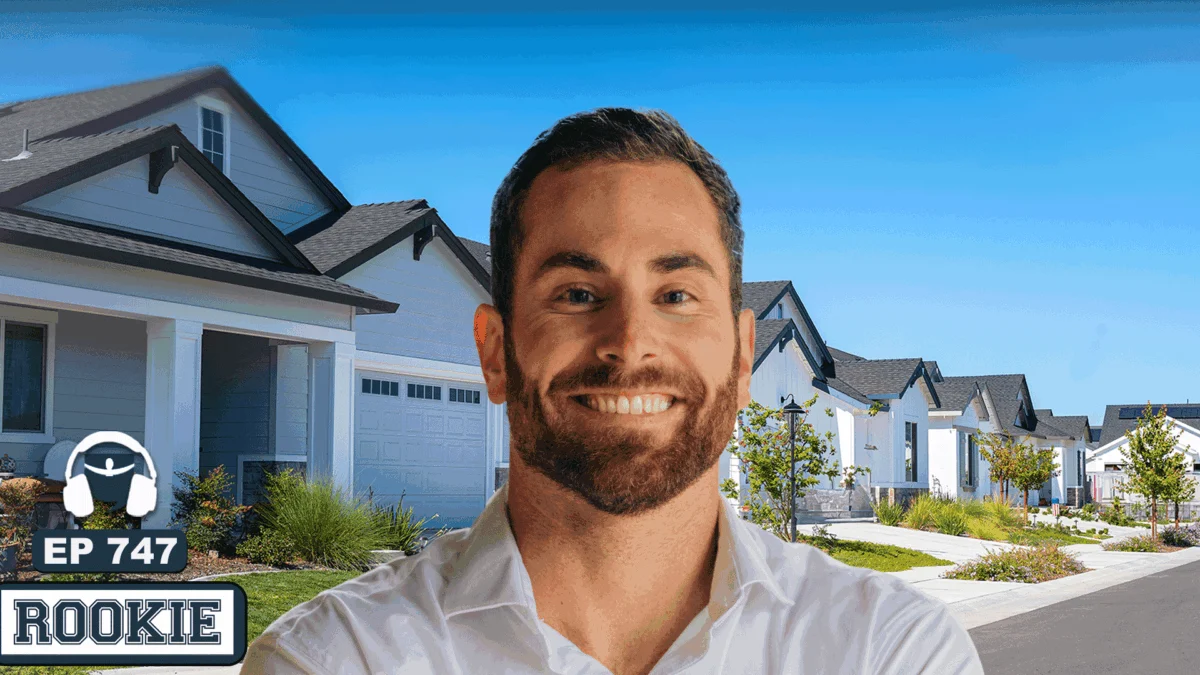
For many new real estate investors, the siren song of “unit count” and rapid portfolio expansion often masks a fundamental flaw: underwriting for the best-case scenario. In a volatile market, this optimism can be the difference between building wealth and drowning in debt. Luke Frizzell, a former Navy SEAL, has taken a decidedly different approach. By applying the rigorous “SMEAC” military mission planning framework to his investments, Frizzell has moved away from the high-maintenance treadmill of traditional rentals and into the lucrative, high-barrier-to-entry world of residential assisted living.
On a recent episode of the Real Estate Rookie podcast, Frizzell detailed his transition from a cash-strapped military homeowner to a sophisticated investor netting $3,000 in monthly cash flow per property—without ever operating the care business himself.
Main Facts: The "SMEAC" Philosophy
At the core of Frizzell’s success is the SMEAC framework—an acronym used by the U.S. military for mission planning: Situation, Mission, Execution, Admin/Logistics, and Command/Control.
Unlike investors who hunt for properties based on aesthetics or speculative appreciation, Frizzell treats every acquisition as a mission. He identifies his "buy box" (the mission) based on macroeconomic data, specifically focusing on the aging demographic in markets like Phoenix, Arizona.
By leveraging a "lease-to-operator" model, Frizzell separates the ownership of the real estate from the complexities of the healthcare business. He purchases residential properties, ensures they meet ADA (Americans with Disabilities Act) and state-specific code compliance, and leases them to professional care operators. This setup allows him to capture a commercial-grade rent premium while offloading the day-to-day headaches of staffing, food service, and resident management to a qualified third party.
A Chronology of Growth: From House Hack to Assisted Living
Frizzell’s journey did not begin in a boardroom, but in the trenches of active-duty service.
The Initial Struggle
In 2017, Frizzell purchased his first primary residence in Southern California for $650,000 using a VA loan. On a junior military salary, the property was a financial liability. “It was draining our bank account,” Frizzell recalled. During deployments, the burden of the mortgage weighed heavily on his family, serving as a harsh lesson in the dangers of negative cash flow.
The ADU Breakthrough
Recognizing that the property was underutilized, Frizzell pivoted. He invested $70,000—a combination of a refinance payout and personal savings—to convert his 400-square-foot garage into an Accessory Dwelling Unit (ADU). The result was immediate: $1,500 in monthly income and a forced appreciation of over $200,000 in the home’s value. This experience provided a 25% cash-on-cash return, proving that the most profitable investment is often the one you already own.
The Pivot to Assisted Living
By 2022, facing rising interest rates and a cooling real estate market, Frizzell realized his house-hacking model had reached its limit. He sought a strategy that provided consistent, high-yield cash flow without the "bandwidth suck" of short-term rentals or traditional multi-family management. His research into the senior care housing crisis revealed a massive supply-demand imbalance. He began acquiring homes and leasing them to professional operators, successfully scaling to five facilities in the Phoenix metro area.
Supporting Data: Why the Numbers Work
The economics of Frizzell’s model rely on the spread between market rent and the premium paid by specialized operators.
- Market Comparison: A standard residential home in Phoenix might command $3,000 to $3,200 per month in traditional rent. However, because Frizzell’s properties are retrofitted for senior care (ADA ramps, fire sprinklers, specialized layouts), he commands $8,000 per month in commercial lease payments.
- The Operator’s Spread: With 10 residents per home paying an average of $6,000 each in monthly care fees, the operator generates $60,000 in gross revenue. After paying Frizzell’s $8,000 rent, staff wages, and operational costs, the operator retains a significant profit, incentivizing them to maintain the property at a high standard.
- Asset Performance: Even after accounting for property taxes and insurance, Frizzell maintains a healthy cash flow. Crucially, the "triple net" nature of the arrangement means the operator covers utilities, cosmetic maintenance, and daily operations, making the asset essentially "hands-free" for the owner.
Official Responses: Managing the Risks
During the Real Estate Rookie interview, hosts Ashley Care and Tony J. Robinson pressed Frizzell on the inherent risks of such a specialized strategy.
The Eviction Question
When asked how he handles an operator who stops paying, Frizzell noted that commercial leases are significantly more "cut and dry" than residential tenant evictions. He shared an anecdote involving a regulatory shift in Arizona that briefly prevented his operators from obtaining a behavioral health license. Rather than defaulting to a hostile eviction, Frizzell utilized his "relationship-first" management style. He offered a temporary rent reduction in exchange for the operator’s cooperation in finding a replacement. This partnership approach ensured he never experienced a negative-cash-flow month.
The "Back to Basics" Debate
A point of contention arose regarding Frizzell’s lack of complex software or AI-driven automation. He relies on simple communication, QuickBooks for bookkeeping, and Mercury banking for ACH transfers.
- Frizzell’s Stance: He argues that over-reliance on tools can lead to "mental fogginess." By keeping his operational ecosystem simple, he remains more in tune with his business partners.
- The HVAC Clause: In a surprising reveal, Frizzell admitted to occasionally covering major repairs, such as a $15,000 HVAC unit, even when the lease dictated it was the operator’s responsibility. He views this as an investment in the long-term viability of the partnership.
Implications: The Future of Senior Housing
Frizzell’s model has implications that reach far beyond his own portfolio. He and his partners have launched "The RAL Room," a community and educational platform aimed at decentralizing senior care.
Decentralizing Senior Care
The prevailing narrative in the United States is that seniors in need of assistance must move into large, impersonal institutional facilities. Frizzell argues that the future lies in smaller, residential-style homes that offer personalized care. By empowering other investors to enter the space, he believes he can improve the quality of care on a national level while simultaneously solving the housing supply issue.
A Call to "Think Differently"
For the rookie investor, Frizzell’s journey serves as a permission slip to abandon the pursuit of "doors" in favor of "purpose." He challenges investors to ask, "How much cash flow do I actually need?" rather than "How many properties can I buy?"
As the real estate market continues to shift, the traditional buy-and-hold strategy is becoming increasingly difficult to execute for those without massive capital. Frizzell’s military-grade discipline suggests that the winning strategy in the current climate isn’t just about finding the right house—it’s about defining a mission, finding the right partners, and executing with a focus on value over vanity.
Whether one is a veteran or a civilian, the lesson remains the same: In any mission, the preparation you do before the deal is signed is exactly what determines your success after the keys are handed over. As Frizzell puts it, "Everything is figure-outable—you just have to be willing to be creative."