









By Financial News Desk
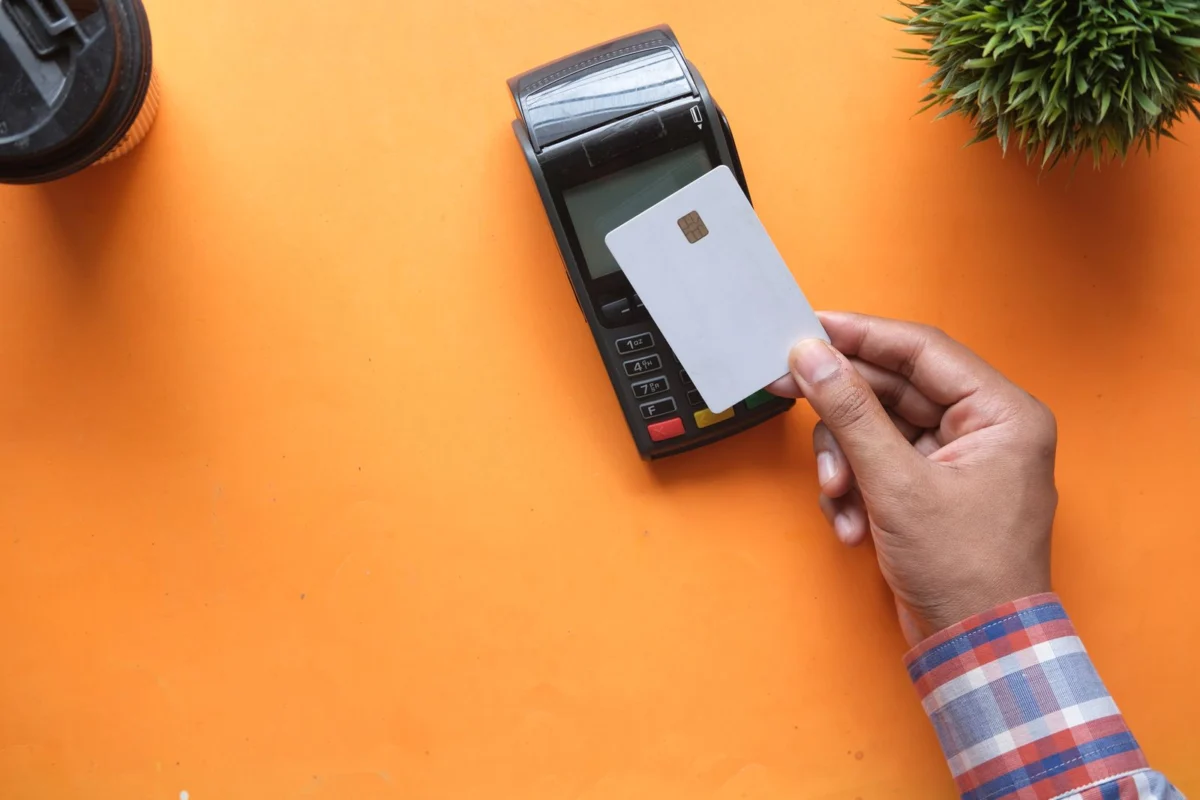
In the span of a few seconds, a modern consumer can execute half a dozen financial transactions. A tap for a morning artisanal coffee, an automated monthly renewal for a streaming service, an online impulse purchase during a lunch break, or a contactless payment for a rideshare ride. Individually, these micro-transactions register as negligible ticks on a digital ledger. Collectively, however, they represent a silent financial current capable of eroding even the most robust monthly budget.
For generations, the traditional approach to personal finance relied on end-of-month reconciliations—gathering stacks of paper receipts, logging into various banking portals, and manually sorting through credit card statements. By the time the typical consumer realized their spending had outpaced their income, weeks had passed, and the opportunity to course-correct had long since vanished.
Today, a technological shift is underway. Powered by mobile processing, secure cloud architecture, and open banking protocols, the modern money tracker app has transformed personal financial management from a tedious monthly chore into a real-time, pocket-sized awareness campaign. As consumer debt levels fluctuate and economic uncertainty persists, these applications are no longer viewed as mere novelty tools; they are becoming essential instruments for financial survival and wealth accumulation.
Main Facts: The Anatomy of Modern Micro-Spending
The core premise driving the adoption of expense-tracking applications is rooted in behavioral psychology: humans are notoriously poor at estimating cumulative minor expenditures.
According to financial behaviorists, consumers suffer from "pain of payment" fatigue, where digital and contactless payments reduce the psychological friction of spending. When cash is handed over physically, the brain registers a loss. When a smartphone is tapped against a terminal, that cognitive registration is muted.
- The Accumulation Effect: Small, recurring purchases—often dubbed "latte factors" or subscription creep—account for hundreds of dollars in undocumented monthly outflow for the average household.
- The Real-Time Gap: Traditional budgeting relies on retrospective analysis (looking backward at what was spent). Mobile money trackers introduce prospective and contemporaneous awareness (knowing exactly how much discretionary spending power remains before the next purchase is made).
- The Visibility Deficit: Most people drastically underestimate their spending in flexible categories like dining out, entertainment, and convenience shopping by 20% to 30% when relying on mental math alone.
By centralizing scattered accounts—checking, savings, credit cards, and investment portfolios—into a single unified dashboard, financial tracking apps bridge the gap between intent and execution.
Chronology: The Evolution of Personal Finance Tracking
To understand the current landscape of digital wealth management, it is helpful to trace how consumers have managed their money over the past several decades:
- The Paper Era (Pre-1990s): Financial tracking was strictly analog. Households maintained ledger books, balanced checkbooks manually with a pen, and relied on physical paper statements mailed monthly by banks. Budgeting required disciplined arithmetic and physical envelope systems.
- The Desktop Revolution (Late 1990s – 2000s): Software pioneers introduced desktop applications like early versions of Microsoft Money and Quicken. Users could download transaction files from bank websites and import them into personal computers. While revolutionary for the time, these systems lacked mobility and required tethered updates.
- The Early Web and Aggregation Phase (2010s): The advent of cloud computing and early financial aggregators (such as early iterations of Mint) allowed users to securely link their bank accounts to web-based platforms. For the first time, automated categorization became mainstream, though mobile interfaces were often clunky secondary experiences.
- The Mobile-First, Real-Time Era (Present Day): Modern applications—including platforms like PocketGuard, Copilot, and YNAB (You Need A Budget)—are built mobile-first. They leverage advanced Application Programming Interfaces (APIs) for instant bank syncing, utilize machine learning for intelligent transaction categorization, and deliver push notifications when spending anomalies or subscription price hikes occur.
Supporting Data: Understanding the Financial Literacy Gap
Financial industry data consistently highlights a profound disconnect between consumer confidence and actual financial preparedness. While surveys frequently show that a majority of adults believe they manage their money well, national savings rates and consumer debt levels tell a different story.
| Financial Metric / Behavior | Traditional Method (Manual/Mental) | Digital Tracking App Users |
|---|---|---|
| Budget Accuracy | Low (Estimated variance >25%) | High (Variance <5%) |
| Subscription Awareness | Often forgets 2–3 active services | Identifies 100% of recurring bills |
| Savings Rate Consistency | Intermittent, reactionary | Systematic, automated |
| Fraud/Error Detection Time | 30 to 60 days (Next statement) | 24 to 48 hours (Push notification) |
Furthermore, studies on consumer psychology indicate that individuals who actively monitor their transaction data at least three times a week reduce their discretionary spending by an average of 12% to 15% within the first 90 days of adoption. This reduction rarely stems from drastic lifestyle deprivation; rather, it is the natural byproduct of heightened consciousness. When individuals see their financial reality reflected accurately on their smartphone screens in real-time, unconscious spending naturally gives way to deliberate choices.
Official Responses and Industry Perspectives
Financial advisors, fintech developers, and cybersecurity experts offer diverse perspectives on the rapid integration of automated finance apps into daily life.
The Financial Planner’s Viewpoint:
Certified Financial Planners (CFPs) increasingly recommend digital tracking tools to their clients as a diagnostic prerequisite. “You cannot optimize what you do not measure,” notes a prominent advisory firm partner based in Chicago. “Before we can construct sophisticated investment or retirement strategies, we must first diagnose the bleeding in the client’s day-to-day cash flow. Apps do the heavy lifting of data collection that clients used to dread.”
The Fintech Developer’s Perspective:
Engineering teams behind modern tracking software emphasize user experience and frictionless design. The goal is to make financial hygiene as engaging as checking social media. By eliminating the friction of manual data entry through secure bank syncing, developers have seen user retention rates skyrocket compared to the spreadsheet era of the past.
The Security Expert’s Viewpoint:
Naturally, connecting bank accounts to third-party applications raises valid concerns regarding data privacy and cybersecurity. Industry security specialists stress that reputable apps employ read-only access protocols, robust tokenization, and bank-grade 256-bit SSL encryption. Users are advised to verify whether platforms utilize established open banking intermediaries (such as Plaid or Finicity) and whether they support multi-factor authentication (MFA).
Choosing Your Method: Automated Sync vs. Manual Control
When selecting a financial tracking strategy, users generally fall into two distinct camps, each with its own philosophical and practical advantages.
1. Automated Bank-Sync Apps
- How it works: Users securely link their checking, savings, and credit accounts. Transactions are automatically pulled, parsed, and categorized by algorithms in real-time.
- Pros: Exceptional time-saver; eliminates human error or forgotten receipts; provides immediate alerts for fraudulent activity or low balances.
- Cons: Requires granting third-party read access credentials; occasional syncing delays due to banking server updates.
2. Manual Entry & Privacy-First Trackers
- How it works: Users log every purchase by hand—either via specialized apps that do not require bank logins or through customized spreadsheets and notebooks.
- Pros: Maximum privacy and security (zero risk of credential exposure); forces a higher degree of mindfulness because every transaction must be physically recorded.
- Cons: High friction; prone to abandonment if the user falls behind by even a few days; easy to miss small automated fees.
Features to Look for in Modern Financial Apps
As the market matures, the feature sets of expense-tracking platforms have evolved far beyond simple debit-and-credit ledgers. When evaluating software options, consumers should look for a comprehensive suite of tools designed to support holistic financial wellness:
- Smart Categorization: The ability of the app to automatically sort purchases into logical buckets (groceries, utilities, travel, dining) with minimal manual correction.
- Recurring Bill Monitoring: Automated detection of subscription services, insurance premiums, and utility bills, alerting users to price hikes or forgotten renewals.
- "In-The-Bank" vs. "To-Spend" Calculators: Advanced tools—such as those pioneered by platforms like PocketGuard—calculate a user’s "safe to spend" amount after factoring in upcoming bills, savings goals, and necessary living expenses.
- Customizable Alerts: Real-time push notifications triggered by unusual spending spikes, low account balances, or approaching budget caps.
- Visual Reports and Trends: Clean, intuitive data visualizations (pie charts, bar graphs) that illustrate spending trajectories over weekly, monthly, and yearly intervals.
Implications: The Broader Economic Impact of Financial Mindfulness
The widespread adoption of mobile money tracking tools carries significant implications for both individual household stability and the broader macroeconomic landscape.
For the Individual Household
At the micro level, mastering daily cash flow creates a psychological cushion against unexpected economic shocks. Job losses, medical emergencies, or inflationary pressures become significantly less catastrophic when a household maintains an accurate, real-time understanding of its financial burn rate. By identifying and cutting low-value expenditures, consumers free up capital to redirect toward high-value objectives: building emergency funds, paying down high-interest revolving debt, investing in retirement accounts, or funding education.
For the Macroeconomy
On a macro level, heightened consumer awareness influences retail and service industries. As consumers become more cognizant of recurring subscription creep and unutilized services, subscription-based business models face greater scrutiny, forcing companies to compete more aggressively on genuine value rather than relying on consumer forgetfulness. Furthermore, financially literate consumers equipped with real-time budgeting tools tend to exhibit more resilient credit profiles, reducing default rates across consumer lending portfolios.
Conclusion: Shifting from Restriction to Awareness
A common misconception surrounding expense tracking is that it represents an exercise in austere self-denial—a digital warden designed to police every cup of coffee or weekend outing.
In practice, the exact opposite is true.
Effective financial tracking is not about restricting purchases; it is about empowerment through clarity. It answers the fundamental question every consumer faces: Where is my money actually going?
By leveraging modern financial technology—whether through automated dashboard aggregators like PocketGuard or dedicated manual ledgers—individuals reclaim authority over their economic lives. Financial awareness ceases to be an intimidating, once-a-month audit and becomes an integrated, effortless part of daily routine.
The sooner consumers embrace this shift in perspective, the easier it becomes to align their daily spending with their long-term personal goals, transforming modern micro-transactions from a silent budget killer into manageable, conscious choices.
What methods do you currently use to monitor your daily expenses? Have you found a digital tracking system or analog routine that keeps you organized and in control of your financial future? Share your thoughts in the comments below.