








By Travis Hornsby, CFA®, CFP®
Founder and CEO, Student Loan Planner
Main Facts: What Borrowers Need to Know About the Repayment Assistance Plan
The official application window for the newly introduced Repayment Assistance Plan (RAP) is officially open, allowing federal student loan borrowers to submit their applications online. Designed to reshape how millions of Americans manage their monthly federal student loan obligations, RAP has emerged as a critical alternative within the federal income-driven repayment (IDR) ecosystem.
For borrowers attempting to lower their monthly expenditures, understand eligibility thresholds, or navigate the often-confusing federal student aid portal, the application process requires careful attention to detail. Making a misstep during the digital submission can result in processing delays, miscalculated monthly obligations, or inadvertent forfeiture of valuable tax considerations—particularly for married borrowers.

The core facts surrounding the rollout of RAP include:
- Accessibility: Applications are currently live and accessible through the official federal student aid portal at StudentAid.gov.
- Target Audience: RAP is primarily structured to benefit borrowers currently restricted to the "Old IBR" (Income-Based Repayment) plan, as well as those seeking robust interest subsidies to prevent negative amortization and ballooning loan balances.
- Digital Integration: The Department of Education strongly encourages automated IRS data-sharing to streamline annual income recertification.
- Processing Timelines: Due to ongoing administrative constraints and staffing adjustments within the Department of Education, applicants should anticipate potential delays before their servicers officially transition them to the new plan.
Chronology: A Step-by-Step Walkthrough of the RAP Application Process
Applying for the Repayment Assistance Plan requires navigating several distinct digital checkpoints on the federal student aid website. To help borrowers avoid common pitfalls, the application process can be broken down into four sequential stages.
Step 1: Accessing the Student Aid Portal and Logging In
The journey begins by navigating to studentaid.gov/idr. Upon arriving at the platform, borrowers must authenticate their identity by logging into their Federal Student Aid (FSA) accounts.
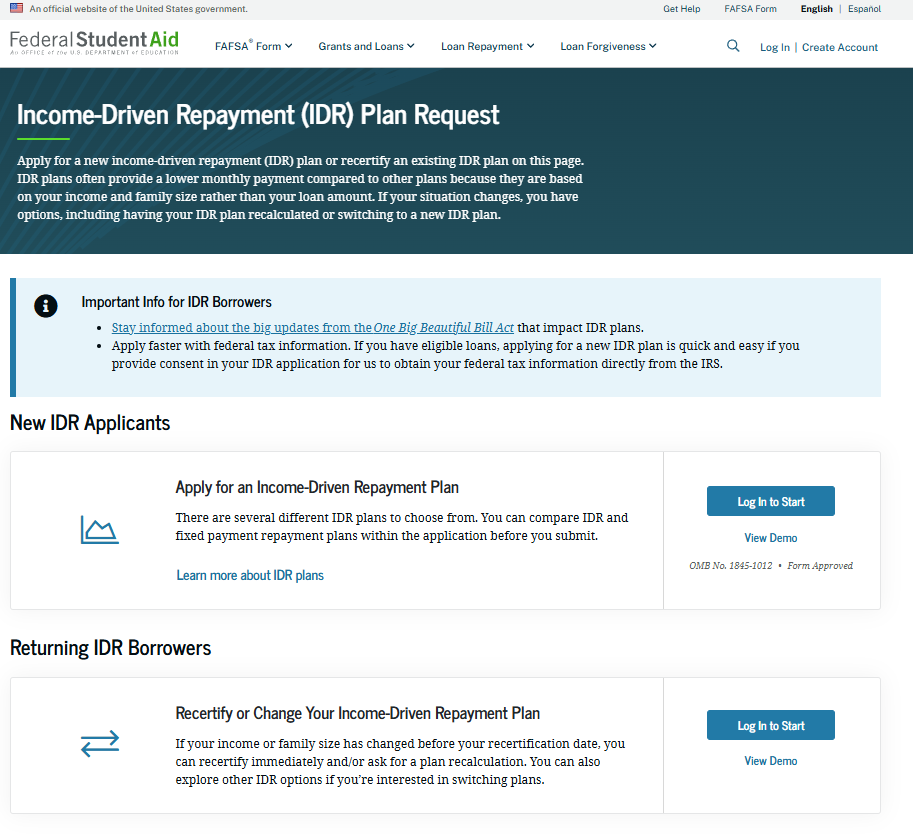
- Returning Borrowers: Individuals who are already enrolled in an alternative IDR plan must select the "returning borrowers" designation.
- New Applicants: Borrowers who have never utilized an income-driven repayment framework must select the button designated for new applicants.
Step 2: Authorizing IRS Data-Sharing and Confirming Demographics
Once authenticated, the system will prompt the applicant to authorize the Internal Revenue Service (IRS) to share relevant income data directly with the U.S. Department of Education.
- Why IRS Authorization Matters: Granting this permission is vital. It permits automated, seamless recertification of RAP payments in subsequent years, eliminating the administrative friction of manually submitting tax documents annually.
- Confirming Personal Data: Following IRS authorization, applicants must meticulously review, verify, and update their primary contact information, mailing address, and fundamental demographic details.
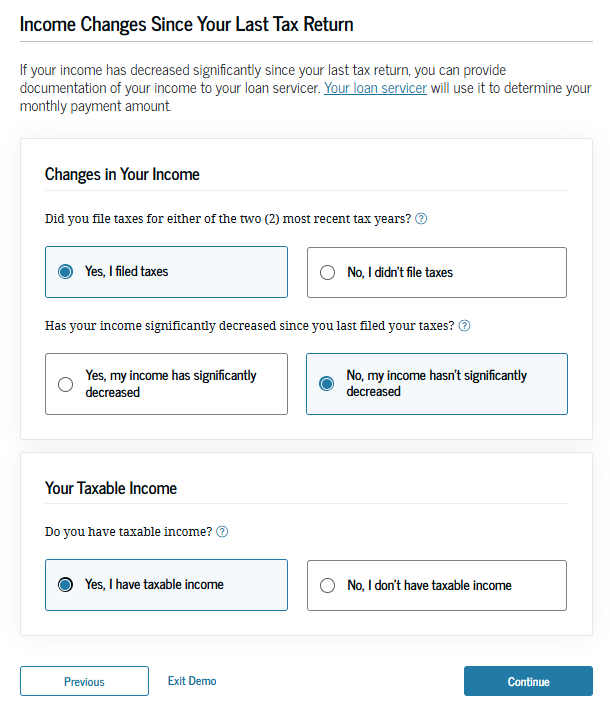
Step 3: Submitting Tax Filing and Income Information
This phase represents the most critical financial juncture in the application process. Borrowers are required to input their tax-filing status and verifiable income metrics.
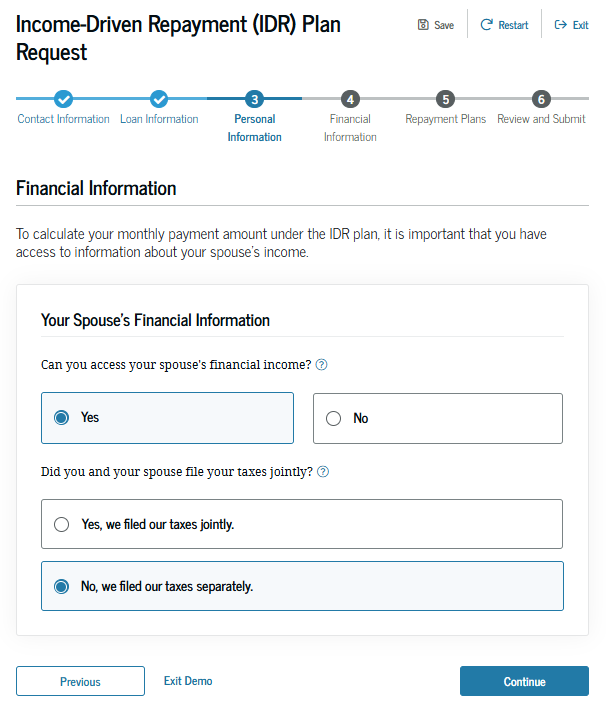
- Married Filing Status Considerations: For married borrowers, tax-filing status acts as the primary financial lever governing monthly obligations. Filing taxes separately (Married Filing Separately, or MFS) can effectively exclude a spouse’s income from the RAP calculation, driving down the borrower’s calculated monthly payment. However, this strategy can simultaneously increase overall household tax liabilities or eliminate specific tax credits and deductions. Borrowers must run financial simulations both ways before filing taxes to determine the net benefit.
- Family Size and Income Verification: Following the tax configuration, applicants must declare their accurate family size. The system will subsequently display automated income figures derived from IRS data. Borrowers must verify that these figures align with their individual circumstances.
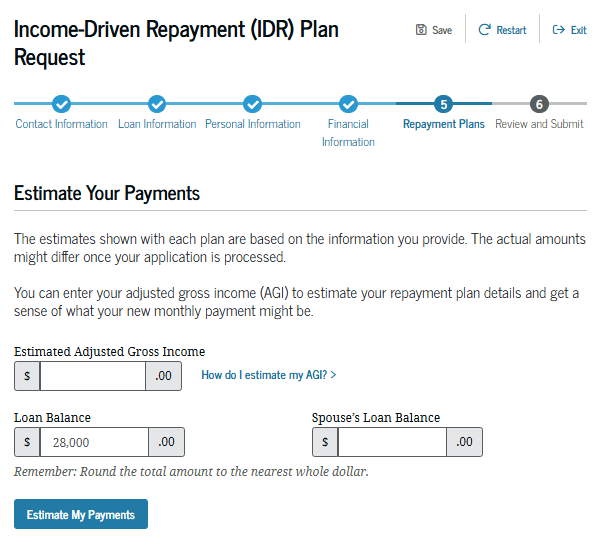
Step 4: Estimating Payments, Selecting RAP, and Submitting
In the final operational phase, the portal generates a payment estimation screen. Here, applicants can evaluate estimated monthly expenditures across various plans and select the Repayment Assistance Plan (RAP).
- Troubleshooting Missing Options: If RAP does not appear as an available selection on the dashboard, it usually indicates an underlying eligibility barrier. Borrowers encountering this issue should immediately halt the application and consult their loan servicer or a qualified student loan consultant.
- Final Legal Review and Submission: After reviewing the mandatory federal disclosures and legal disclosures, the borrower must submit the application. Once confirmed, the formal submission is logged with the Department of Education.
Supporting Data: Who Stands to Benefit Most From RAP?
Evaluating the financial utility of the Repayment Assistance Plan requires analyzing structural differences between federal repayment vehicles. Market data and student loan analytics indicate that RAP is not a universal solution; rather, it serves specific borrower demographics with high precision.
Primary Beneficiaries
- Old IBR Captives: Borrowers historically locked into the legacy "Old IBR" plan often face less favorable terms compared to modern IDR iterations. RAP serves as a modernized alternative designed to alleviate the financial pressures experienced by this cohort.
- Interest Subsidy Seekers: Borrowers accumulating unsustainable amounts of unpaid interest due to low initial monthly payments can utilize RAP’s structural interest subsidies to protect their underlying principal balances from compounding aggressively.
Alternative Options for PSLF Seekers
While RAP offers immediate cash-flow relief, borrowers actively pursuing Public Service Loan Forgiveness (PSLF) must weigh its long-term implications carefully. For certain professionals, alternative plans such as New IBR or the PAYE (Pay As You Earn) plan may still offer superior long-term savings depending on debt-to-income ratios and projected forgiveness timelines.
Official Responses and Administrative Realities
The rollout of the Repayment Assistance Plan occurs within a complex administrative environment. The U.S. Department of Education has faced persistent budgetary and staffing hurdles while managing millions of active student loan accounts, IDR recertifications, and platform transitions.
Department of Education Posture
Federal officials have emphasized that digital submissions via StudentAid.gov represent the most secure and expeditious path for borrowers transitioning to RAP. By integrating direct IRS data-sharing, the Department aims to minimize manual processing errors and reduce the administrative burden placed on federal loan servicers.
Servicer Processing Delays
Despite technological streamlining, structural backlogs remain a reality. Historically, transitioning between IDR plans can require anywhere from several weeks to multiple months. Industry analysts note that an influx of new applications under RAP will likely test the operational capacity of federal loan servicers. Consequently, applicants should prepare for a transitional waiting period during which their existing repayment terms may temporarily remain in effect.
Implications: Strategic Financial Planning for Borrowers
The introduction of the Repayment Assistance Plan alters the decision-making matrix for households managing significant federal student debt.
1. The Intersection of Tax Strategy and Student Loans
The tactical use of tax-filing status under RAP underscores the reality that effective student loan management cannot be decoupled from personal income tax planning. Married couples must evaluate the trade-offs between reduced monthly student loan payments via Married Filing Separately versus the potential tax penalties incurred by forfeiting joint filing benefits. Comprehensive financial modeling prior to filing annual tax returns is no longer optional—it is a core component of debt optimization.
2. Tailored Guidance Versus One-Size-Fits-All Solutions
Because federal student loan policies interact dynamically with career trajectories, family planning, and tax legislation, generalized advice often proves insufficient. Borrowers navigating complex scenarios—such as dual-income households with high debt loads, medical professionals targeting specialized forgiveness tracks, or individuals uncertain of their long-term career permanence—benefit significantly from personalized evaluations.
3. Professional Support and Resources
For those uncertain whether transitioning to the Repayment Assistance Plan aligns with their long-term financial independence goals, objective third-party evaluations can provide clarity. Utilizing specialized analytical tools, such as tailored student loan assessment quizzes or consulting with certified financial planners who specialize in student debt, helps mitigate uncertainty and protects borrowers from costly structural missteps.