







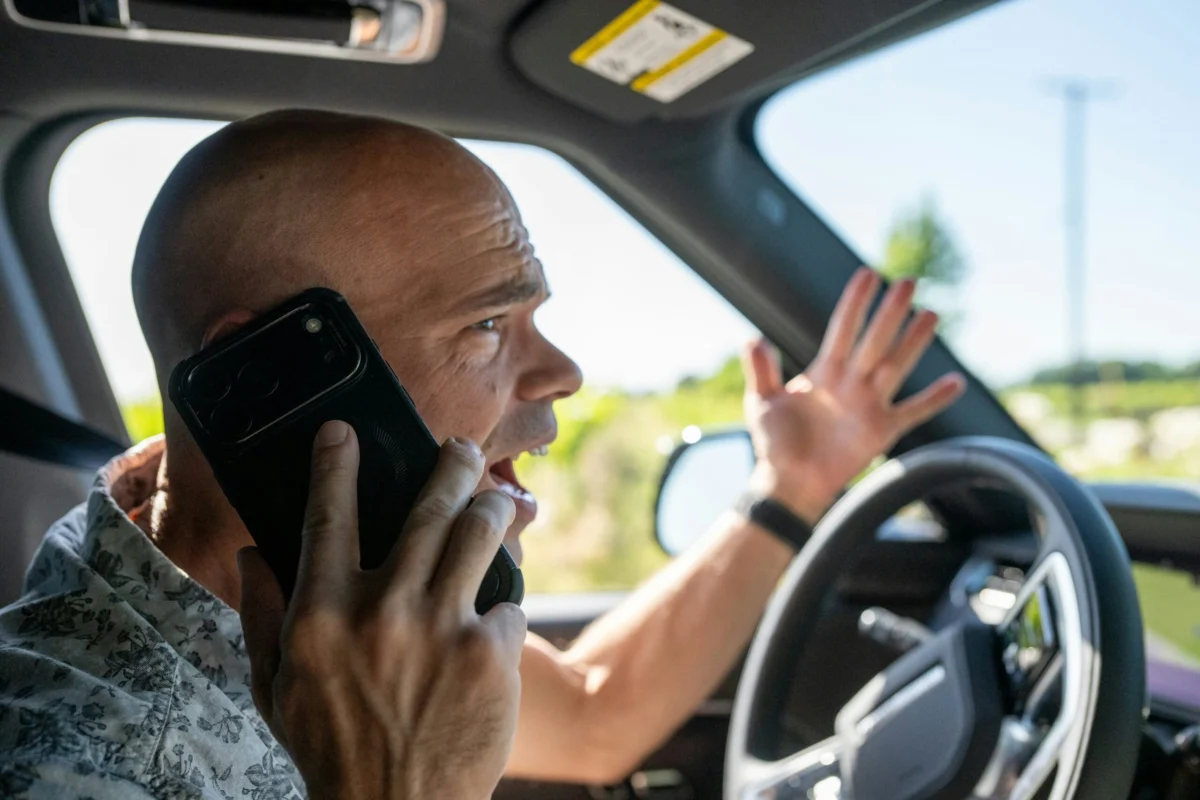
September 24, 2026 — As the United States marches toward the 2026 midterm elections, the Federal Communications Commission (FCC) finds itself at the center of a brewing digital firestorm. A petition filed by the conservative advocacy group Club for Growth has ignited intense debate over the future of voter communication, personal privacy, and the sanctity of the democratic process. The group is urging the Commission to carve out an exemption to federal law that would allow political campaigns and committees to deploy AI-generated, automated voice calls directly to citizens’ cellphones without prior consent.
For privacy advocates and election integrity watchdogs, the proposal represents a dangerous threshold. If approved, the FCC would effectively dismantle long-standing protections established by the Telephone Consumer Protection Act (TCPA), potentially subjecting millions of Americans to a deluge of synthetic, AI-powered solicitations during the most sensitive window of the electoral cycle.
The Core Conflict: Automation vs. Consent
At the heart of the matter is the Telephone Consumer Protection Act (TCPA), a cornerstone of American consumer law designed to curb the reach of unsolicited telemarketing. Under current regulations, robocallers—automated systems that use pre-recorded or artificial voices—must secure express prior consent from a consumer before dialing a cellphone number. This barrier has historically served as a critical firewall, protecting the public from the invasive reach of automated outreach.
The Club for Growth’s petition argues that the existing regulatory framework is outdated and that modern political discourse requires more efficient channels for voter engagement. They propose a "limited" alternative: allowing AI-driven political calls to cellphones, provided that each caller limits their reach to three calls per 30-day period and honors "stop" requests within 10 days.
However, critics argue that these safeguards are mathematically and logistically hollow. Because the exemption would apply to any political entity—including thousands of Super PACs, individual candidate campaigns, non-profits, and partisan advocacy groups—the cumulative effect would be a constant, inescapable barrage of calls. If every political actor utilized their three-call allowance, an average American could receive hundreds of unsolicited AI calls in a single month, rendering the "three-call" limit effectively meaningless.
A Chronology of the Regulatory Stand-off
The current regulatory tension is the culmination of years of rapid advancements in generative AI and a shifting political landscape that prizes direct voter contact.
- Pre-2026: AI voice-cloning technology moves from experimental research labs to mass-market availability. Concerns regarding "deepfakes" grow as synthetic voices become indistinguishable from human speakers.
- Early 2026: Political consultants begin exploring the cost-effectiveness of generative AI. By using LLMs (Large Language Models) coupled with voice synthesis, campaigns can create personalized, interactive scripts at a fraction of the cost of traditional phone banks.
- Mid-2026: The Club for Growth files a formal petition with the FCC, arguing that current TCPA restrictions unfairly limit the ability of political organizations to communicate with the electorate.
- September 2026: The FCC officially opens the matter for public comment, acknowledging the gravity of the potential precedent. The Commission invites input from technology experts, privacy advocates, and the general public, setting the stage for a final decision that could redefine electioneering for the remainder of the decade.
The Peril of Synthetic Misinformation
The implications of permitting AI-driven robocalls extend far beyond mere annoyance. As the technology matures, it has brought with it a host of documented defects, most notably "hallucinations"—instances where AI models present false information as absolute fact with high confidence.
In the context of a midterm election, the stakes are existential. An AI-powered bot, trained on campaign talking points but prone to erratic outputs, could inadvertently disseminate incorrect polling locations, falsified candidate records, or inflammatory claims about opponents. Unlike a human volunteer, who can be held accountable for their statements, an AI agent is a black box.
Furthermore, the "10-day stop" provision in the Club for Growth’s proposal is viewed by many as a loophole that favors bad actors. During the final 72 hours of an election, when misinformation is most damaging and least likely to be corrected, the ability to bombard voters with AI calls would remain unchecked. Once a call is received, the damage to the voter’s perception is often irreversible, regardless of whether a "stop" request is processed after the election is over.
Implications for Democracy and Data Privacy
The broader implications of this petition speak to the erosion of digital boundaries. If the FCC prioritizes the political messaging needs of organizations over the privacy of the individual, it risks a permanent shift in how Americans interact with their devices.
The Erosion of Truth
The rise of voice-cloning technology means that bad actors can now mimic the voices of trusted local officials, community leaders, or even family members. When these synthesized voices are delivered via automated calls, the cognitive burden on the voter increases significantly. Distinguishing between a legitimate get-out-the-vote effort and a malicious "deepfake" aimed at voter suppression becomes an impossible task for the average citizen.
The Psychological Toll
Continuous, unsolicited AI communication threatens the psychological well-being of the electorate. We are entering an era of "attention scarcity," where the digital space is already saturated with advertisements and notifications. Allowing political actors to bypass the "consent" firewall will exacerbate digital fatigue, potentially leading to voter cynicism and, ultimately, lower participation rates.
A Precedent for Future Intrusion
If the FCC grants this exemption to political entities, it establishes a dangerous legal precedent. Once the "consent" barrier is lowered for political speech, it becomes significantly harder to justify maintaining that barrier for commercial or non-profit interests. The TCPA has been the primary defense against the total commodification of the personal cellphone; piercing that shield for political purposes could lead to a slow-motion collapse of all mobile privacy protections.
Official Responses and Public Engagement
The FCC’s request for public comment has mobilized a broad coalition of stakeholders. Privacy advocates, such as the Electronic Frontier Foundation and various consumer protection watchdogs, have urged the Commission to reject the petition outright. They argue that the FCC has a mandate to protect the integrity of the nation’s telecommunications infrastructure, and that "integrity" is incompatible with the mass-deployment of deceptive, automated synthetic agents.
Conversely, supporters of the petition argue that the First Amendment and the importance of civic engagement necessitate a more permissive regulatory approach. They posit that the "three-call" limit is a fair compromise that balances the need for political outreach with the convenience of the voter.
How to Make Your Voice Heard
The FCC is currently accepting public comments on this issue under Proceeding 02-278. Citizens are encouraged to participate in the democratic process by filing their own perspectives. The process is straightforward:
- Navigate to the FCC’s Electronic Comment Filing System (ECFS).
- On the "Proceeding(s)" line, enter 02-278.
- Provide your name, address, and contact information.
- Draft a concise comment expressing your concerns regarding AI-voiced robocalls and the potential for misinformation.
- Review your submission for accuracy, agree to the privacy terms, and click "Submit."
Conclusion: A Line in the Sand
The FCC’s decision on the Club for Growth petition is more than a technical ruling on telecommunications law; it is a defining moment for the future of the American electoral process. We are standing at a crossroads where the technological capacity for mass persuasion is colliding with the fundamental right to be left alone.
If the Commission allows political entities to unleash AI-powered robocalls, it will be effectively choosing to prioritize the volume of political noise over the quality of our democratic discourse. The risks—ranging from the spread of sophisticated misinformation to the total loss of privacy for the American voter—are simply too high to ignore.
As the midterms approach, the burden of proof lies with those who wish to dismantle the existing protections. Until they can demonstrate that AI-driven robocalls can be deployed without deception, without causing significant harm, and without violating the privacy of the average citizen, the FCC must maintain its commitment to the Telephone Consumer Protection Act. The integrity of our elections and the sanctity of our personal devices depend on it.