








In an era where remote work portals, automated messaging, and algorithmic workflows frequently replace face-to-face interaction, a striking paradox has emerged at the heart of the modern economy. While digital transformation accelerates across every industry, the human element—specifically, interpersonal competence—has never been more critical to organizational survival.
A comprehensive new data release, the CNBC and SurveyMonkey Social Skills Pulse Survey, has illuminated this paradigm shift. The findings offer profound insights into the indispensable role that social skills play in today’s workplace. For small business owners navigating tight labor markets, shifting employee expectations, and the complexities of hybrid team dynamics, these findings are more than just academic observations; they are a strategic roadmap for sustainable growth, talent retention, and organizational resilience.
Main Facts: The Hard Truth About Soft Skills
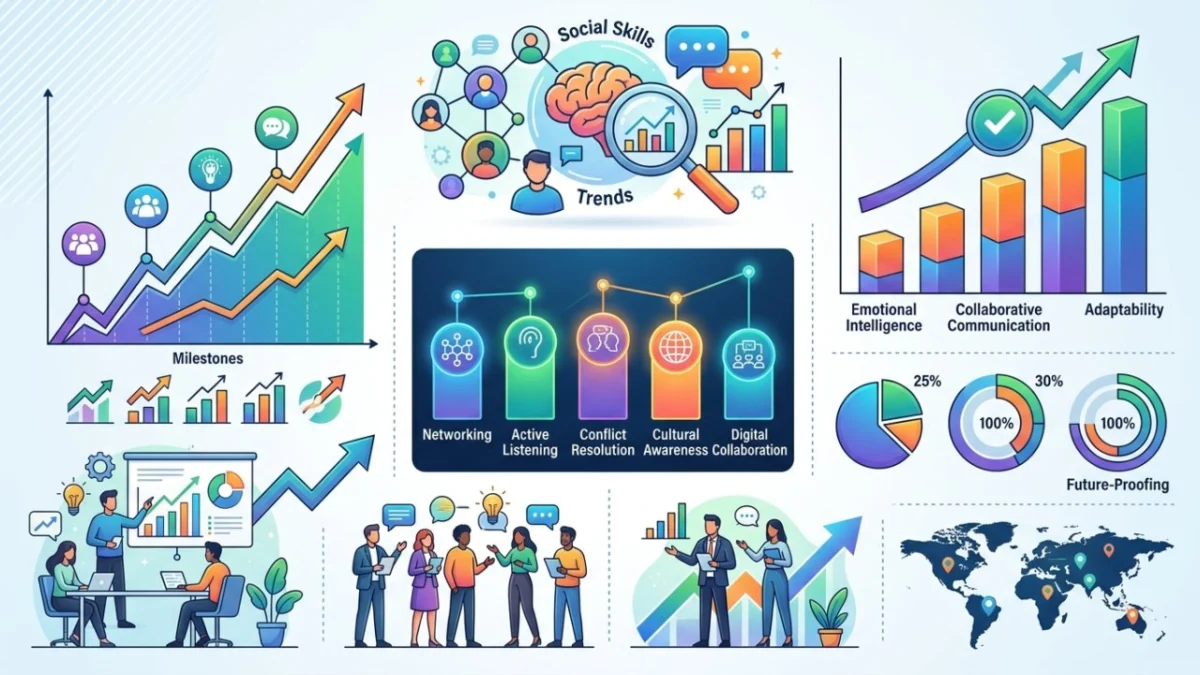
At first glance, the concept of "soft skills" might sound secondary to technical execution, coding proficiency, or financial acumen. However, the CNBC and SurveyMonkey data dismantle this outdated notion entirely. According to the survey’s core findings, over 80% of respondents identified strong communication skills as an absolute essential in the contemporary workplace.
Furthermore, the data underscores emotional intelligence (EQ) as the foundational engine of modern corporate success. An overwhelming 91% of survey participants asserted that high emotional intelligence directly enhances cross-functional collaboration and actively fosters a positive, psychologically safe work environment. These statistics send a clear message to employers: technical knowledge may get a candidate through the door, but emotional intelligence and communication capabilities determine how long they stay and how much they achieve.
Unlike large corporations with sprawling human resources departments and dedicated corporate culture teams, small businesses operate in high-visibility, tight-knit environments. In these settings, interpersonal friction or a lack of basic communication hygiene can derail a project, poison team morale, and immediately impact the bottom line. The CNBC and SurveyMonkey survey highlights that the modern workplace demands a workforce equipped with interpersonal competencies that transcend traditional job descriptions.
Chronology: The Evolution of Workplace Expectations
To understand how the modern workplace arrived at this juncture, it is helpful to trace the chronological evolution of employer priorities over the past two decades.
The Early 2000s: The Technical Supremacy Era
At the turn of the century, the primary corporate focus centered on digital literacy, technical certification, and hard skill acquisition. As personal computers and enterprise software became ubiquitous, businesses prioritized candidates who could operate complex systems, write code, or manage spreadsheets. Interpersonal skills were often viewed as secondary "nice-to-haves" rather than core competencies.
The 2010s: The Rise of Collaboration and Culture
As businesses transitioned into the cloud era and agile methodologies took root, the limitations of hyper-specialized, siloed technical work became apparent. Organizations realized that complex projects required cross-functional teamwork. This decade saw the gradual elevation of "culture fit," brainstorming sessions, and basic team-building exercises, though technical skills still dominated recruitment metrics.
The 2020s: The Pandemic Pivot and Digital Isolation
The global disruption of the COVID-19 pandemic permanently altered how human beings interact professionally. The sudden pivot to remote and hybrid work models meant that casual hallway conversations, impromptu brainstorming, and organic mentorship moments vanished overnight. Communication became heavily mediated through screens, Slack channels, and email threads.
Paradoxically, this digital isolation highlighted a massive deficit in digital communication and empathy. Misunderstandings multiplied, burnout spiked, and organizational culture frayed.
The Present Day: The Social Skills Renaissance
Enter the CNBC and SurveyMonkey Social Skills Pulse Survey. Today, business leaders recognize that as artificial intelligence and automation take over routine technical tasks, what remains uniquely human—empathy, nuanced negotiation, active listening, and conflict resolution—is the true differentiator. The modern timeline of work has evolved from valuing what an employee can produce in isolation to how they can co-create value within a dynamic human network.
Supporting Data: Breaking Down the Survey Metrics
A deeper dive into the metrics provided by the CNBC and SurveyMonkey initiative reveals critical nuances that small business owners must factor into their operational strategies.
- 80%+ Communication Threshold: More than four out of five surveyed professionals stated that robust communication skills are non-negotiable for daily workplace functioning. This includes not only public speaking or client-facing presentations, but written clarity, asynchronous communication hygiene, and active listening.
- 91% Emotional Intelligence Benchmark: A staggering 91% of respondents agreed that emotional intelligence is a primary driver of successful collaboration and positive workplace culture. This metric cuts across industries, proving that technical brilliance without self-awareness and social awareness is a liability.
- The Generational Divide: One of the most intriguing discoveries of the survey involves generational divergences in workplace values. Younger employees—specifically Millennials and Generation Z—place a significantly higher premium on social skills, emotional intelligence, and interpersonal transparency than their older counterparts.
This generational shift signals a profound cultural transformation. Younger workers entering the labor market expect employers to value their holistic well-being, facilitate open dialogue, and cultivate empathetic leadership. Small business owners who fail to adapt to these shifting cultural expectations risk alienating top-tier young talent who view toxic communication or low EQ as dealbreakers.
Official Responses and Expert Perspectives
Industry leaders and survey administrators have been vocal about what these findings mean for the broader economic landscape.
Highlighting the operational necessity of these traits, a spokesperson from SurveyMonkey remarked:
"Social skills are paramount in enabling teams to communicate effectively and work collaboratively toward shared goals."
This perspective resonates deeply within the small business ecosystem. Because small businesses typically operate with leaner staffs, every single employee represents a substantial percentage of the overall team dynamic. When one individual struggles with basic interpersonal dynamics, the disruption is immediate and palpable across the entire organization.
Management experts commenting on the survey emphasize that soft skills are no longer "soft" in terms of their impact—they are foundational "hard currency" in a competitive marketplace. Business psychologists note that emotional intelligence acts as a social glue, reducing cognitive friction during high-stress periods and allowing small, agile teams to pivot rapidly in response to market disruptions.
Implications for Small Business Owners
The insights derived from the CNBC and SurveyMonkey survey carry direct, actionable implications for small business owners across three critical operational pillars: recruitment, retention, and training.
1. Strategic Recruitment and Hiring
In an increasingly competitive job market, small businesses often struggle to compete with large enterprises on base salary or expansive benefits packages. However, they can win the talent war by offering superior workplace culture and deep mentorship.
By integrating behavioral assessments and situational interview questions focused on emotional intelligence, conflict resolution, and teamwork into the hiring process, small business owners can identify candidates who not only possess the required technical resume bullets but will also elevate the entire team. Hiring for social skills leads to enhanced productivity, smoother workflows, and dramatically lower turnover rates.
2. Tailored Training and Professional Development
Recognizing that social skills exist on a spectrum, proactive small businesses are moving beyond passive observation and actively investing in interpersonal training. Implementing structured workshops, communication bootcamps, and emotional intelligence modules can yield massive returns.
However, business owners must approach training with strategic intention. Programs implemented merely for the sake of corporate compliance often result in employee disinterest and cynicism. To maintain high engagement, training initiatives must feature clear, measurable objectives that tie back to daily workflows, demonstrating to employees that their personal growth directly benefits both them and the organization.
3. Navigating Team Disparities and Psychological Safety
Enhancing social skills across an organization is not without its challenges. Employees possess vastly different baselines of comfort when it comes to interpersonal interaction, group discussions, and vulnerability.
More outgoing, naturally articulate staff members may dominate team settings, while introverted or neurodivergent employees may feel intimidated or overwhelmed. Small business owners must cultivate a supportive, psychologically safe environment where all communication styles are respected, and every team member feels empowered to develop their interpersonal toolkit at their own pace.
Conclusion: Soft Skills as Hard Currency
In a world where corporate efficiency often threatens to eclipse our shared humanity, the CNBC and SurveyMonkey Social Skills Pulse Survey serves as an essential wake-up call. It reminds business leaders that no amount of technological automation can replace the foundational power of genuine human connection.
For small business owners, embracing this reality is no longer optional. By prioritizing social skills in hiring, fostering emotional intelligence through targeted professional development, and aligning interpersonal training with overarching corporate goals, small businesses can inoculate themselves against volatility.
Ultimately, enterprises that champion social skills will cultivate the innovation, agility, and deep resilience required to not only survive, but thrive, in the ever-evolving landscape of modern commerce.
To explore the complete survey data, methodology, and additional insights, visit the original publication on the SurveyMonkey Curiosity Blog.