







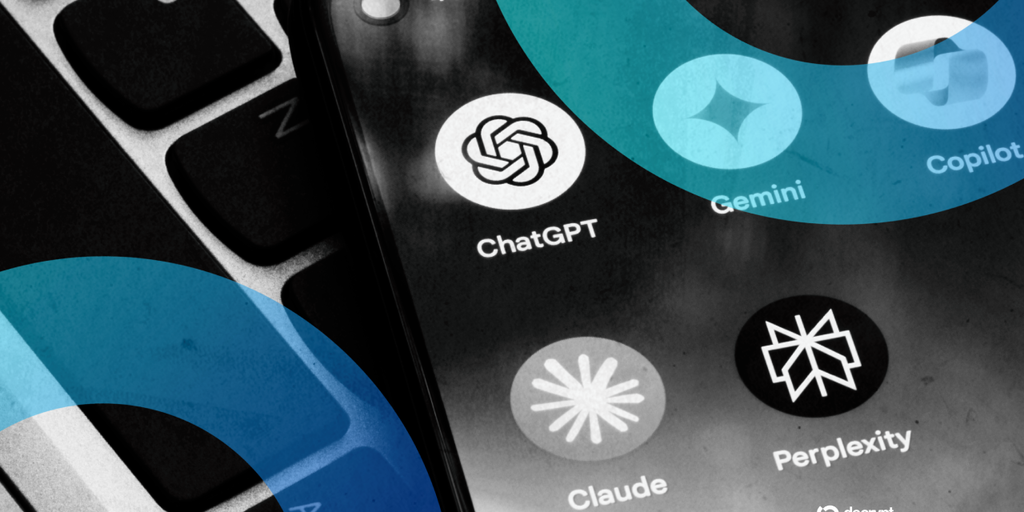
STOCKHOLM — In a decisive move underscoring mounting European anxieties over artificial intelligence and data sovereignty, Sweden’s Government Offices have announced a sweeping ban on popular consumer AI tools, including OpenAI’s ChatGPT and Anthropic’s Claude. Effective Monday, civil servants operating on official state computers will be blocked from accessing the standalone platforms.
The directive, first reported by Sweden’s national public broadcaster Sveriges Radio, establishes Microsoft’s Copilot as the sole approved artificial intelligence assistant for the administrative body supporting the prime minister and the cabinet.
The policy shift highlights a broader, continent-wide reckoning within public sector institutions. As generative AI becomes deeply embedded in daily workflows, European governments are scrambling to establish stringent regulatory boundaries between open consumer-facing applications and secure enterprise environments.
Main Facts
The new policy implemented by Sweden’s central administration is built on several key pillars:
- The Ban: Starting Monday, access to ChatGPT and Claude on official Government Offices hardware will be restricted.
- The Exception: Microsoft’s Copilot remains the only sanctioned AI utility for general staff use, following a rigorous security review and subsequent hardening of its administrative settings by government IT specialists.
- The Justification: Mikael Wettercrantz, the Government Offices’ director of digitalisation, cited severe information security vulnerabilities stemming from the use of consumer-grade AI services devoid of formal corporate data-processing agreements.
- The Underlying Vulnerability: Unregulated consumer AI tools transmit user queries to external, cloud-based servers. Under foreign jurisdictions—specifically United States federal law—authorities can legally compel technology companies to surrender stored data, creating profound legal and national security liabilities for foreign states.
- The Internal Workaround: Despite the frontline ban, certain employees will retain access to the restricted models via a bespoke, internally constructed AI platform managed by the Government Offices, though officials have declined to specify user thresholds or exact operational restrictions.
Chronology of the Swedish Public Sector AI Crackdown
The restriction enacted by the Government Offices is not an isolated incident; rather, it represents the crest of a mounting wave of regulatory caution across Swedish state agencies:
- Early 2023: Following Italy’s pioneering temporary ban on ChatGPT over privacy concerns, European data protection authorities begin scrutinizing how large language models ingest and process personal data.
- Late 2023 – 2024: Swedish agencies begin noting ad-hoc, uncoordinated adoption of generative AI tools among civil servants. Internal audits reveal potential leaks of sensitive public sector data into third-party training pipelines.
- 2024–2025: Several key institutions enact individual bans. Sweden’s Tax Agency and the National Board of Institutional Care independently restrict consumer AI platforms. Meanwhile, an internal audit at the Swedish Transport Administration reveals approximately 10 distinct AI services being utilized in a "widespread and risky way."
- Early 2026: Microsoft integrates Anthropic’s Claude models directly into its enterprise ecosystem as an optional feature, complicating the technological distinctions between competing AI providers.
- October 2026: Mikael Wettercrantz posts an internal intranet directive announcing the formal restriction of standalone ChatGPT and Claude applications across Sweden’s Government Offices, directing all standard AI workflows toward a vetted instance of Microsoft Copilot.
Supporting Data and Institutional Landscape
The rapid proliferation of artificial intelligence within government bureaucracies has repeatedly clashed with statutory obligations regarding public transparency, state secrets, and citizen privacy.
According to internal risk assessments conducted across Swedish state agencies, civil servants frequently paste sensitive documents, draft legislation, and confidential communications into consumer AI interfaces to summarize text, translate languages, or brainstorm policy. Because consumer-grade platforms often retain user inputs to retrain their underlying models, proprietary state data risks being inadvertently absorbed into commercial knowledge bases.
The legal exposure is exacerbated by cross-border data transfers. When a European civil servant queries a U.S.-hosted large language model, that data leaves European jurisdiction. U.S. intelligence and law enforcement agencies operating under statutory frameworks like the Foreign Intelligence Surveillance Act (FISA) or administrative subpoenas can demand access to data held by American cloud providers, regardless of where the data originated or whose sovereignty it concerns.
To mitigate this, enterprise agreements are legally binding contracts that explicitly dictate:
- That user inputs will not be utilized for model training.
- That data at rest and in transit must meet specific encryption standards.
- That data retention policies strictly limit how long logs are maintained before permanent deletion.
While Sweden’s Government Offices put Microsoft’s Copilot through this rigorous vetting process—subsequently elevating its internal security configurations—no such enterprise arrangements were established for OpenAI’s ChatGPT or Anthropic’s Claude prior to their widespread adoption by staff.
Official Responses and Bureaucratic Nuances
Explaining the rationale behind the clampdown on the staff intranet, Mikael Wettercrantz pointed directly to tangible security failures observed within the administration.
"We have seen several examples of problematic use of open AI services," Wettercrantz wrote. "The examples concern both the sensitivity of the information that has been entered and how the AI-generated responses have been handled."
However, the line drawn by the Swedish government between "banned" and "approved" tools contains notable technical blurriness.
In early 2026, Microsoft integrated Anthropic’s Claude architecture as an option within its broader enterprise ecosystem. Within the European Union, Anthropic models default to an "off" state, requiring system administrators to actively toggle them on. The Government Offices have thus far declined to clarify whether their specific, approved instance of Microsoft Copilot has Claude capabilities enabled. Consequently, civil servants barred from accessing Claude directly via Anthropic’s interface may still inadvertently interact with Claude’s underlying technology through the sanctioned Microsoft portal.
Furthermore, other Swedish state agencies are moving at varying speeds. The Enforcement Authority—tasked with high-stakes debt collection and court-ordered asset seizures—is currently drafting its own formal policy regarding generative AI. These localized restrictions reflect an administrative ecosystem attempting to catch up with a runaway technological revolution.
Wider European Implications
Sweden’s measured approach stands in stark contrast to more drastic measures adopted elsewhere in European governance.
In February, the European Parliament took a hardline stance by implementing a blanket ban on all AI features across corporate work devices—including ChatGPT, Claude, and Microsoft Copilot alike. The parliamentary administration concluded that no available commercial product could offer absolute guarantees against data leakage or foreign surveillance under current regulatory frameworks.
Italy’s groundbreaking 2023 enforcement action against OpenAI served as the catalyst for these continental anxieties, demonstrating that national data protection authorities (DPAs) are willing to enforce the EU’s General Data Protection Regulation (GDPR) against AI developers.
By sanctioning Microsoft while shutting out OpenAI and Anthropic, Sweden is carving out a middle path. Stockholm is attempting to balance the undeniable productivity gains of generative AI against the non-negotiable imperatives of national cybersecurity.
As public sector bodies across Europe grapple with the digital age, the Swedish model illustrates both the necessity of institutional control and the messy, overlapping realities of modern software supply chains—where sweeping bans on specific brand names may do little to keep underlying technologies out of the back door.