








As investors scan across asset classes—from residential real estate and gold to cryptocurrency and equities—prices remain stubbornly high across nearly every sector. Yet, one segment of the broader economy stands out as a stark exception: commercial real estate.
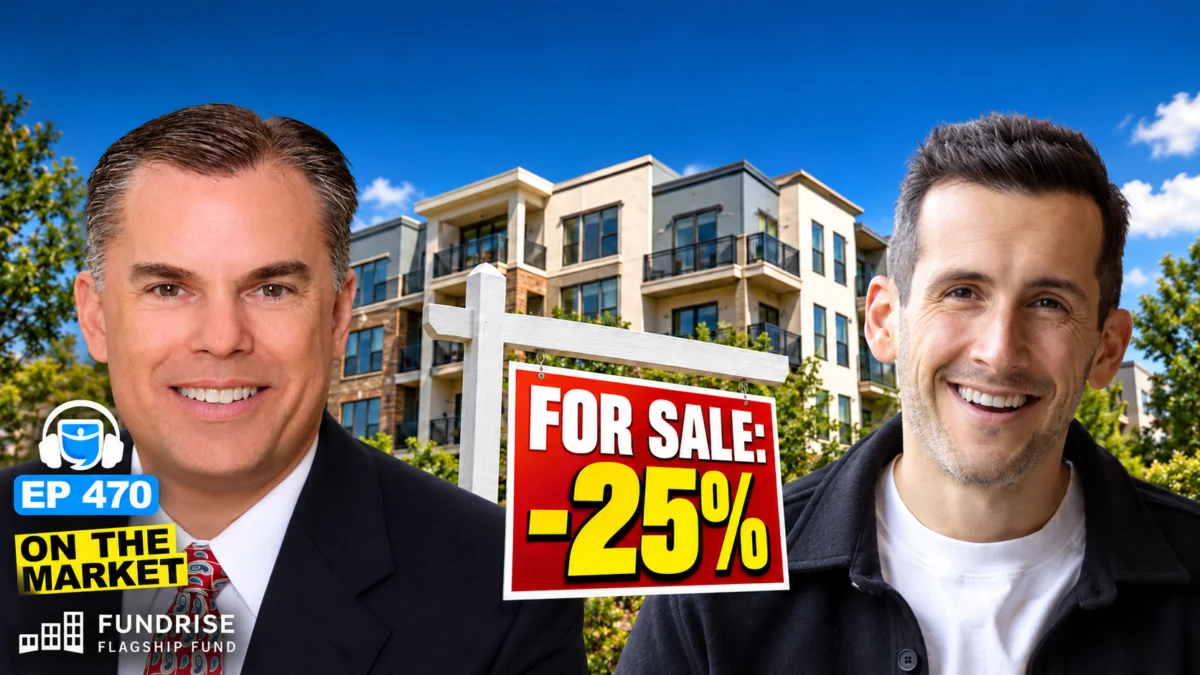
Prices across the commercial sector have already tumbled by at least 20%, with office spaces plunging by as much as 50%. According to market analysts and industry veterans, these deepening declines could culminate in a historic buying opportunity for agile, well-capitalized investors.
To evaluate this evolving hypothesis, On the Market host Dave Meyer recently welcomed back real estate investor Brian Burke, CEO of Praxis Capital and an acknowledged expert in multifamily real estate. The discussion laid bare the harsh realities facing the current commercial real estate landscape, the macroeconomic factors driving the crisis, and a strategic playbook for investors eyeing the next multi-year market cycle.
Main Facts: A Four-Way Traffic Collision in the Multifamily Market
For years, warnings have mounted regarding structural cracks in the commercial real estate ecosystem, particularly within the multifamily housing sector. What began as localized pressure points have since snowballed into widespread distress.
Describing the current state of affairs, Burke pulled no punches: "It’s a complete disaster, but it’s been a disaster for a long time."
Rather than a sudden shock, Burke characterizes the current market collapse as a "slow boil"—akin to the proverbial frog in a pot of water. For years, market participants ignored tightening fundamentals, holding out hope that the Federal Reserve would swiftly cut interest rates and rescue over-leveraged properties.
However, market dynamics proved far more complex than simple monetary policy. The ongoing distress is the result of what Burke calls a "traffic collision in a four-way intersection," where all green lights—cap rates, interest rates, rent growth, and occupancy—simultaneously turned red.
- Cap Rate Decompression: Properties purchased at aggressive 4% and 5% capitalization rates are fundamentally unviable in a treasury market yielding over 5%.
- Negative Leverage: With borrowing costs soaring well above property yields, investors face an upside-down relationship where holding assets actively burns cash.
- Supply and Demand Dislocation: Historic construction booms in markets like Austin and Denver coincided with falling birth rates, lower demographic pools of 18-to-30-year-old renters, and sharp declines in international immigration.
Chronology of the Crisis: From Pandemic Exuberance to the 2027–2028 Trough
To understand how the multifamily market reached its current precipice, experts look back to the post-pandemic economic environment characterized by cheap capital, irrational exuberance, and frantic bidding wars.
Phase 1: The Initial Monetary Tightening (2022–2023)
The crisis began when the Federal Reserve aggressively raised overnight borrowing rates to combat surging inflation. This directly impacted the Secured Overnight Financing Rate (SOFR), instantly doubling and tripling the interest expenses for operators utilizing floating-rate debt.
Phase 2: The Refinancing Wall and the 10-Year Treasury (2024–2025)
As short-term debt matured, operators anticipated refinancing into long-term fixed-rate debt. However, long-term debt is governed by the 10-year Treasury bond—a rate not directly controlled by the Fed. Driven by persistent inflation and a surge in corporate bond issuance (fueled in part by massive capital expenditures for AI infrastructure), the 10-year yield climbed. Borrowers found themselves trapped with expensive, short-term debt that they could neither refinance nor service sustainably.
Phase 3: The Current Boiling Point and Broker Reality Checks (Present)
Today, market sentiment has shifted from guarded optimism to a reluctant acceptance of reality. Brokers attempting to list Class B properties at 5.3% cap rates are finding virtually no buyers. Sane investors refuse to step into negative leverage, leaving sellers and brokers locked in a classic decreasing-market standoff: sellers demand "last year’s prices," while buyers wait for deep discounts.
Phase 4: Projected Bottom and Bull Run (2027–2028)
Industry observers note that the commercial real estate market is experiencing only its third double-digit price decline in the past 50 years—following the tax law changes of the 1980s and the 2008 Great Financial Crisis. History suggests that subsequent multi-year bull runs lasted more than a decade following those crashes. Consequently, analysts project that 2027 and 2028 could mirror the residential market bottom of 2010–2011, establishing a generational window of opportunity.
Supporting Data and Macroeconomic Realities
The narrative that falling interest rates will swoop in to save distressed multifamily operators is widely dismissed by seasoned financiers. The macroeconomic environment presents structural hurdles that cannot be easily undone by central bank policy.
- Inflation Drivers: Current inflation is largely "supply-push" rather than "demand-pull," driven by supply chain shocks that a recession alone cannot cure.
- Capital Competition: Investors seeking safe yields increasingly turn to high-grade corporate bonds (such as Microsoft’s infrastructure debt) rather than 10-year Treasuries, keeping government and commercial borrowing yields elevated.
- Historical Precedents: During previous downturns—such as in 1992—commercial property values plummeted by 10% and remained completely flat for five years before recovering. Market participants are warned that the current trough may take years to fully clear.
Official Responses and Industry Sentiment
While institutional investors and syndicated operators navigate rising distress, industry leaders emphasize that market timing, while often discouraged in theory, is heavily utilized in practice by sophisticated players.
Brian Burke noted that his firm, Praxis Capital, has maintained a "pencils down" approach regarding traditional multifamily acquisitions, shifting focus instead toward specialized sectors like senior housing. By targeting retiring operators facing financial distress since the pandemic, they are securing deals at 9%, 10%, 11%, and 12% cap rates.
For the average investor, the consensus from industry veterans is clear: patience is paramount. There is no urgency to catch the exact bottom of the market. Waiting for clear empirical evidence of an uptrend—such as declining rental concessions, positive lease trade-outs, and dropping vacancy rates—significantly reduces risk while still allowing investors to capture the upside of a long-term economic cycle.
Implications: A Strategic Playbook for Future Buyers
For investors looking to position themselves to capitalize on the unfolding commercial real estate correction over the next two to three years, experts recommend a disciplined, step-by-step preparation framework:
1. Build Strategic Relationships
Distressed properties rarely hit public listing sites or the MLS early in a cycle. Investors must cultivate deep relationships with local property management companies (frequently hired by lenders and asset managers to handle receiverships) and commercial brokers who maintain intimate knowledge of struggling local operators.
2. Secure Capital Readiness
When lenders decide to offload distressed assets to clean up their quarterly balance sheets, they demand execution certainty. Prospective buyers must line up soft commitments from investor bases well in advance, ensuring they have the demonstrable financial capacity to move quickly when opportunities arise.
3. Underwrite Conservatively
Investors should run underwriting models that assume interest rates will remain higher for longer. Properties that require every economic indicator to go right in order to succeed are classified as high-risk gambles. Successful investors underwrite to profit even when their assumptions are proven wrong.
4. Optimize Debt Strategies
While long-term fixed-rate financing (such as agency debt) remains the ultimate goal for stabilized assets, interim bridge debt can serve as a tactical tool when acquiring severely distressed, under-occupied properties at a fraction of their peak replacement cost. Utilizing specialized commercial debt brokers helps match assets with the most advantageous lending products available.
Conclusion
The multifamily market faces an extended period of adjustment, but as industry veterans emphasize, "chaos breeds opportunity." By focusing on rigorous preparation, building resilient capital pipelines, and exercising disciplined patience, investors can turn the coming commercial real estate correction into a foundation for lifelong wealth generation.