






As voters across the United States prepare for the upcoming 2026 midterm elections, campaigns are increasingly dominated by a single, pressing domestic issue: the profound and persistent lack of affordable housing. From bustling metropolitan centers to rural communities, the inability of everyday Americans to secure reasonably priced shelter has transformed local and federal races alike.
To help voters cut through the rhetoric, this installment—the fourth in a series analyzing prominent campaign slogans and catchphrases—examines how candidates from both sides of the political aisle are framing the housing crisis, what their proposed solutions entail, and the harsh economic realities driving the national conversation.
1. Main Facts: The Anatomy of the National Housing Crunch
At its core, the U.S. housing crisis is a multifaceted supply-and-demand problem. Simply put, there are not enough homes available—nor are they being built quickly enough—to accommodate the number of people who need them.
This severe shortage has driven the costs of purchasing a home to historic highs. Combined with ongoing inflationary pressures that have steadily eroded household budgets, and mortgage interest rates stubbornly hovering above 7%, would-be home buyers are finding themselves priced out of the market entirely.
When prospective buyers cannot afford to purchase a home, they are forced to remain in the rental market for much longer periods. This prolonged tenancy dramatically increases overall demand for rental housing. In markets where the construction of new rental units cannot keep pace, the result is relentless, upward pressure on monthly rents.
Defining "Affordable Housing"
While politicians frequently invoke the term "affordable housing," its technical definition is often lost in political speechmaking. According to housing economists and federal guidelines, housing is considered "affordable" when an occupant spends no more than 30% of their gross income on housing costs and utilities.
This 30% threshold is designed to ensure that families retain the remaining 70% of their income to cover other essential living expenses, such as food, healthcare, transportation, and savings. Households that are forced to spend more than 30% of their income on shelter are officially categorized as housing cost-burdened.
2. Supporting Data: The Scale of the Deficit
The numbers illustrating the crisis are staggering. According to data compiled by the National Low Income Housing Coalition (NLIHC):
- The Deficit: There is currently a nationwide deficit of 6.8 million affordable housing units available for extremely low-income renters.
- Cost Burden: Roughly 70% of extremely low-income families spend more than half of their total income solely on rent, leaving them highly vulnerable to economic shocks, housing instability, and homelessness.
Against this sobering backdrop, candidates running in the 2026 election cycle have made "affordable housing" a central refrain in their platform proposals. However, a closer examination reveals that what politicians mean by the term—and how they propose to achieve it—varies widely from race to race and party to party.
While some candidates focus heavily on expanding market-rate construction and cutting regulatory "red tape," others advocate for sweeping government intervention, public housing development, and stringent price controls.
3. Chronology and Evolution of the Housing Debate
To understand how housing became the defining battleground of the 2026 midterms, it is necessary to trace how the crisis evolved over the past decade:
- Pre-2020: The roots of the modern shortage began in the wake of the 2008 Great Recession. Construction of entry-level single-family homes plummeted and remained sluggish for years, creating a slow-burning inventory deficit.
- 2020–2022 (The Pandemic Shock): The COVID-19 pandemic accelerated housing pressures. Historic lows in interest rates triggered a buying frenzy, while supply chain disruptions and labor shortages stalled construction. Concurrently, millions of Americans relocated, creating localized housing crunches in suburban and Sun Belt markets.
- 2023–2024 (The Rate Hike Era): To combat soaring inflation, the Federal Reserve aggressively raised interest rates, pushing mortgage rates above 7%. This created the "lock-in effect," where homeowners with low fixed-rate mortgages refused to sell, freezing existing inventory and locking out first-time buyers.
- 2025–2026 (The Midterm Focal Point): With homeownership out of reach for a generation of young adults and rental costs continuing to consume majority shares of household incomes, housing transitioned from a localized urban planning issue into a top-tier national political campaign platform.
4. Official Responses: Candidate Slogans and Proposed Solutions
Different candidates view the crisis through distinct ideological lenses, leading to a diverse array of proposed policy remedies. Below is a breakdown of prominent slogans and platform promises from key congressional and gubernatorial races across the country.
— “Build 100,000 Homes”
- Who says it: Amy Klobuchar, Democratic candidate for governor of Minnesota.
- The Strategy: Klobuchar’s platform centers on a direct production target to put Minnesota on a path to create 100,000 new housing units.
- Key Proposals: She advocates supporting factory-built (modular) housing, standardizing and accelerating the local permitting process to reduce friction for developers, establishing a low-interest revolving loan fund for rural housing developments, instituting bans on rent price-fixing, and making the state housing tax credit permanent.
— “Housing for All”
- Who says it: Claire Valdez, Democratic candidate for the U.S. House of Representatives in New York’s 7th Congressional District.
- The Strategy: Valdez takes a progressive, interventionist approach focused on federal leadership and public investment.
- Key Proposals: Her plan includes creating a federal housing developer to directly finance and build millions of permanently affordable homes, repealing historic restrictions on public housing construction, and tying federal housing grants to mandatory local zoning reforms that permit multifamily developments. Additionally, she supports a national rent control standard, expanded housing vouchers, a federal "good-cause" eviction law, and aggressive enforcement against negligent landlords.
— “Builders”
- Who says it: Mike Rogers, Republican candidate for the U.S. Senate in Michigan.
- The Strategy: Rogers’ housing blueprint focuses primarily on supply-side deregulation, incentivizing private-sector construction, and supporting individual savings.
- Key Proposals: Rogers proposes expanding tax-advantaged savings vehicles for first-time home buyers, allowing renters to build credit histories through consistent, on-time rent payments, and permitting student loan borrowers to temporarily defer payments while actively saving for a down payment. On the supply side, he pledges to cut federal regulations and permitting barriers, create tax-free residential housing zones to stimulate new construction, and heavily invest in skilled-trades training to expand the construction labor workforce.
— “Building Boom”
- Who says it: Abdul El-Sayed, Democratic candidate for the U.S. Senate in Michigan.
- The Strategy: El-Sayed combines massive federal investment in affordable housing with strict regulations on speculative corporate landlords and short-term rentals.
- Key Proposals: His platform calls for substantial federal funding for new housing, streamlined regulatory compliance, and an expansion of the Low-Income Housing Tax Credit (LIHTC) program. To protect existing affordability, El-Sayed proposes banning large corporations from purchasing single-family homes for speculation, banning algorithmic rent price-fixing, imposing dislocation fees on short-term rental platforms like Airbnb, and establishing a federal renters’ "Bill of Rights."
— “Put Homeownership Back Within Reach”
- Who says it: Chris Pappas, Democratic candidate for the U.S. Senate in New Hampshire.
- The Strategy: Pappas focuses heavily on bipartisan-friendly incentives for first-time buyers alongside targeted reductions in development friction.
- Key Proposals: He aims to cut bureaucratic red tape to accelerate homebuilding, expand allocations for the Low-Income Housing Tax Credit, and deliver targeted tax credits to assist first-time buyers with pricey down payments. Furthermore, Pappas supports raising loan limits for manufactured housing and home improvement projects, and he has co-led federal legislation designed to create a grant program offsetting local impact fees for new housing developments.
— “Make Homeownership More Affordable”
- Who says it: Ken Paxton, Republican candidate for the U.S. Senate in Texas.
- The Strategy: Paxton’s approach emphasizes direct tax relief for buyers and movers, combined with restrictions on institutional investors.
- Key Proposals: Paxton has proposed a significant $50,000 tax deduction specifically for first-time home buyers, as well as a separate $50,000 tax deduction for existing homeowners relocating to a new primary residence. Aligning with several cross-party proposals, he also advocates for legal restrictions preventing large corporations from aggressively purchasing single-family residential properties.
5. Implications for the 2026 Electorate
The divergence in these strategies highlights a fundamental philosophical split in American politics regarding how to address market failures. While conservative candidates like Mike Rogers and Ken Paxton lean toward deregulation, tax deductions for buyers, and unleashing private enterprise, progressive and moderate Democrats like Claire Valdez, Amy Klobuchar, Abdul El-Sayed, and Chris Pappas often pair production incentives with tenant protections, rent regulations, and direct government-backed development.
Regardless of political affiliation, the prominence of housing on the 2026 ballot signals that voters are no longer willing to view high housing costs as an inevitable economic byproduct. As campaigns enter their final weeks, the debate over who can most effectively build, subsidize, and regulate the American housing market will likely remain a decisive factor at the ballot box.
How to Learn More About Your Ballot
Voters seeking clarity on where their specific local, state, and federal candidates stand on housing and other critical issues can utilize several official resources:
- State and Local Election Offices: Begin by contacting your local government election division.
- U.S. Election Assistance Commission (EAC): Visit eac.gov for official state election administrative directories.
- Can I Vote: Access nonpartisan voter registration and ballot information via nass.org/can-I-vote.
- VOTE411: Explore personalized candidate comparisons and ballot guides provided by the League of Women Voters at vote411.org.
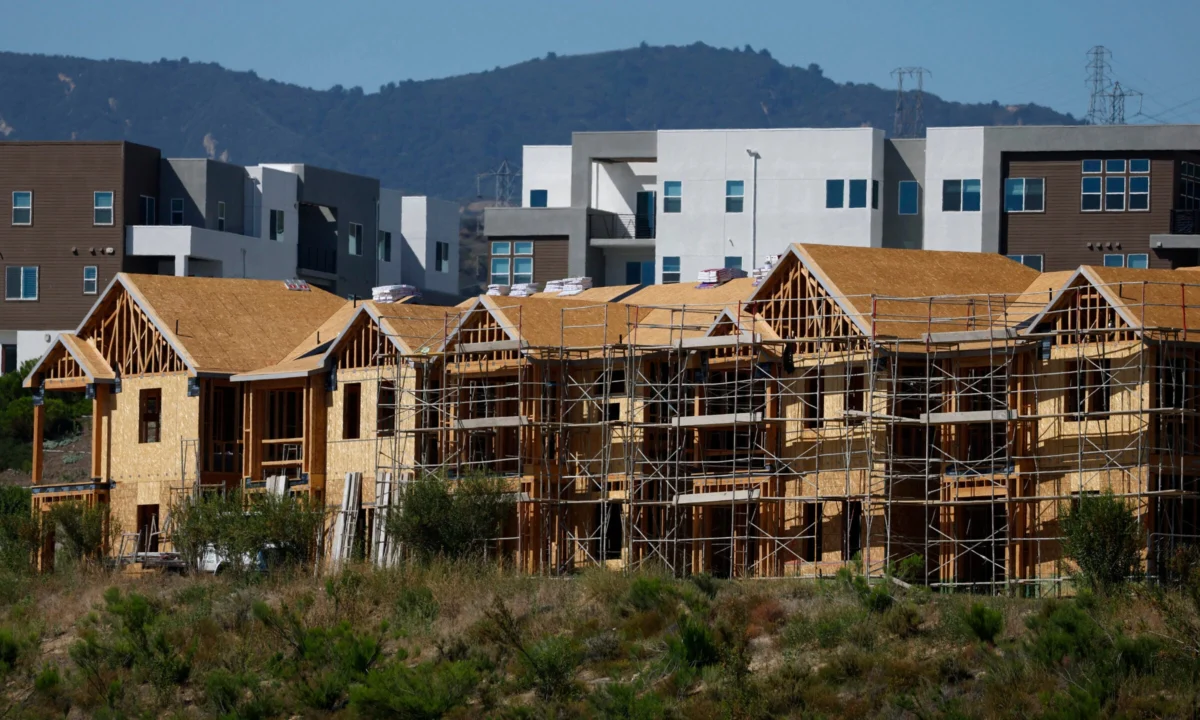
(Photo by Justin Sullivan/Getty Images News via Getty Images)