









Entering the real estate market in a high-cost area like Los Angeles can feel daunting for any newcomer. Skyrocketing property values, fierce competition, and stringent lending criteria often lead rookie investors to believe that primary-market investing is entirely out of reach. However, strategic planning, creative financing, and a willingness to look past surface-level flaws can transform perceived obstacles into long-term wealth-building opportunities.
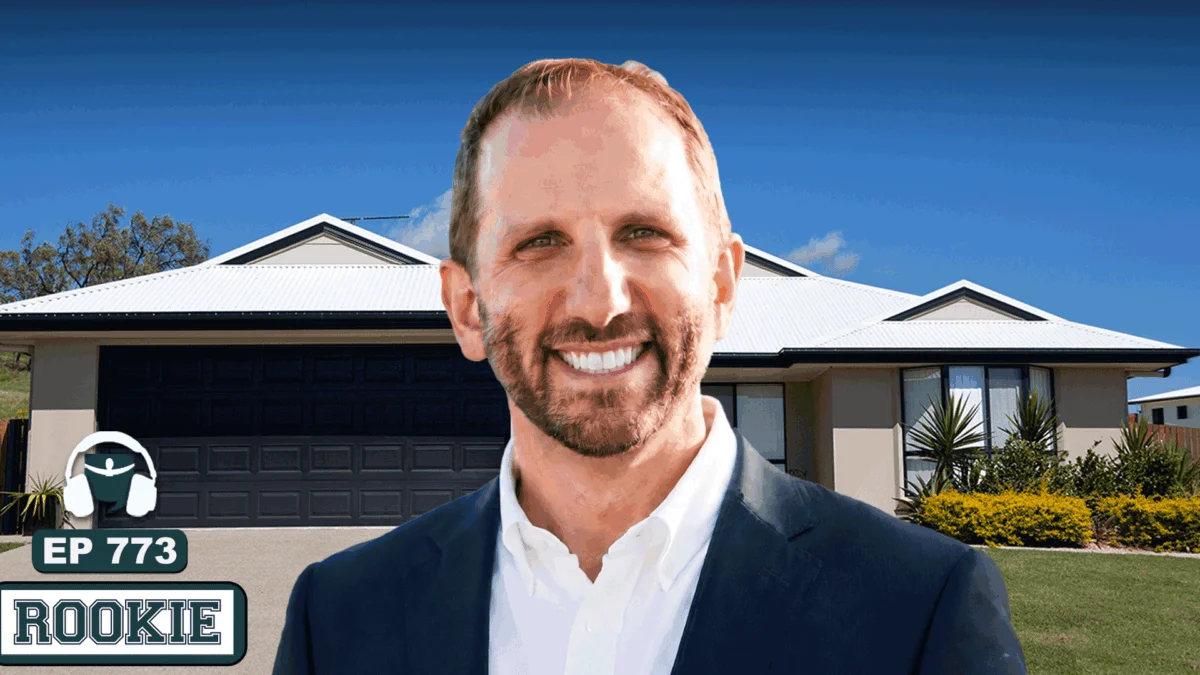
Guest expert Rick Albert recently shared his remarkable journey on the Real Estate Rookie podcast, detailing how he leveraged an overlooked, smoke-damaged Los Angeles condo into a sprawling 17-door portfolio spanning three states.
Main Facts: From Broke College Graduate to Multi-State Investor
Rick Albert’s trajectory into real estate began in December 2009 during his senior year of college. A visit with a family friend introduced him to the world of commercial real estate and property management. Mentored by experienced investors, Albert secured an internship, read foundational literature such as Gary Keller’s The Millionaire Real Estate Investor and The Richest Man in Babylon, and earned his real estate license.
Rather than waiting for ideal market conditions, Albert utilized classic house-hacking strategies, unconventional financing mechanisms like FHA 203(k) renovation loans, and calculated risk management. His early moves included:
- Purchasing a heavily smoke-damaged 938-square-foot condo in Los Angeles for $225,000 with a 10% down payment.
- Generating initial rental income by house-hacking the property with a trusted roommate.
- Utilizing a Home Equity Line of Credit (HELOC) to fund a complex, ground-up accessory dwelling unit (ADU) conversion project.
- Transitioning into out-of-state markets like Nashville and Alabama to scale his portfolio to 17 units.
Chronology of a Portfolio: Step-by-Step Expansion
1. The Smoke-Damaged Condo (2015)
Albert’s first purchase was a 938-square-foot condo listed on the MLS for nearly $250,000. The property had been occupied by a heavy smoker for over 30 years, turning away many potential buyers. Recognizing that physical damage could be remediated, Albert purchased the unit for $225,000, putting down 10% ($22,500) and covering closing costs by leveraging a lender-paid interest rate credit rather than paying cash points.
To make the space livable and rentable, Albert invested approximately $18,000 in renovations:
- Scrubbing walls with trisodium phosphate (TSP) to remove nicotine residue.
- Applying multiple coats of specialty primer (specifically Zinsser B-I-N or Killz) to lock in lingering odors.
- Replacing sub-panels, updating flooring, and re-glazing bathtubs and countertops.
Albert house-hacked the condo by renting a spare room to a trusted acquaintance for $800 a month, which included utilities and bi-monthly professional house cleaning to prevent interpersonal friction. When he eventually sold the property in 2022 during the Los Angeles eviction moratoriums, he walked away with $453,000—clearing a significant profit that catalyzed his next phase of investing.
2. The FHA 203(k) Loan and ADU Build (2018)
With equity from his first property and a HELOC secured before moving out, Albert purchased a single-family home in 2018 for $525,000 after a competitive 17-offer bidding war and subsequent inspection-based price reductions.
To expand the property’s income potential, Albert utilized an FHA 203(k) renovation loan, which rolled both acquisition and construction costs into a single mortgage requiring just 3.5% down. He undertook the construction of a detached backyard accessory dwelling unit (ADU) from scratch.
Despite encountering bureaucratic delays—such as a city inspector breaking his back, which stretched a four-month project into a 12-month ordeal—Albert and his wife navigated the hurdles. To qualify for a streamline FHA refinance later on, they temporarily moved into the tiny studio ADU themselves, renting out the main house for nearly $3,300 a month to drastically reduce their personal housing expenses.
3. Expanding Out-of-State: Nashville and Alabama
With capital freed up from selling his initial Los Angeles condo, Albert partnered with his brother-in-law to purchase a fourplex in Nashville, Tennessee, utilizing a 5-year fixed-rate HELOC at 4.75% interest-only.
Seeking additional cash-flow opportunities in landlord-friendly markets, Albert independently purchased a triplex in Alabama for $90,000 cash. The property lacked functional hot water heaters, preventing traditional bank financing. After investing $55,000 in renovations (including installing new water heaters), Albert executed the BRRRR (Buy, Rehab, Rent, Refinance, Repeat) strategy, securing a cash-out refinance of approximately $120,000 to roll into future acquisitions.
Supporting Data and Financial Strategies
Albert’s success highlights several advanced financial instruments and negotiation tactics that rookie investors can apply in high-cost environments:
- Lender-Paid Closing Cost Credits: Instead of paying upfront points to lower an interest rate, buyers planning a short-term hold or future refinance can voluntarily accept a slightly higher interest rate. In exchange, the lender provides a financial credit that directly covers closing costs.
- The FHA 203(k) Loan Mechanics: This loan product allows owner-occupants to finance both the purchase and heavy rehabilitation of a property. While requiring strict adherence to contractor bids, material-versus-labor breakdowns, and HUD consultant inspections, it provides a viable path to forced appreciation.
- Appreciation in High-Cost Markets: Albert notes the basic mathematical advantages of primary markets: a 3% appreciation rate on a $1,000,000 property yields $30,000 in equity growth, whereas the same percentage on a $100,000 home yields only $3,000.
Expert Insights: Host and Guest Perspectives
During the podcast discussion, hosts Ashley Kehr and Tony J. Robinson emphasized how rookies frequently fall into the trap of analysis paralysis, overcomplicating tenant screening, and walking away from properties with superficial defects like mold, smoke damage, or deferred maintenance.
"Anything can be fixed," Albert noted regarding his decision to buy a smoke-damaged property. "At some point, there’s an end to it. I don’t really have the belief that properties can be money pits."
Kehr and Robinson highlighted the importance of leveraging personal networks, utilizing local Facebook groups or professional organizations, and maintaining proactive communication when vetting roommates and tenants. Furthermore, they underscored the value of holding primary-market real estate long enough to weather market cycles, as stringent local regulations (such as rent control and eviction moratoriums) often necessitate cautious, strategic exits.
Implications for Rookie Investors
For aspiring real estate investors operating in expensive metropolitan areas, Rick Albert’s journey offers several key takeaways:
- Embrace Secondary Niches: Condos, townhouses, and properties just outside prime luxury neighborhoods often present lower barriers to entry while benefiting from the spillover demand of higher-priced districts.
- Master Creative Financing: Utilizing HELOCs, escalation clauses, inspection-based price reductions, and FHA 203(k) renovation loans enables investors with limited initial capital to compete effectively in aggressive markets.
- Prioritize Forced Appreciation: Whether through nicotine remediation, structural repairs, or building unpermitted or under-utilized spaces into legal ADUs, creating equity through sweat and strategy accelerates portfolio scaling.
By viewing high-cost real estate markets through a lens of operational creativity rather than impossibility, newcomers can lay a solid foundation for sustainable, multi-state wealth generation.