







For many aspiring real estate investors, the prospect of breaking into an expensive, high-barrier-to-market city like Los Angeles feels like an impossible dream. The conventional wisdom often dictates that rookies should flee to cheaper, midwestern secondary markets where single-family homes can still be purchased for the price of a luxury car down payment.
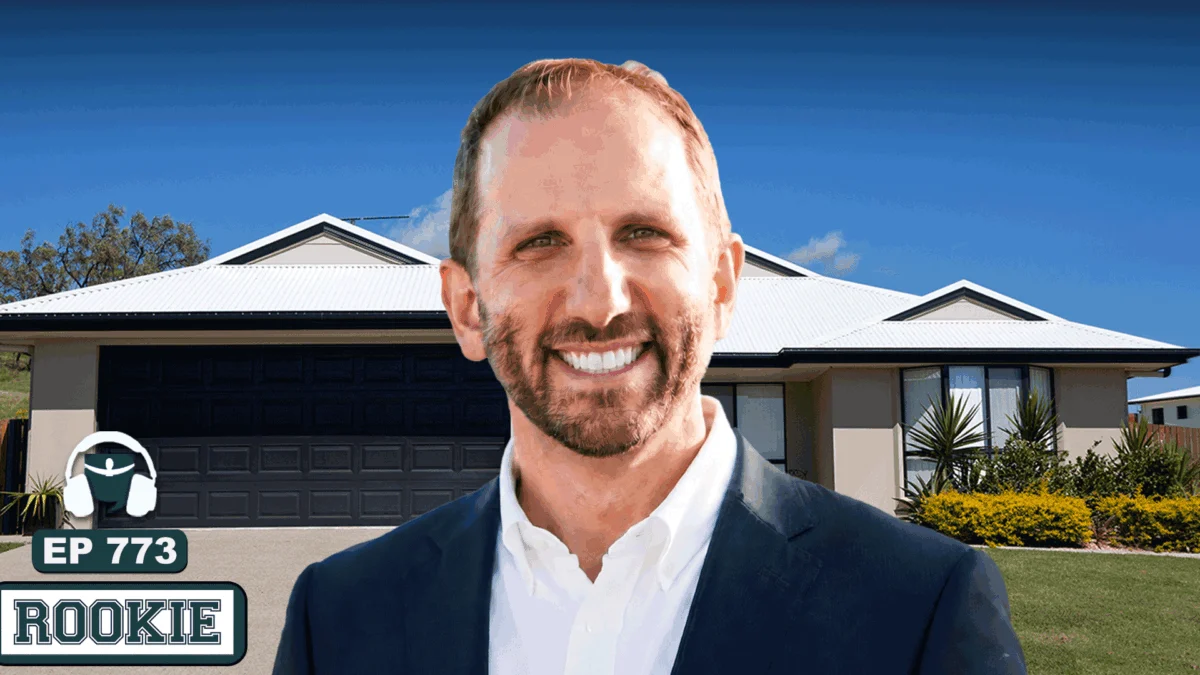
However, savvy investors who understand local market dynamics, leverage creative financing, and capitalize on neglected properties can turn high-cost regions into powerful wealth-building engines. This is precisely the path forged by real estate investor, agent, and podcast host Rick Albert. Starting as a broke college senior with zero background in real estate, Albert ultimately scaled a strategy into a 17-door portfolio spanning three states.
Main Facts: The Blueprint of High-Cost Market Investing
The journey from a broke college graduate to a seasoned portfolio owner highlights several foundational principles of real estate investing:
- The Power of House Hacking: Albert’s entire portfolio was built on the foundation of his first primary residence purchase—a neglected, heavy-smoker-damaged 938-square-foot condo in Southern California acquired with just 10% down.
- Leveraging Equity: By utilizing Home Equity Lines of Credit (HELOCs) and strategic refinancing, Albert pulled capital from his primary residences to fund subsequent, more ambitious projects without needing outside venture capital.
- Accessory Dwelling Units (ADUs): Albert capitalized on shifting California housing laws by undertaking a ground-up garage conversion, drastically increasing the property’s rental income potential.
- Geographic Diversification: After mastering high-cost markets, Albert expanded outward, partnering on a fourplex in Nashville and executing the BRRRR (Buy, Rehab, Rent, Refinance, Repeat) method on a triplex in Alabama.
Chronology: From Courtroom Steps to Multi-State Portfolios
1. The Mentorship and the Courthouse Steps (2009–2014)
In December 2009, Rick Albert was a college senior uncertain of his career path. A visit to a family friend in Southern California introduced him to the world of real estate. Offered mentorship under strict conditions—obtaining a real estate license, completing an internship in commercial property management, and reading foundational texts like The Millionaire Real Estate Investor and The Richest Man in Babylon—Albert dove headfirst into the industry.
Relocating to Southern California upon graduation, Albert worked in his mentor’s IT office while serving as the boots-on-the-ground bidder at foreclosure auctions. Standing at the courthouse steps with cashier’s checks, he learned the psychological games of property bidding, setting the stage for his own investing career.
2. The Smoker’s Condo and the First House Hack (2015)
Equipped with practical experience, Albert targeted his first investment: a 938-square-foot condo listed on the MLS for nearly $250,000. The property came with a major deterrent—it had been occupied for over 30 years by a heavy smoker, leaving the walls deeply saturated with nicotine and smoke odors.
While other buyers walked away, Albert saw an opportunity. Purchased for $225,000 with a 10% down payment ($22,500), Albert invested roughly $18,000 into renovations. The remediation process involved:
- Scrubbing the walls with tri-sodium phosphate (TSP).
- Applying multiple coats of specialized nicotine-blocking paint (KILZ).
- Upgrading flooring, electrical sub-panels, and bathrooms.
To offset his mortgage, Albert house-hacked the unit by renting out the second bedroom to a long-time acquaintance for $800 a month—a rate that included utilities and bi-monthly house cleaning. After four years, Albert sold the property for $453,000, walking away with significant tax-free capital.
3. Scaling Up: The FHA 203K Loan and the ADU Gamble (2018)
Using an $80,000 HELOC pulled from his first condo, Albert targeted his next primary residence: a single-family home priced at $499,000, which he secured via an escalation clause for $567,000 (later negotiated down to $525,000 due to inspection contingencies and unpermitted additions).
To finance both the acquisition and a massive property expansion, Albert utilized an FHA 203K loan, which allows buyers to roll renovation costs into a low-down-payment primary mortgage. The ambitious plan involved converting a detached garage into a legal Accessory Dwelling Unit (ADU) from scratch.
What was projected to be a four-month renovation ultimately stretched into a grueling 12-month project plagued by municipal delays and under-budgeted infrastructure costs (such as a $7,000 sewer line requirement). To survive the cash-flow crunch, Albert even temporarily relocated his newlywed wife into the tiny studio ADU while renting out the primary house for $3,299 a month to cover the $4,600 mortgage.
4. Expanding Out of State: Nashville and Alabama
Following the success of his California projects, Albert looked to diversify geographically to mitigate local regulatory risks, such as Los Angeles’s prolonged COVID-era eviction moratoriums.
Partnering with his brother-in-law, Albert went 50/50 on a fourplex in Nashville using a low-rate, fixed-term HELOC. Seeking higher cash-flow yields, Albert then targeted a distressed triplex in Alabama listed at $180,000. Because the property lacked functional hot water heaters, it could not qualify for traditional financing. Albert acquired the property for a staggering $90,000 cash, poured $55,000 into renovations, and successfully completed a BRRRR strategy, pulling out $120,000 in cash-out refinancing. Today, his portfolio sits at 17 doors across three states.
Supporting Data and Financial Strategies
Albert’s playbook relies heavily on advanced financial mechanics that many rookie investors overlook:
- Lender-Paid Closing Costs (Interest Rate Trade-Offs): Instead of paying points to lower an interest rate, investors can intentionally raise their interest rate slightly. In exchange, the lender issues a credit that covers a substantial portion of closing costs. For investors planning to refinance down the road—or execute a quick BRRRR—this is an effective method for preserving upfront capital.
- FHA 203K Loan Constraints: While this loan product allows buyers to finance major renovations with just 3.5% down, it comes with strict oversight, requiring approved licensed contractors, detailed material-versus-labor breakdowns, and inspections by a HUD consultant.
- Appreciation Dynamics: While cash-flow yields are typically lower in high-cost-of-living markets like Los Angeles, the raw dollar value of appreciation scales significantly faster. A 3% appreciation rate on a $1 million property yields $30,000, compared to just $3,000 on a $100,000 asset.
Expert Insights and Real Estate Perspectives
During a detailed discussion on the Real Estate Rookie podcast, hosts Ashley Kehr and Tony J. Robinson unpacked the psychological and tactical hurdles of Albert’s journey.
- Overcoming Analysis Paralysis: Albert emphasized that real estate investing rewards forward momentum. "What I love about real estate is you can stumble as long as you’re stumbling forward, you’ll be fine," Albert noted, underscoring that perceived red flags—like smoke damage or unpermitted work—often eliminate competition and create deep equity margins.
- The Reality of ADUs: Albert cautioned that while ADUs are incredible value-add strategies in high-density urban zones, investors must design them with meticulous attention to tenant privacy, separate utility configurations, and dedicated parking or outdoor spaces to command top-tier rental rates.
Implications for Rookie Investors
Rick Albert’s trajectory offers a clear roadmap for investors operating in high-priced metropolitan areas:
- Look on the Periphery: Target properties just outside ultra-desirable, expensive neighborhoods where buyers and renters are actively being priced out.
- Embrace Distress: Properties with severe cosmetic issues (like smoke saturation) or functional obsolescence (like missing water heaters) eliminate retail buyer competition and allow for steep discounts.
- Master Creative Financing: Utilize HELOCs, FHA 203K renovation loans, and lender-paid closing cost credits to stretch limited capital further.
- House Hack Aggressively: Utilizing multi-family units, condos, or ADUs as primary residences minimizes living expenses while accelerating portfolio growth through forced appreciation.
By treating high-cost markets as strategic opportunities rather than insurmountable barriers, rookies can build durable, long-term wealth just as Albert did across his 17-door portfolio.