










The Rise of Geoeconomic Taxation: How Proposed Section 899 Forced a Global Tax Retreat

Negotiations between sovereign governments have long relied on economic leverage to alter the behavior of international counterparties and compel diplomatic compromises. While traditional geoeconomic tools—such as economic sanctions, embargoes, and retaliatory tariffs—are well-documented in the annals of statecraft, domestic tax policies have historically remained insulated from foreign policy maneuvering. That paradigm shifted dramatically with the…

Read Full News

The Nicotine Pouch Tax Dilemma: How States Are Navigating Harm Reduction, Budget Holes, and Cross-Border Smuggling

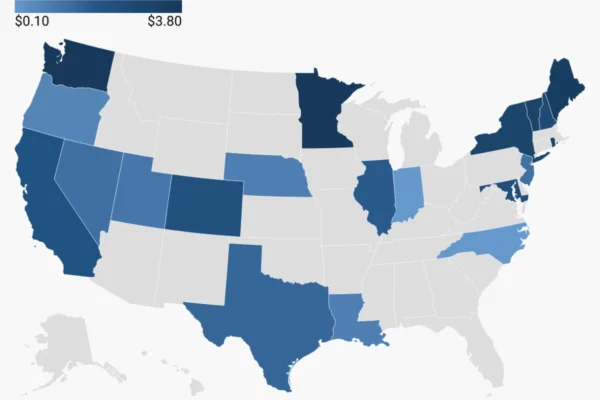
As traditional cigarette consumption steadily declines across the United States—a major victory for public health—state lawmakers are confronting an unexpected fiscal headache: a widening revenue crater in state budgets. For decades, lucrative cigarette excise taxes served as a reliable stream of income for state treasuries. Now, as smokers successfully transition away from combustible tobacco, those…

Read Full News

Canada Unveils ‘Productivity Mega Deduction’: A Permanent Shift in Tax Policy to Secure Global Investment Leadership

OTTAWA — In a major policy announcement that promises to reshape the nation’s economic landscape for decades, the Government of Canada has declared that full expensing for machinery, equipment, and patent rights will be made permanent. The move, officially unveiled on September 15 by Minister of Finance and National Revenue François-Philippe Champagne, introduces what the…

Read Full News

The Trillion-Dollar Weight: How Federal Healthcare Subsidies and Tax Preferences Drive America’s Fiscal Crisis

Main Facts The United States federal government faces an unprecedented fiscal trajectory, defined by historical deficits and a debt-to-GDP ratio on track to shatter previous records. According to projections from the Congressional Budget Office (CBO), deficits as a share of Gross Domestic Product (GDP) will climb from 5.8 percent in 2026 to 6.7 percent in…

Read Full News

The Great American CapEx Surge: How the AI Boom and Full Expensing Are Reshaping Corporate Taxation

WASHINGTON — Across the United States, a historic capital investment boom is quietly rewriting the nation’s economic narrative. Driven by an unprecedented wave of technological infrastructure spending—most notably the explosive buildout of artificial intelligence (AI) servers, data centers, and advanced cooling systems—businesses are pouring money into physical and digital assets at a pace that is…

Read Full News

The Great Barrel Blunder: How Six U.S. States Are Breaking U.S. Measurement Standards and Costing Businesses Millions

To the average consumer, a barrel is a barrel—a quintessential cylindrical container associated with oil extraction, brewing, and old-fashioned shipping. But to ask "how many gallons are in a barrel?" is to step into a regulatory minefield. While mathematics and federal law offer straightforward answers, state-level bureaucrats have spent generations muddying the waters. Today, the…

Read Full News

The Hidden Half-Trillion-Dollar Tax Bill: How Compliance Costs Outpace the IRS Budget

WASHINGTON — While Americans frequently debate the headline rates of income and corporate taxes, a far more insidious levy operates in the background, consuming hundreds of billions of dollars and billions of hours each year. According to official estimates from the White House Office of Information and Regulatory Affairs (OIRA) and a comprehensive economic analysis,…

Read Full News

The Cost of Complexity: Why Making Temporary "No Tax On" Carveouts Permanent Could Undermine U.S. Tax Reform

WASHINGTON — As the expiration date for key provisions of the One Big Beautiful Bill Act (OBBBA) approaches at the end of 2028, Washington lawmakers face a critical fiscal crossroads. A comprehensive new economic and distributional analysis from the Tax Foundation, published in Options for Reforming America’s Tax Code 3.0: A Policymaker’s Guide to Tax…

Read Full News

Brussels’ Tobacco Tax Overhaul Threatens National Sovereignty and Public Health Harm Reduction

BRUSSELS — A fresh legislative battle is brewing across the European Union as the European Commission pushes forward with a comprehensive overhaul of the bloc’s Tobacco Excise Directive (TED). While framed by Brussels as a necessary modernization to secure the Single Market and protect public health, the sweeping proposal has ignited a fierce debate over…

Read Full News

Echoes of the 1990s: Why the Failed "Bit Tax" Serves as a Cautionary Tale for Modern AI Proposals

As United States investment in artificial intelligence (AI) accelerates at an unprecedented pace, policymakers, economists, and public figures are grappling with how to regulate and extract revenue from this burgeoning sector. Alongside broad proposals aimed at high-net-worth individuals and large corporations, lawmakers have floated narrowly targeted levies designed to tax specific AI inputs. These include…

Read Full News