







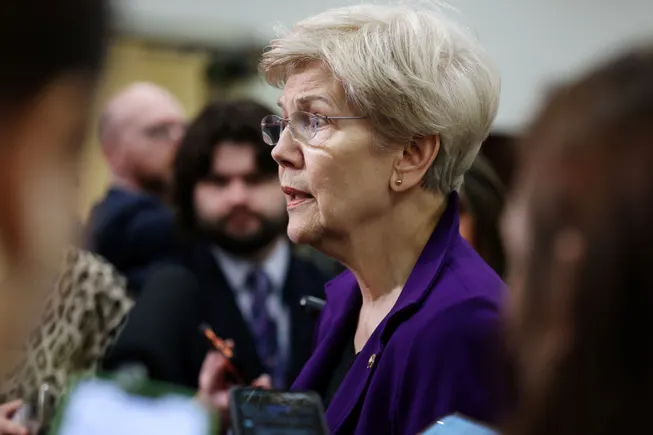
In an escalating confrontation between federal oversight proponents and the booming fintech sector, two prominent U.S. senators have formally called on the nonbank lender OppFi to immediately withdraw its application to acquire Arizona-based BNCCORP and its subsidiary, BNC National Bank. The intervention by Sens. Chris Van Hollen (D-MD) and Elizabeth Warren (D-MA) marks a significant intensification of the regulatory scrutiny facing nonbank financial institutions that seek to obtain federal banking charters.
The senators’ letter, sent this past Wednesday, frames the $130 million acquisition bid not as a legitimate business expansion, but as a gateway for the perpetuation of "predatory lending practices." This latest development signals a growing consensus among progressive lawmakers that the "fintech-to-bank" pipeline is being utilized to circumvent state-level consumer protections, particularly interest rate caps.
The Core Allegations: Predatory Lending Under the Microscope
At the heart of the controversy is OppFi’s business model, which specializes in providing personal installment loans to "underserved" consumers—a demographic the company claims is frequently ignored by traditional banking institutions due to lower credit scores or thin credit histories. However, Sens. Van Hollen and Warren argue that this mission statement masks a predatory reality.
The lawmakers point to the exorbitant cost of credit associated with OppFi’s products, which can reach an Annual Percentage Rate (APR) of as high as 195%. According to the senators, these rates are not merely high-risk premiums but are reflective of a model built on extracting wealth from vulnerable borrowers who have few alternatives.
Furthermore, the letter highlights findings from a 2021 lawsuit initiated by the District of Columbia’s attorney general. The suit alleged that OppFi’s internal underwriting models are designed with the expectation that up to one-third of borrowers will ultimately default on their loans. The senators further accused the lender of utilizing "aggressive" tactics to encourage borrowers to refinance existing debt, a strategy they claim serves only to extend the debt cycle and inflate borrowing costs for those least able to afford them.
Chronology: A Pattern of Regulatory Resistance
The pressure on OppFi is not an isolated event; it is part of a broader, ongoing campaign by regulators and state officials to rein in fintech entities that partner with banks to facilitate high-interest lending.
The Precedent: The Enova-Grasshopper Collapse
The current climate of apprehension for fintech firms was significantly shaped by the recent failure of Enova International to acquire Grasshopper Bank. Similar to the current OppFi situation, Enova—a major nonbank lender—sought to secure a banking charter to streamline its operations. However, the deal collapsed under the weight of mounting political and regulatory friction.
Steve Cunningham, CEO of Enova, ultimately terminated the bid, citing a "lack of clear standards" for nonbanks attempting to transition into the banking sector. Cunningham openly attributed the collapse to "political pressure," suggesting that the regulatory environment had become untenable for companies attempting to bridge the gap between fintech and traditional banking.
The "Rent-a-Bank" Allegations
The scrutiny intensified in July when a coalition of 20 state attorneys general sent a joint letter to the Office of the Comptroller of the Currency (OCC), the Federal Deposit Insurance Corporation (FDIC), and the Federal Reserve. The AGs argued that firms like OppFi and Enova engage in "rent-a-bank" schemes.
By partnering with banks chartered in states that lack interest rate caps, these fintechs are able to export high interest rates into states that have established a 36% limit on consumer loans. The attorneys general labeled these arrangements "deliberate efforts to avoid state usury laws," designed to extract maximum profit from consumers in desperate financial straits.
OppFi’s Defense: Innovation or Exploitation?
In response to the senators’ demands, OppFi has maintained a defiant stance, rejecting the characterization of its business model as predatory. A spokesperson for the company described the political pushback as a "disservice to consumers" who are being excluded from the formal financial system.
Challenging the Data
OppFi specifically pushed back against the figures cited by Sens. Van Hollen and Warren regarding charge-off rates. While the senators alleged that the company’s charge-off rate exceeds 55%, the company claims this figure is a gross misrepresentation caused by improper methodology.
"Annualizing quarterly charge-offs makes it appear as though actual charge-offs are up to three times greater than they really are," the spokesperson stated. According to company data, the lifetime charge-off rate for their loans over the past three years is significantly lower, hovering between 18% and 25%, with an average loan duration of approximately four months.
The Argument for Federal Oversight
OppFi’s defense relies heavily on the premise that becoming a regulated bank is actually a positive step for consumer protection. The company argues that transitioning into the federally regulated banking system would subject its operations to the most rigorous oversight in the industry. By doing so, OppFi claims it would be reinforcing its commitment to "fair and responsible lending" by bringing its operations fully under the purview of federal examiners, rather than operating in the current, more fragmented state-level regulatory landscape.
The Broader Implications for the Fintech Industry
The standoff between OppFi and federal lawmakers serves as a bellwether for the future of the fintech-banking convergence. As nonbank lenders attempt to shed their reputations as "predatory" by seeking the legitimacy of a bank charter, they are finding that the political cost of entry is rising rapidly.
Regulatory Uncertainty
The failure of the Enova deal and the ongoing assault on the OppFi application suggest that the regulatory agencies—the OCC, the Fed, and the FDIC—are becoming increasingly hesitant to grant charters to companies that have historically operated in the high-APR space. This creates a "chilling effect" on the industry, where the path to institutional legitimacy is becoming blocked by the same legislative bodies that are supposed to oversee the evolution of the banking system.
The Future of "Underserved" Credit
The debate ultimately forces a difficult question regarding the financial system: If firms like OppFi are prohibited from operating, what happens to the consumers they serve?
OppFi argues that by shutting down their ability to scale, lawmakers are removing the only safety net available to millions of Americans who do not qualify for traditional credit. Conversely, Senator Warren and her allies maintain that the "safety net" provided by high-interest installment lenders is, in fact, a debt trap that keeps low-income families in a state of permanent insolvency.
What Lies Ahead?
As the application process for the BNC National Bank acquisition continues, all eyes will be on the federal regulators. If the OCC and other bodies bow to the pressure of the 20 state attorneys general and the high-profile senators, it could effectively end the era of rapid bank acquisitions by nonbank, high-interest lenders.
For now, OppFi remains at a crossroads. The company must decide whether to continue its push for federal legitimacy—at the risk of further political alienation—or to retreat, following the path paved by Enova. The outcome of this battle will likely set the standard for how fintechs navigate the American financial regulatory system for years to come.