









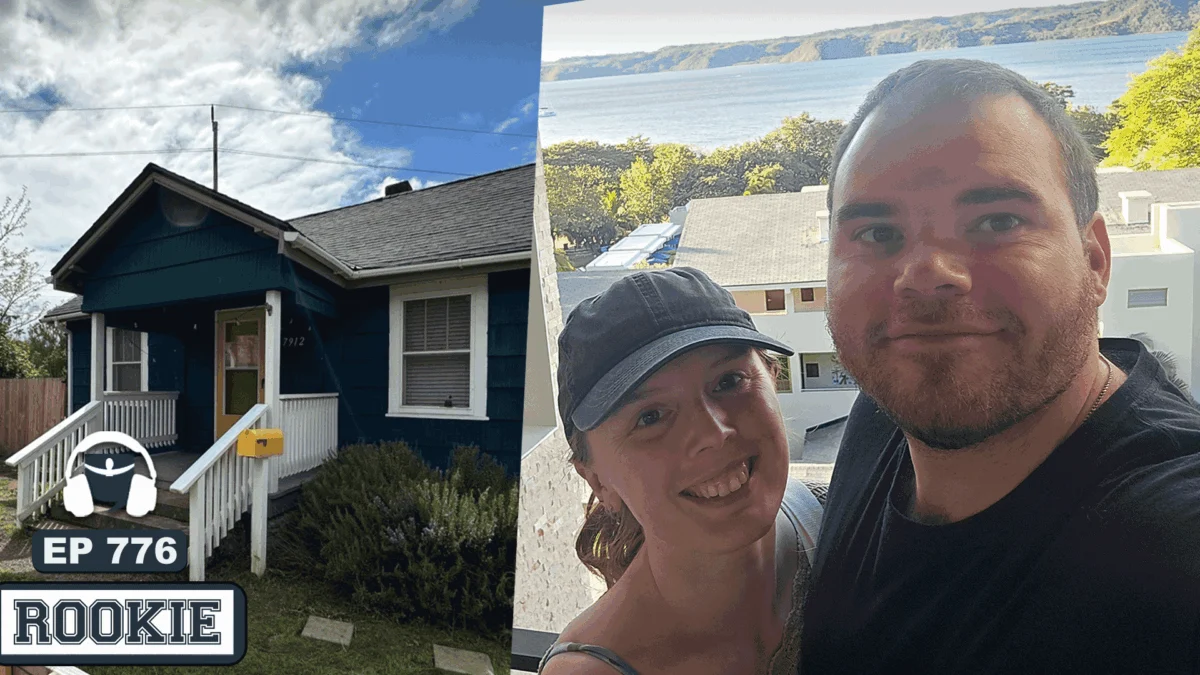
For many aspiring real estate investors, the fear of purchasing a financial "money pit" acts as an insurmountable barrier. The prospect of hidden structural damage, non-paying occupants, and mounting renovation costs keeps countless rookies on the sidelines for years. However, real-world experience often proves that a rocky beginning does not preclude long-term success.
During a recent episode of the Real Estate Rookie podcast hosted by Ashley Kehr and Tony J. Robinson, guest Joshua Settimio shared how a catastrophic first investment—marked by an active termite infestation, a tenant who had not paid rent in over a year, and a grueling year-long renovation—ultimately served as the launchpad for a multi-million-dollar portfolio. Today, Settimio co-owns approximately 70 properties across four separate partnerships and is scaling into commercial acquisitions. His journey illustrates that real estate investing is rarely a linear path, but rather an education earned through perseverance, creative problem-solving, and strategic networking.
Chronology of a Rookie Investment
Settimio’s trajectory into property investment was forged through unconventional experiences long before he purchased his first asset.
The Early Blueprint: Lessons from the Beach
Growing up, Settimio worked a summer beach service job in Gulf Shores, Alabama, setting up chairs and umbrellas for vacationers. When the owner’s father needed extra labor to turn over million-dollar coastal rentals between weekly occupancies, Settimio was dispatched with cleaning supplies and bleach.
While scrubbing HVAC vents in high-end properties, Settimio engaged the property owner, Mr. Young, in conversations about how he built his livelihood. Witnessing a lifestyle sustained by real estate management—rather than a traditional 9-to-5 career—planted the initial seed for Settimio’s future ambitions.
The College Pivot
Settimio later accepted a full-tuition athletic scholarship to play football as an offensive lineman at Lyon College in Arkansas. However, a sports injury during his college years forced him to reevaluate his career trajectory away from physical labor and education. Seeking new opportunities, he secured an internship at a local real estate and property management company simply by observing workers on campus and making a cold call to offer his assistance.
Working closely with seasoned property managers exposed Settimio to the daily realities of real estate operations. By the time he graduated a year early with degrees in psychology and business, he had earned his real estate license and positioned himself directly within a thriving local investing ecosystem.
The $38,000 Nightmare Deal
By the fall of 2019, Settimio was working as a licensed real estate agent. Eager to break into investing, he quickly discovered a major roadblock: traditional commercial lenders were unwilling to extend financing to an agent with only six months of 1099 work history.
Undeterred, Settimio learned of a distressed $38,000 property through his brokerage network. The owner was desperate to sell but trapped in an untenable situation: a tenant had occupied the single-family home without paying rent for a year and a half, and refused to allow prospective buyers inside.
Recognizing that conventional bank financing was out of reach, Settimio proposed seller financing to the owner. Since the seller had received zero income from the asset in 18 months, receiving regular monthly payments presented a welcome alternative. After managing a brief walkthrough, Settimio secured the contract despite the obvious signs of distress.
Supporting Data and Obstacles Overcome
Navigating a distressed property purchase during the height of the COVID-19 pandemic tested Settimio’s resolve. The challenges he faced highlight several core principles of risk management and resourcefulness in real estate.
Managing the Non-Paying Tenant Without an Attorney
Settimio quickly learned that empathy and business boundaries must coexist. When the existing tenant refused to resume rent payments under the new ownership structure, Settimio took decisive legal action.
Operating in a rural Arkansas market where local authorities and legal professionals were occasionally unfamiliar with proper eviction mechanisms during pandemic-era restrictions, Settimio served a formal three-day notice to quit, followed by an unlawful detainer filing. Rather than incurring costly legal fees, his firm stance prompted the occupant to vacate the premises peacefully before formal court-ordered eviction proceedings concluded.
Uncovering the True Extent of the Rehab
Once vacant, the true condition of the 1930s-era home became apparent. Without the safety net of a professional home inspection prior to purchase, Settimio uncovered severe structural issues:
- Termite Infestation: The home had an active termite problem that required a $1,500-to-$1,800 remediation and prevention investment.
- Subfloor and Joist Failure: Settimio discovered soft flooring and compromised floor joists due to insufficient clearance between the ground and the framing.
- Sweat Equity: Working alongside his wife, Kayla, Settimio spent months manually excavating crawlspace dirt to increase clearance from 12 inches to 24 inches—a modification that drastically reduced annual termite bond renewal fees.
Securing Financing Through Persistence
For nearly a year, the property sat vacant while Settimio and his wife self-funded structural repairs using income from their day jobs. Once the major framing and roofing repairs were complete, Settimio approached local banks for permanent financing.
After multiple rejections from lenders wary of the property’s history, Settimio connected with a representative at the largest local bank in his area. Armed with a detailed business plan and scope of work, he utilized an as-completed appraisal, which valued the renovated home at $86,000.
The bank refinanced the property, leaving Settimio with a manageable loan balance of roughly $46,000 to $48,000. Furthermore, the newly created equity allowed him to establish a line of credit, providing the capital needed to acquire his next two investment properties.
Official Responses and Industry Insights
Reflecting on the transaction during the podcast episode, co-hosts Ashley Kehr and Tony J. Robinson emphasized the value of resilience in the face of initial rejection.
"If someone would’ve stopped at lender number one or lender number five or lender number 10, and they didn’t talk to that last person, they maybe never would’ve become real estate investors," noted Tony J. Robinson. "For every lender that says, ‘Oh, we can’t do that,’ there’s another lender that says, ‘Oh, we do those kind of loans all day.’"
Settimio stressed that perfection is not a prerequisite for entering the market. By treating his first acquisition as an educational expense comparable to—or cheaper than—student loans, he reframed a potential financial disaster into a masterclass in asset management.
"Your first deal doesn’t have to be perfect," Settimio advised listeners. "It just has to teach you enough to get to the next one."
Implications for Future Real Estate Investors
Settimio’s journey offers actionable takeaways for rookies entering the modern housing market:
- Leverage Proximity and Mentorship: Surrounding oneself with experienced investors accelerates the learning curve and normalizes the friction of overcoming operational hurdles.
- Explore Creative Financing: When traditional W-2 or seasoning requirements block bank financing, alternative structures such as seller financing can bridge the gap.
- Embrace Persistence in Lending: Banking criteria vary wildly from institution to institution. Rejections from early lenders do not dictate market viability.
- Build Systems Early: Transitioning from DIY labor on a first property to scalable property management principles allows investors to expand their portfolios efficiently.
Having successfully navigated his baptism by fire, Settimio’s portfolio continues to expand. In a testament to his long-term growth, he and his wife recently undertook their largest independent acquisition to date: converting a 20-unit mom-and-pop motel in a nearby lake town into a long-term rental community. His trajectory stands as proof that with the right mindset, even the most daunting money pit can be transformed into an engine for financial freedom.