









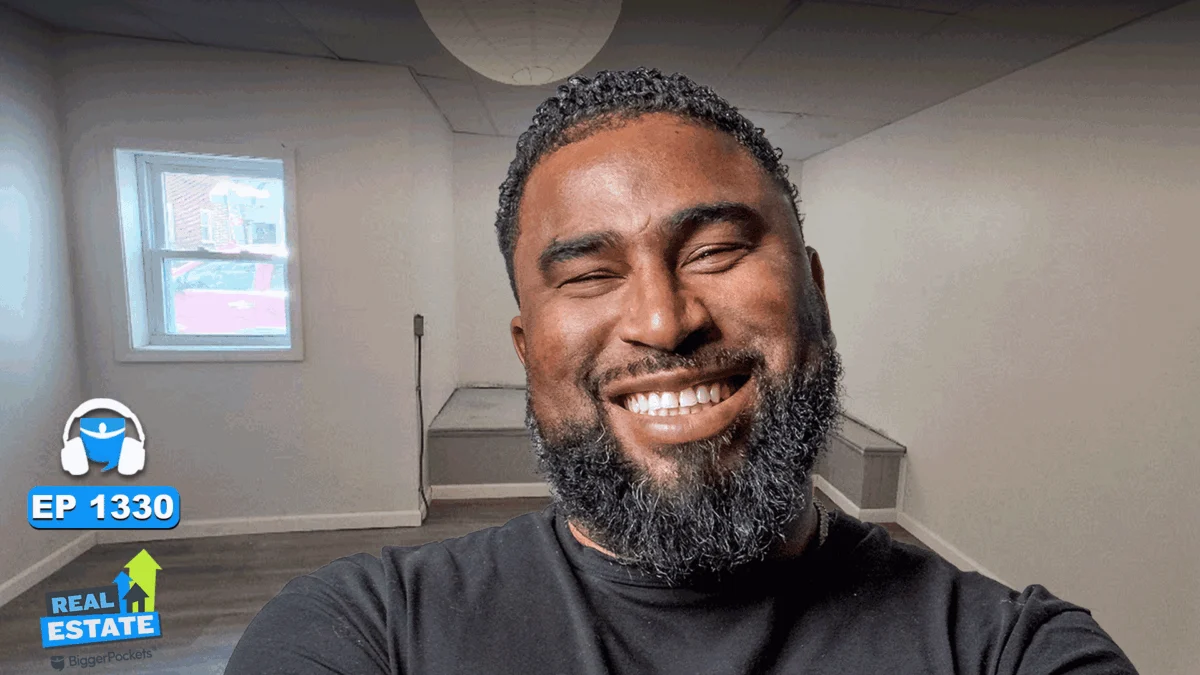
ALTOONA, Pa. — In an era when internet influencers flood social media with unattainable promises of effortless digital wealth and overnight passive income, finding a genuine blueprint for financial independence can feel impossible. For Kent Long, a 48-year-old regional manager for occupational therapy, the turning point came after wading through a sea of online noise that ultimately sold little more than fantasy.
Realizing that digital ventures like Amazon storefronts were choked out by high advertising costs, Long turned to a tangible, time-tested asset class: real estate. What began in July 2024 as an ambitious pivot during a personal transition has rapidly evolved into a masterclass in modern investing. In just 24 months, Long scaled from zero units to a thriving portfolio of 10 doors, generating over $5,500 in monthly cash flow, and positioning himself to step away from his demanding corporate career 15 years ahead of traditional retirement age.
The Main Facts: A Modern Masterclass in Leverage and Sweat Equity
Long’s ascent defies the common misconception that the window for profitable real estate investing has closed. Operating out of Altoona, Pennsylvania—a market characterized by lower entry prices and reliable, high-yield cash flow—Long implemented a modified BRRRR (Buy, Rehab, Rent, Refinance, Repeat) strategy. However, instead of executing a traditional cash-out refinance that resets a mortgage at a higher balance and dilutes cash flow, Long utilized Home Equity Lines of Credit (HELOCs) and commercial loans through local community banks.
- Portfolio Size: 4 properties encompassing 10 doors (two duplexes and two triplexes).
- Monthly Cash Flow: Approximately $5,500.
- Timeline: Zero to 10 units completed in just two years (July 2024 to present).
- Financing Strategy: Conventional and commercial community bank loans paired with HELOC recycling.
- Target Demographic: Affordable mid-market properties with multi-unit conversion potential.
Long’s success underscores a vital market reality: while lower-priced markets rarely yield massive national-average appreciation, they offer a formidable defense against market volatility through outsized cash flow and low initial capital exposure.
Chronology of a Portfolio: Deal by Deal
Long’s methodology relies on disciplined pacing, executing roughly one major transaction every six months while balancing a full-time career that requires traveling three to four days a week.
Deal #1: The Catalyst (July 2024)
While navigating a divorce and facing the prospect of renting, Long discovered a large single-family home in Altoona that had previously operated as a duplex. Listed on the market after multiple failed contracts, Long purchased the property for $70,000 using a 30-year conventional loan with a modest down payment of roughly $14,000.
Leveraging his background in home repairs and the carpentry expertise of his union-carpenter father, Long spent just $10,000 converting the structure back into a triplex. By installing a single door, adding minor cabinetry, and utilizing existing luxury vinyl plank (LVP) flooring, he created three distinct rental units:
- Unit 1 (Rear furnished space): $850/month
- Unit 2 (First-floor 1-bedroom): $900/month
- Unit 3 (Third-floor 3-bedroom): $1,250/month
- Total Gross Rent: $3,000/month against a monthly debt service of roughly $500 to $600.
Deal #2: Expanding the Footprint (February 2025)
Seven months later, utilizing a $78,000 HELOC pulled from the equity of his first property, Long acquired a 1,700-square-foot single-family home for $35,000 cash. After a $20,000 renovation, he converted it into a multi-unit property generating $1,900 per month in rent. He subsequently refinanced through a local commercial bank for an $85,000 loan, wiping out lingering credit card debt and solidifying his cash-flow pipeline.
Deal #3: Generational Wealth and the Family Business
Seeking to secure his son’s financial future, Long brought his 19-year-old son into the fold. The duo purchased a listed duplex in Altoona for $44,000, funding the 15% down payment via Long’s existing HELOC. With the help of three generations—grandfather (a union carpenter), father, and son—the family executed a $25,000 renovation.
The property generated robust rents of $1,200 per unit. Upon refinancing, the young investor secured a $72,000 payout at age 20, fully repaying his father and retaining over $50,000 in liquid capital while maintaining a cash-flowing asset.
Deal #4: The Corner Store Conversion
Long’s most recent and labor-intensive project involved a duplex featuring an abandoned, disaster-stricken first-floor corner store. Purchasing the property for $55,000, he retained existing tenants on the upper floor while investing $30,000 and two full dumpsters of labor into transforming the ground floor into a sprawling three-bedroom unit. Grossing $3,100 monthly, Long recently refinanced the asset for $83,000, completely zeroing out his HELOC balance and resetting the cycle for his next acquisition.
Supporting Data: The Math Behind the Markets
Long’s portfolio provides a compelling case study in risk mitigation through lower-cost acquisitions. Standard financial theory warns against purchasing properties under $100,000, assuming they are money pits destined for endless repairs. Long’s strategy disproves this narrative by strictly targeting properties with structural multi-unit upside.
| Deal | Purchase Price | Renovation Cost | Total All-In | Gross Monthly Rent | Monthly Debt Service |
|---|---|---|---|---|---|
| Property 1 (Triplex) | $70,000 | $10,000 | $80,000 | $3,000 | ~$500 – $600 |
| Property 2 (Duplex) | $35,000 | $20,000 | $55,000 | $1,900 | Commercial Refinance |
| Property 3 (Son’s Duplex) | $44,000 | $25,000 | $69,000 | $2,400 | Commercial Refinance |
| Property 4 (Triplex/Store) | $55,000 | $30,000 | $85,000 | $3,100 | Commercial Refinance |
By keeping debt service low and leveraging local community banks that understand regional valuations, Long achieved an average cash-on-cash return that far outpaces traditional Wall Street investment vehicles.
Official Perspectives and Expert Insights
Appearing on an episode of the BiggerPockets Podcast hosted by Henry Washington, Long broke down the operational mechanics that allowed him to manage an expanding enterprise while working a demanding 50-hour-plus corporate schedule.
"Ideally, I wanted duplexes or triplexes. They’re the easiest to renovate," Long explained to Washington. "The whole idea of multi-families is I like one renter to pay the mortgage and one renter to pay me. When you look at multi-families, it’s just a cash flow engine, and that ideally has always been my goal."
Washington praised Long’s execution of the modified BRRRR strategy, emphasizing the distinct advantages of utilizing a HELOC over a traditional cash-out refinance:
"When you refinance, you’re getting a new loan at a higher amount, which then lessens your cash flow. But because you just pulled a line of credit, you gave yourself access to the equity, but you didn’t get a new loan at a higher amount. Your loan stays the same, and you only pay interest when you borrow against the HELOC."
Furthermore, Long highlighted the value of human empathy in property management, noting that rather than abruptly raising rents on legacy tenants paying below-market rates ($450/month), he implemented a "slow-roll" escalation strategy. By transparently communicating market realities and allowing tenants a voice in the transition plan, he preserved occupancy while steadily climbing toward market equilibrium.
Implications for Aspiring Investors
Long’s trajectory offers several profound takeaways for everyday professionals seeking to break free from the traditional 9-to-5 grind:
- Geographic Agnosticism is Optional: While many investors feel pressured to chase expensive coastal markets, thriving sub-markets exist nationwide where low entry barriers combine with strong rental demand to produce exceptional cash-flow metrics.
- Community Banking Relationships Matter: Partnering with local banks rather than rigid national conglomerates provides flexibility on construction loans, portfolio financing, and localized underwriting.
- Generational Knowledge Transfer: Involving family members not only slashes labor overhead through sweat equity but also creates enduring pathways to generational wealth.
- Defined Exit Horizons: Long’s strict adherence to a timeline—targeting 10 doors within a multi-year window—demonstrates that early retirement is attainable through disciplined, repeatable execution rather than speculative risks.
As Long approaches his milestone birthday of 50, his sights are firmly set on acquiring four additional doors over the next 18 months. By systematically extinguishing his lines of credit and converting sweat equity into institutional financing, Kent Long has proven that financial freedom is not reserved for internet gurus—it belongs to those willing to execute the fundamentals.