








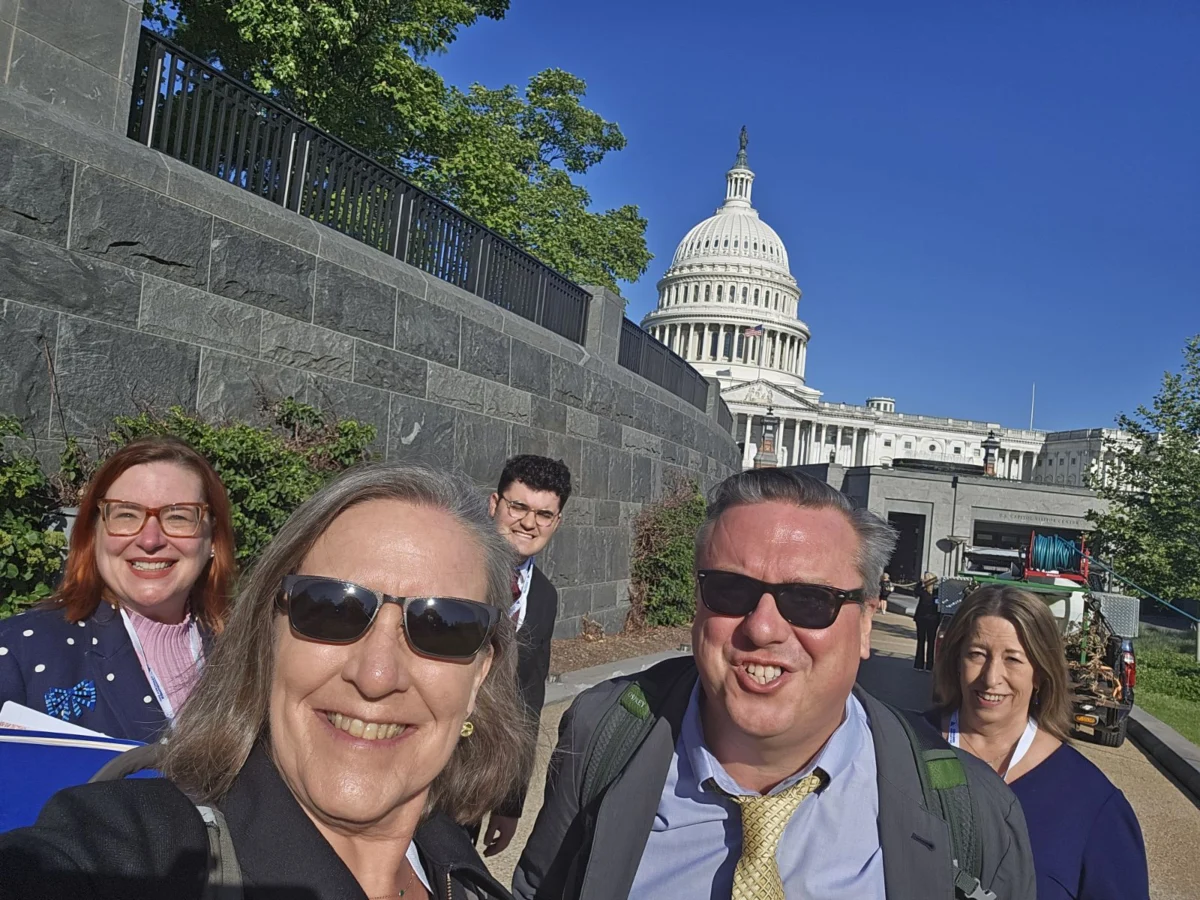
WASHINGTON — On Tuesday, June 2, 2026, the halls of Congress were transformed into a forum for grassroots accountability as more than 100 consumer advocates from 30 states and the District of Columbia converged on the nation’s capital. The event, dubbed "Consumer Advocacy Day," represents a significant escalation in the ongoing struggle to protect American households from what organizers describe as an unchecked "affordability crisis" exacerbated by weakening federal oversight and the proliferation of high-cost debt traps.
The coalition, comprised of representatives from diverse backgrounds—including rural community leaders, urban activists, and policy experts—aims to force a pivot in national financial policy. Their agenda is twofold: to provide lawmakers with the human face of financial struggle and to advocate for specific legislative guardrails that prioritize the economic stability of working families, seniors, and military households over the interests of predatory lenders.
The Core Mandate: Fighting the Debt Trap
At the heart of the advocates’ mission is the urgent need to address the systemic erosion of consumer protections. Participants are specifically lobbying against legislative maneuvers that would exempt "earned wage access" (EWA) payday loan applications from federal oversight. These apps, often marketed as convenient financial tools, are frequently criticized by consumer groups as digital-age iterations of traditional payday lending, often carrying hidden costs and interest rates that trap vulnerable users in cycles of debt.
The coalition is throwing its collective weight behind two pivotal pieces of legislation:
- The Empowering States’ Rights to Protect Consumers Act (S. 3721): A bill designed to restore the authority of individual states to cap credit card interest rates, ensuring that local governments can shield their residents from exorbitant lending practices that federal law currently allows to bypass state usury limits.
- The Predatory Lending Elimination Act (S. 3793): A comprehensive legislative effort to establish a national interest rate cap, aiming to curb the ability of predatory lenders to charge triple-digit annual percentage rates (APR) on short-term loans.
Conversely, the group is mounting an aggressive campaign to block S. 3889 and H.R. 7866, bills which advocates fear would dismantle existing state-level interest rate caps, effectively stripping states of their ability to regulate financial products within their own borders.
Chronology of a Crisis: The Battle for the CFPB
The Consumer Financial Protection Bureau (CFPB) stands at the epicenter of this conflict. Established in the wake of the 2008 financial crisis, the agency has functioned as the primary watchdog against financial malfeasance. Since its inception, the CFPB has successfully secured over $21 billion in relief for consumers, ranging from illegal fee refunds to the resolution of predatory mortgage disputes.
However, the recent political climate has seen an organized push to diminish the agency’s power.
- Early 2026: Reports surfaced detailing administrative shifts that curtailed the CFPB’s enforcement capabilities, particularly regarding bank overdraft fees and the reporting of medical debt.
- Spring 2026: Consumer advocacy groups observed a significant uptick in complaints regarding predatory apps and non-bank lenders, which they argue are exploiting the reduced enforcement posture of the current administration.
- June 2, 2026: The mobilization of Consumer Advocacy Day serves as the direct response to these trends, marking a strategic attempt to bring the "street-level" reality of these policy shifts to the desks of legislators.
Supporting Data and Human Impact
The argument presented by the coalition is grounded in both macroeconomic data and individual narrative. During their meetings with congressional staff, advocates are sharing stories that highlight the tangible consequences of the current financial landscape.
For the average American, the lack of robust consumer protection is not an abstract policy failure but a daily struggle. The "affordability crisis" cited by advocates is reflected in the growing reliance on high-cost credit to cover essential living expenses. As inflation persists and stagnant wages fail to keep pace, the ease of access to predatory apps has become a double-edged sword, providing immediate liquidity at the cost of long-term financial insolvency.
The CFPB’s own complaint database serves as a vital barometer for this crisis. Advocates argue that the agency’s complaint system is often the only mechanism available to the average consumer who has been wronged by a major financial institution. Without the threat of CFPB intervention, many institutions have reportedly become less responsive to consumer grievances, emboldened by the perceived lack of federal oversight.
Official Responses: Voices from the Frontlines
The delegation in Washington represents the culmination of months of coordination among various advocacy organizations. Leaders from these groups expressed a unified frustration with the current trajectory of federal policy.
Alys Cohen, director of federal housing advocacy and acting co-director of federal advocacy at the National Consumer Law Center, framed the current situation as a failure of institutional responsibility:
"This Administration has fueled the affordability crisis by gutting the CFPB and rolling back key anti-discrimination rules and critical consumer protections that limited bank overdraft fees, credit card late fees, and medical debt on credit reports. People need relief. We’re on Capitol Hill this week to urge Congress to restore funding to the nation’s top consumer watchdog, cap interest rates on loans, and uphold the ability of states to protect residents from predatory, debt-trap lending."
Ruth Susswein, director of consumer protection at Consumer Action, emphasized the vital role of the CFPB’s complaint portal:
"Consumers have come from all over the country to urge lawmakers to fully fund the CFPB and to vote against dismantling the agency’s critical complaint system. Consumers rely on the CFPB’s complaint process as often the only place they can turn to address financial disputes that companies refuse to resolve."
Tom Feltner, associate director of consumer policy at Americans for Financial Reform, highlighted the importance of federal-state cooperation:
"States have served as the front-line defense against high interest rates and harmful lending practices that continue to make life more difficult and more expensive for tens of millions of people. Lawmakers in Washington need to hear firsthand how strong state protections can translate into a national movement for safer, fairer lending and an economy that works for everyone."
Christine Hines, senior policy director at the National Association of Consumer Advocates, echoed the sentiment that the economic burden is increasingly falling on the working class:
"Current federal policies are weakening consumer protections and making everyday life more expensive for working people. We’re pleased to join consumer advocates in Washington, DC to support the CFPB’s mission, tackle predatory lending, and ensure that states can play their part to protect their residents."
Adam Rust, director of financial services at the Consumer Federation of America, concluded the perspective on the broader economic context:
"Families across America are working harder than ever just to keep up with the rising cost of living. During this affordability crisis, it is crucial that consumer advocates come to Washington to ensure lawmakers hear firsthand how high-cost lending, payday loan apps, scams, and diminished consumer protections are impacting real people and their communities."
Implications: A Crossroads for Financial Policy
The success of Consumer Advocacy Day will ultimately be measured by the legislative response in the coming months. If the coalition manages to stall the bills that seek to weaken state authority or if they succeed in securing a renewed commitment to CFPB funding, it would represent a significant victory for the consumer protection movement.
However, the implications go beyond individual bills. The mobilization suggests a deepening divide in how policymakers view the role of the federal government in the financial marketplace. One side advocates for "innovation" through deregulation, arguing that apps and non-bank lenders offer necessary flexibility to consumers. The other, represented by the advocates currently on Capitol Hill, argues that this "flexibility" is merely a thin veil for a return to the era of usurious lending and minimal accountability.
As these advocates return to their home states, the pressure on Congress is expected to remain high. By centering the conversation on the lived experiences of citizens—from the senior citizen struggling with credit card debt to the military family navigating the pitfalls of high-interest emergency loans—the coalition has successfully made the "affordability crisis" a central focus of the legislative agenda. Whether this translates into concrete policy changes, however, remains one of the most significant questions for the remainder of the 119th Congress.