








July 16, 2026
In a move that has sent shockwaves through the consumer advocacy community and financial regulatory circles alike, Opportunity Financial (OppFi)—a prominent provider of high-interest installment loans—has formally petitioned federal authorities for approval to acquire BNC Bank. If successful, this acquisition would facilitate the creation of "OppFi Bank," a national institution that would effectively bypass state-level consumer protection laws across the United States.
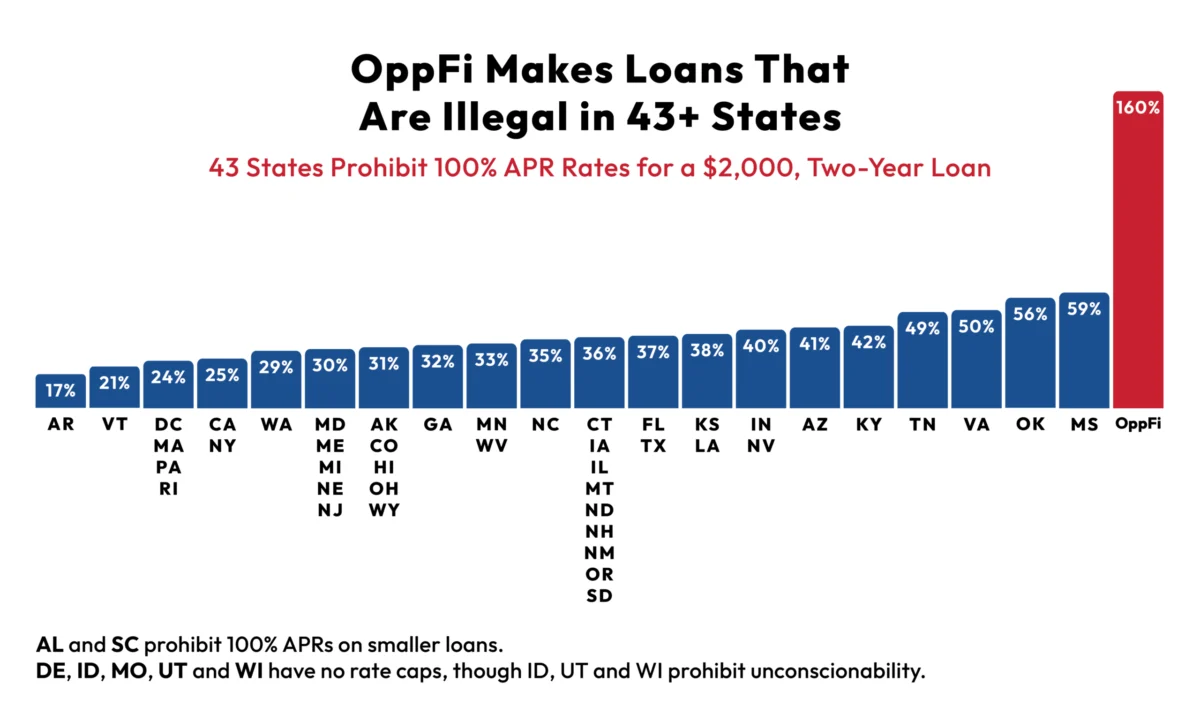
The proposed merger represents a significant escalation in the ongoing battle between fintech lenders and state regulators. With OppFi currently charging interest rates often exceeding 160% APR, the acquisition would grant the company a "passport" to export these rates into 45 states that currently maintain strict interest rate caps. As federal agencies weigh the implications, critics argue that the move poses a systemic risk to the financial health of vulnerable households and could fundamentally undermine the efficacy of state-level usury laws.
The Core Conflict: Arbitrage vs. Consumer Protection
At the heart of this controversy is the concept of "bank charter arbitrage." Under current legal frameworks, national banks are generally exempt from many state-level interest rate restrictions, a principle often referred to as "preemption." By acquiring a national bank charter, a non-bank lender like OppFi could potentially operate under the umbrella of federal authority, effectively neutralizing the legal barriers that prevent them from issuing high-interest debt in states with robust usury statutes.
OppFi’s business model has long been a lightning rod for criticism. The company focuses on the subprime market, offering installment loans that are often marketed as alternatives to traditional payday loans. However, consumer advocates point out that the triple-digit APRs associated with these products frequently trap borrowers in a cycle of perpetual debt, where the interest costs alone exceed the principal borrowed, leaving families struggling to cover basic necessities like rent and groceries.
Chronology of a Regulatory Push
The path to this moment has been paved by a series of aggressive maneuvers by various fintech players seeking to solidify their market dominance through institutional banking.
- Mid-2024: Industry analysts began noting a trend of "fintech-bank" partnerships, where non-bank lenders sought to integrate more closely with chartered institutions to lower their cost of capital and expand their reach.
- Early 2025: Following a shift in the federal regulatory environment, several large-scale fintech lenders began exploring direct acquisitions of existing national banks to streamline operations.
- Late 2025: Enova, the parent company of brands such as CashNetUSA, NetCredit, and OnDeck, filed a bid to acquire Grasshopper Bank. This filing served as a template for the industry, signaling that the "charter acquisition" strategy was the new frontier for high-APR lenders.
- July 2026: OppFi formally submits its application to acquire BNC Bank, marking the most significant attempt yet to bring a massive, high-interest consumer lending platform under the guise of a federally chartered national bank.
The timing of these applications suggests a coordinated industry effort to capitalize on a regulatory environment that many advocates feel has become increasingly permissive toward non-traditional financial services.
Supporting Data: The Impact of High-APR Lending
The economic reality for consumers utilizing 160% APR loans is stark. According to data from the National Consumer Law Center (NCLC), the proliferation of these loans creates a disproportionate burden on low-to-moderate-income households.
- State-Level Restrictions: Currently, 45 states have enacted interest rate caps designed specifically to prevent the type of predatory lending OppFi facilitates. These laws serve as a critical safety net, preventing the "debt trap" model from taking root in local economies.
- The "Debt Trap" Metric: Independent research indicates that borrowers who engage with 100%+ APR products are statistically more likely to experience credit score deterioration, difficulty meeting mortgage or rent obligations, and an increased reliance on public assistance programs.
- The Expansion Plan: Internal company projections suggest that OppFi intends to leverage the BNC Bank charter to launch "earned wage" payday products on a national scale. By doing so, the company could expand its footprint into the five remaining states that currently have the most stringent protections, effectively creating a 50-state monopoly on high-cost, short-term debt.
Official Responses and the Regulatory Stance
The decision to approve or deny the acquisition rests with a triumvirate of federal agencies: the Federal Reserve, the Office of the Comptroller of the Currency (OCC), and the Federal Deposit Insurance Corporation (FDIC).
To date, the agencies have remained largely non-committal, though the window for public comment is rapidly closing. The sheer volume of opposition from consumer rights organizations has been unprecedented. Advocacy groups are highlighting that these agencies have a mandate not only to ensure the stability of the banking system but also to protect the public from unfair or deceptive acts and practices (UDAP).
A Call to Action
The regulatory process allows for public participation, and agencies are currently soliciting comments from those who have been directly impacted by predatory lending practices. The deadlines for these submissions are critical:
- FDIC: Comments due by July 29, 2026.
- OCC: Comments due by August 5, 2026.
- Federal Reserve: Comments due by August 13, 2026.
Regulators are looking for documented evidence of how high-interest loans have impacted personal financial stability. Advocates are urging the public to share their stories of credit damage and the difficulties encountered when attempting to repay loans with triple-digit interest rates.
Implications: The Future of Consumer Finance
The approval of the OppFi acquisition would set a dangerous precedent, potentially triggering a "race to the bottom" in consumer lending. If a national bank can openly offer 160% APR loans, it removes the competitive advantage of legitimate financial institutions that offer more affordable credit. It essentially validates a business model built on the financial distress of the American consumer.
Economic Systemic Risk
Beyond the individual impact, there is the question of institutional reputation. Historically, the national banking system has been synonymous with safety, security, and a certain level of ethical standard. Allowing a predatory lender to operate under the "bank" label may erode public trust in the entire financial system. If the FDIC permits an entity to use its insurance and oversight to facilitate predatory lending, it raises fundamental questions about the agency’s commitment to its mission of maintaining stability and public confidence.
The Legislative Path Forward
If the federal regulators do not block these acquisitions, the burden will shift to Congress. There is growing momentum for federal legislation that would impose a nationwide interest rate cap—similar to the 36% limit currently applied to military personnel under the Military Lending Act—to prevent fintech companies from using state-law preemption to bypass consumer protections.
However, in the current political climate, legislative action remains uncertain. This makes the administrative decisions by the Fed, OCC, and FDIC the primary—and perhaps only—defense against the widespread nationalization of predatory lending practices.
Conclusion: A Critical Juncture
The request by OppFi to acquire BNC Bank is not merely a corporate merger; it is an attempt to rewrite the rules of consumer finance in America. By seeking a national charter, the company is attempting to achieve through regulatory loophole what it cannot achieve through public policy: the right to charge triple-digit interest rates in every corner of the country.
As the deadlines for public comments approach, the choice before federal regulators is clear. They must decide whether the sanctity of the national banking charter will be preserved for the benefit of the American consumer, or whether it will be opened to facilitate a business model that relies on the financial ruin of the nation’s most vulnerable. The final decision will resonate far beyond the walls of the boardroom, potentially defining the landscape of consumer credit for a generation.
Citizens, small business owners, and advocates are encouraged to voice their concerns immediately. The fight against the "160% National Bank" is a battle for the integrity of the American financial system, and the clock is ticking.