








As the weekend settles, the aviation and travel landscape remains as dynamic as ever. While the team at One Mile at a Time (OMAAT) takes a brief moment to decompress from a harrowing international journey, the broader industry continues its rapid evolution. From the operational restructuring of major airport hubs to significant shifts in premium credit card loyalty programs, this week has been defined by both grand-scale developments and the unpredictable nature of global transit.
The Reality of Modern Air Travel: A Personal Account of Adversity
For many, the dream of international family travel is often tempered by the harsh realities of modern aviation. This week, the OMAAT team completed their first transatlantic flight with their two sons—an experience that served as a microcosm for the current state of air travel.
While the children proved to be exemplary passengers, exceeding all expectations, the journey itself was a testament to the volatility of modern logistics. The itinerary was plagued by a series of cascading failures, including a flight cancellation, an unscheduled diversion, and two separate "go-around" procedures. The intensity of the experience reached its zenith when a flight attendant suffered a fall during a period of heavy turbulence.
This sequence of events serves as a poignant reminder that even with meticulous planning, the infrastructure of global aviation remains susceptible to disruptions. It is an experience that underscores the need for resilience and patience, qualities that are increasingly essential for the modern traveler.
Key Developments in the Travel Industry: A Weekly Recap
While the skies were turbulent, the ground-level news in the travel industry was equally transformative. Several major announcements this week are poised to alter the strategic landscape for frequent travelers and luxury enthusiasts alike.
1. Chase Sapphire Preferred: Evolving Loyalty
The Chase Sapphire Preferred card has long been the gold standard for travel rewards. Recent updates to the program have sparked significant discourse among credit card enthusiasts. As Chase recalibrates its value proposition, cardholders must assess how these changes impact their long-term loyalty strategies. Whether through altered redemption ratios or new travel credit structures, these shifts are indicative of a broader trend among major issuers to tighten control over high-value rewards ecosystems.
2. Luxury Hospitality Expansion: St. Regis and Andaz
The luxury segment continues to see aggressive growth. New details regarding the upcoming St. Regis London have provided a clearer picture of the property’s positioning within the high-end market. Simultaneously, the opening of reservations for the Andaz Turks & Caicos signals a strategic move by Hyatt to capture the burgeoning luxury leisure market in the Caribbean. These developments are not merely hotel openings; they are significant capital investments that reflect a growing demand for experiential luxury.
3. Frankfurt’s Operational Milestone
Frankfurt Airport (FRA) has achieved a major operational milestone with the full integration of its new Terminal 3. This expansion is designed to alleviate capacity constraints at one of Europe’s busiest transit hubs. The operational success of Terminal 3 is critical, as it will likely determine Frankfurt’s ability to compete with other major continental hubs like Paris-Charles de Gaulle and Amsterdam Schiphol in the coming decade.
4. Delta Air Lines: Transpacific Ambitions
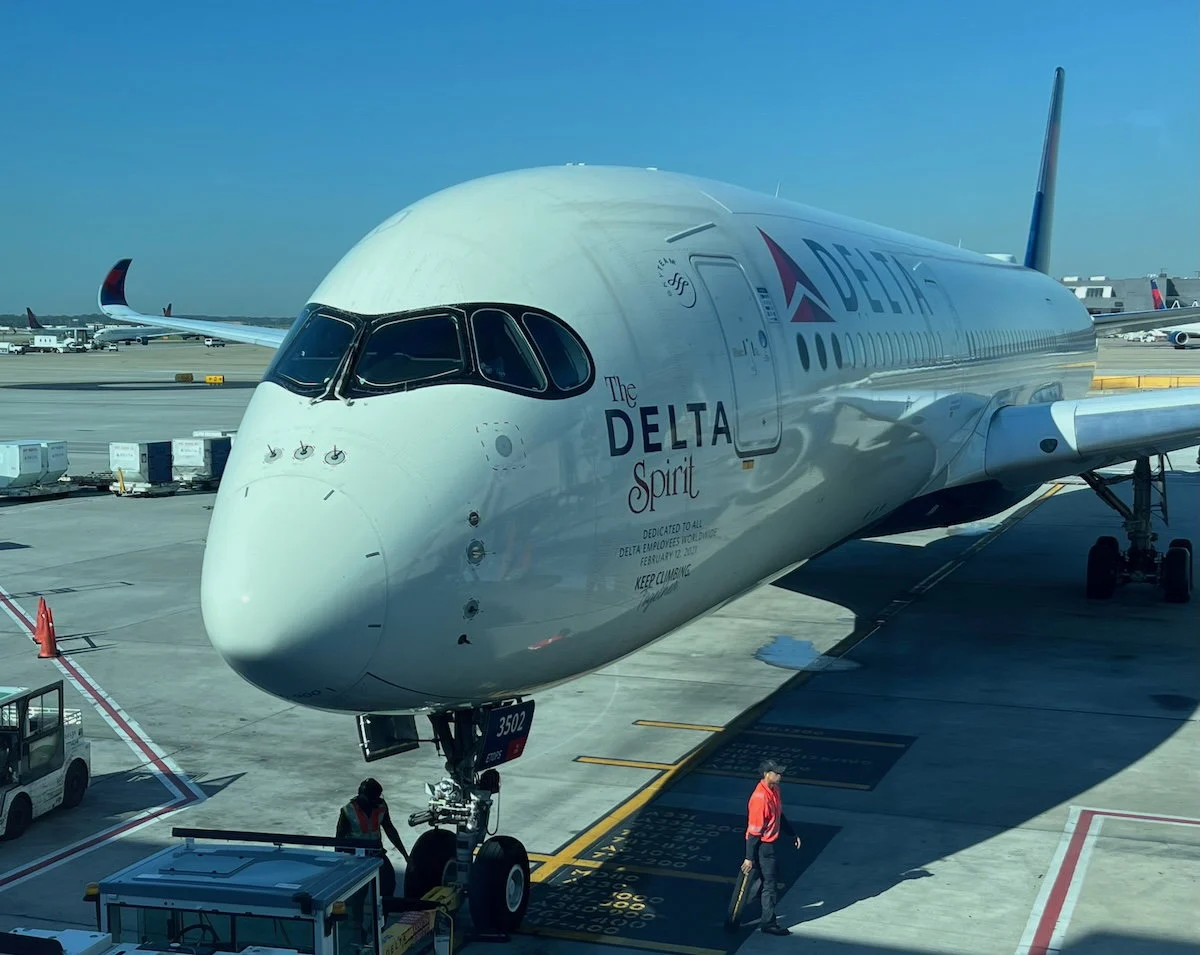
Delta Air Lines has unveiled a set of "lofty goals" regarding its transpacific network. In an era where international routes are increasingly competitive, Delta’s strategy seems focused on leveraging strategic partnerships and modern fleet efficiency to capture a larger share of the lucrative business and premium leisure travel between North America and East Asia.
Chronology of Industry Movements
The week’s events followed a rapid succession that highlights the interconnected nature of the travel sector:
- Monday: Initial reporting on the operational expansion at Frankfurt Airport began to circulate, setting the tone for infrastructure-focused discussions.
- Tuesday: Chase released details regarding the modifications to the Sapphire Preferred program, triggering an immediate reaction from financial analysts and the points-and-miles community.
- Wednesday: Hospitality giants Hyatt and Marriott (St. Regis) provided long-awaited updates on their respective luxury properties in London and the Caribbean, driving interest in high-end travel bookings.
- Thursday: Delta Air Lines hosted briefings on their transpacific strategy, outlining a multi-year plan to overhaul flight frequencies and cabin configurations.
- Friday: The OMAAT team’s personal travel ordeal concluded, serving as a sobering counterpoint to the optimistic growth projections provided by airline executives earlier in the week.
Supporting Data and Strategic Implications
The Economic Impact of Infrastructure Upgrades
The activation of Terminal 3 at Frankfurt is not merely a logistical upgrade; it represents an economic imperative. Modernizing transit hubs is essential to maintaining the "hub-and-spoke" efficiency that major carriers rely upon. Data from the International Air Transport Association (IATA) suggests that hub efficiency directly correlates to a carrier’s bottom line by reducing taxi times and optimizing gate turnarounds.
Analyzing the "Chase Effect"
The changes to the Chase Sapphire Preferred card are a reflection of the "war on rewards." As issuers face higher interest rate environments and increased customer acquisition costs, the trend toward "devaluation-by-adjustment" is becoming more common. For consumers, this implies a necessity for greater financial literacy—understanding not just the points earned, but the specific value proposition of each transfer partner.
Delta’s Pacific Strategy: High Stakes
Delta’s pivot to the Pacific is a high-stakes gamble. The airline is betting that premium demand will continue to recover post-pandemic, justifying the allocation of wide-body aircraft to these long-haul routes. If successful, this could solidify Delta’s position as the dominant US carrier in the transpacific corridor, though success remains contingent on geopolitical stability and fuel price volatility.
Official Responses and Industry Outlook
Industry analysts have noted that while the travel sector is enjoying a robust recovery, it is also entering a period of "normalization." Official statements from Delta executives emphasize "strategic connectivity," yet industry experts suggest that the focus is as much on yield management as it is on network growth.
Similarly, the hotel groups opening new properties in London and the Caribbean have focused their messaging on the "guest experience." By moving away from standard luxury toward boutique, immersive environments, brands like Andaz are attempting to attract a younger, more affluent demographic that prioritizes authenticity over traditional brand prestige.
The Broader Implications for Travelers
The intersection of these events points toward a travel environment that is becoming both more efficient and more expensive. The infrastructure improvements (like those at Frankfurt) aim to streamline the passenger experience, but the financial shifts (like those at Chase) and the consolidation of luxury travel indicate that the cost of entry for premium experiences is rising.
For the average traveler, this requires a more proactive approach. The volatility experienced during the OMAAT team’s recent flight serves as a reminder that travelers should prioritize travel insurance, maintain a buffer in their itineraries, and remain informed about the rapid changes occurring in loyalty programs and airline networks.
As we look toward the coming weeks, the focus will undoubtedly shift toward how these new policies and infrastructure changes manifest in real-world application. Will the Frankfurt expansion lead to shorter security queues? Will Delta’s ambitious goals translate into better transpacific premium cabins? And will the new hotel properties live up to the marketing hype?
One thing remains certain: the travel industry is never static. Whether it is a canceled flight or a new credit card benefit, the landscape is constantly shifting under our feet. For now, the team at OMAAT will take a much-needed recovery period, ready to analyze the next wave of developments in this fascinating, often chaotic, world of travel. Stay tuned for further insights and deep dives into these evolving stories in the days ahead.