








In the early 2000s, the financial sector and the technology sector were often viewed as distinct silos. To be a "banker" meant understanding ledgers, risk, and capital markets; to be a "technologist" meant understanding code, hardware, and systems architecture. For Cameron Wadley, now a supervision tech executive in Bank of America’s wealth management division, the early days of his career were marked by what he now describes as "silly questions" from peers and recruiters who struggled to categorize his dual expertise.
Today, that distinction has not only blurred—it has evaporated. Wadley, an electrical engineer by training with a business degree, represents the new vanguard of leadership in global finance. "Fast-forward 20 years and it’s a ridiculous question," Wadley remarked in a recent interview, reflecting on the integration of his two worlds. "Because even to be a pure banker, if you don’t know anything about technology, you’re not really qualified. The world has just changed a lot."
As Bank of America maneuvers through a landscape increasingly dominated by artificial intelligence (AI), machine learning, and digital-first consumer expectations, Wadley’s role as an inventor and strategist highlights a broader shift: the transformation of traditional banks into intellectual property powerhouses.
Main Facts: The Intersection of Innovation and Assets
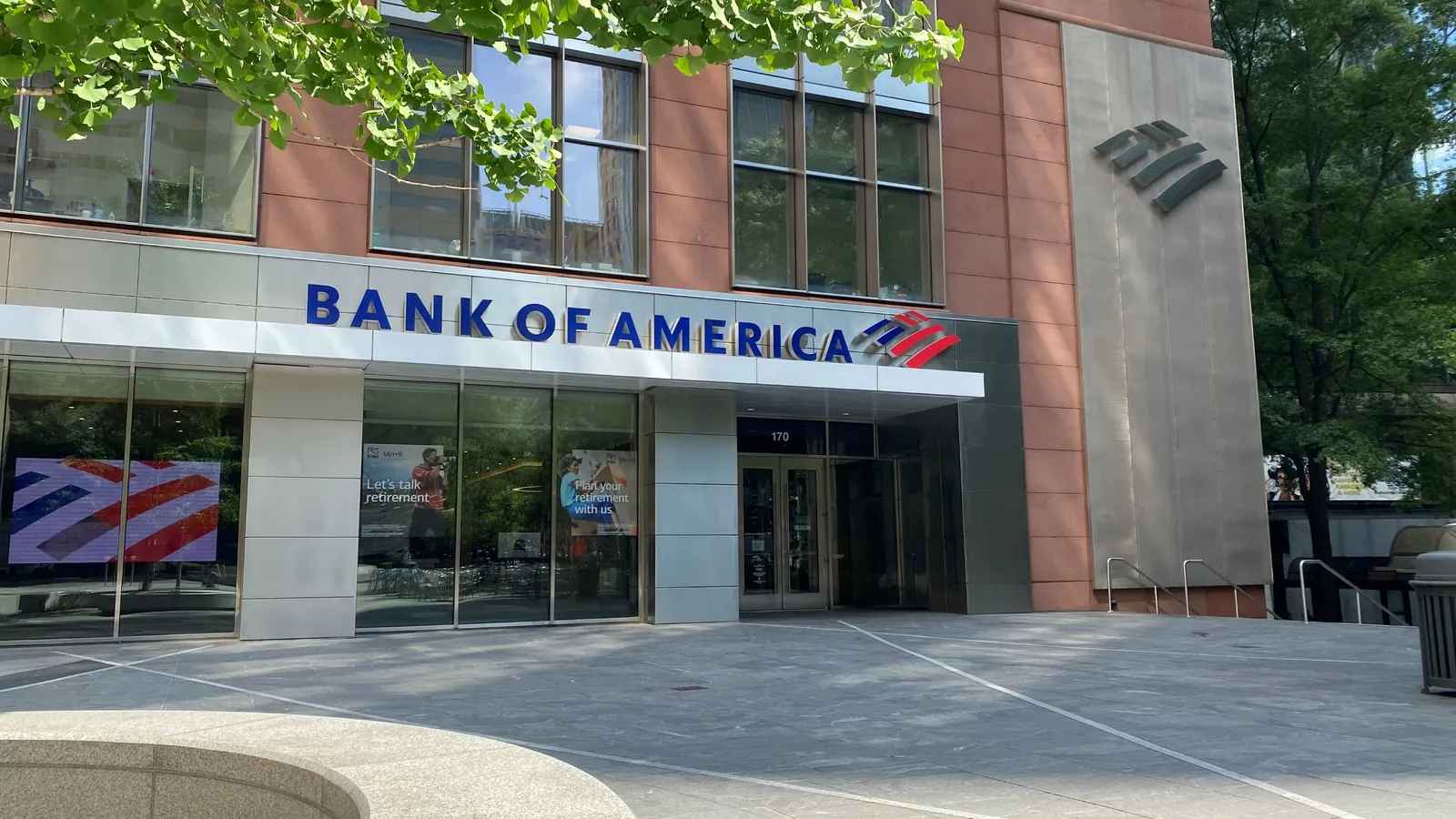
Bank of America, the second-largest bank in the United States, is currently managing a staggering $3.5 trillion in assets. However, its value is increasingly measured not just in deposits and loans, but in its massive portfolio of proprietary technology. The bank currently holds approximately 8,400 granted patents and pending patent applications, a figure that rivals many pure-play technology firms in Silicon Valley.
At the heart of this patent engine is Cameron Wadley. Since joining the Charlotte, North Carolina-based institution in 2006, Wadley has applied for 70 patents and successfully secured more than 40. His work is not confined to a single niche; rather, it spans the entire ecosystem of modern finance:
- Retirement Planning: Developing algorithmic approaches to long-term financial security.
- Payment Systems: Engineering new, frictionless ways for capital to move globally.
- Data Analytics: Creating predictive models that notify clients of necessary actions before a problem arises.
- AI Integration: Several of Wadley’s patents serve as the foundational architecture for "Erica," the bank’s widely recognized AI-powered virtual assistant.
The scale of investment supporting these efforts is immense. Bank of America spends approximately $13.5 billion annually on technology. Of that, roughly $4 billion is dedicated specifically to new initiatives—the "R&D" of the banking world.
Chronology: From Systems Engineering to Wealth Management Leadership
Wadley’s journey reflects the broader evolution of the banking industry over the last two decades.
- 2006: Wadley joins Bank of America. At this time, the industry was on the cusp of the mobile revolution. Innovation was often seen as a back-office function rather than a front-end customer experience driver.
- The Early 2010s: As the bank began to recover from the global financial crisis, the focus shifted toward digitization. Wadley began applying his electrical engineering background to consumer business problems, focusing on how data could be used to proactively serve clients.
- 2018–Present: The launch and subsequent scaling of Erica marked a turning point. Wadley’s foundational patents in predictive usage and resource management became central to the bank’s strategy.
- Current Era: Now serving as a supervision tech executive in the wealth management division (which includes Merrill Lynch and the Private Bank), Wadley is overseeing the integration of AI into high-net-worth client services, ensuring that "innovation" is no longer a separate department but a core competency of every business line.
Supporting Data: A Portfolio Built on Artificial Intelligence
The bank’s patent strategy is a clear indicator of where it believes the future of finance lies. Of its 8,400 patents and applications, approximately 1,600 are focused specifically on artificial intelligence. This represents one of the largest AI portfolios in the financial services sector.
The breakdown of new patent grants reveals a strategic focus on six key pillars:
- AI and Machine Learning (ML): Enhancing predictive capabilities and automation.
- Information Security: Protecting the $3.5 trillion asset base from increasingly sophisticated cyber threats.
- Online and Mobile Banking: Maintaining the bank’s lead in digital user experience.
- Payments: Navigating the shift toward real-time, blockchain-adjacent, and contactless transactions.
- Data Analytics: Turning raw client data into actionable financial advice.
- Augmented and Virtual Reality (AR/VR): Exploring the next frontier of client interaction and employee training.
Wadley’s own contribution, such as the "system for predictive usage of resources," demonstrates the versatility of these patents. This specific system is used to match patterns and predict resolutions at scale. It helps anticipate questions a customer might ask in a chat window, but it also functions internally, helping Bank of America’s 212,000 employees troubleshoot technical issues before they disrupt operations.
Official Responses: The "North Star" Philosophy
For Wadley and Bank of America, innovation is not an academic exercise; it is a pragmatic response to market demands. In his interview, Wadley emphasized that every patent must serve a specific purpose.
"It always starts with the customer problem that we’re trying to solve," Wadley said. "We’ve got to have some north star, something to anchor ourselves to—[a sense] that this is actually a good use of the company’s resources."
This "North Star" approach involves a rigorous evaluation process for every new idea. Before a patent application is filed, the idea is vetted against two primary criteria:
- Risk and Reliability: Can the technology meet the bank’s stringent risk standards while operating reliably across a global client base?
- Scalability: Can an idea conceived for a small subset of users be rolled out across all eight of the lender’s business lines?
Wadley also shed light on the bank’s defensive strategy regarding intellectual property. In a world where fintech startups and tech giants are constantly encroaching on traditional banking territory, patents are a vital shield. "We don’t want to do something based on feedback from clients that we roll out there and it delights them, and then all of a sudden we have to take it away because we didn’t protect it with some sort of a patent," he explained.
Perhaps most notably, Wadley rejects the idea of a "genius-driven" innovation model. Bank of America encourages its entire workforce to contribute to the IP pipeline. "Innovation isn’t in its own lane," Wadley noted. "We don’t want some designated geniuses to do all the thinking and everyone else does all the labor." This culture is fostered through biannual innovation challenges, where employees from various departments pitch solutions to business problems. Erica, the bank’s flagship AI, was born out of one such challenge.
Implications: The Shift Toward Predictive, Personalized Finance
The work being done by Wadley and his colleagues suggests a future where banking is no longer reactive, but predictive. The ultimate goal is a level of personalization that mirrors the experiences consumers have with companies like Netflix or Amazon, but applied to the far more complex world of personal and corporate finance.
The Personalization Mandate
Wadley points out that customers no longer accept "one-size-fits-all" models. They expect their financial experiences to reflect their individual needs in real time. This requires a transition from traditional banking—where a client checks a balance or applies for a loan—to a model where the bank anticipates the client’s needs. For example, a predictive system might notify a client to move funds to avoid a late fee or suggest a specific investment strategy based on real-time market shifts and the client’s unique tax profile.
The AI Acceleration
While innovation has always been a part of the bank’s DNA, the advent of generative AI and advanced machine learning has accelerated the pace. Wadley observed that "everything is being reevaluated" in light of AI. While the fundamental principles of innovation remain the same, the "zeal" and "level of enthusiasm" have reached unprecedented levels.
The Competitive Advantage
As Bank of America continues to invest $4 billion annually into new initiatives, the barrier to entry for smaller competitors grows higher. The bank’s ability to own the underlying technology of its services—protected by thousands of patents—creates a "moat" that is difficult for competitors to cross. By integrating these technologies across all eight business lines, from retail banking to wealth management and global markets, the bank ensures a seamless experience that is difficult to replicate with off-the-shelf software.
Conclusion
The career of Cameron Wadley serves as a roadmap for the modern financial professional. By bridging the gap between electrical engineering and business strategy, he has helped Bank of America transform into a technology leader that holds more than 8,000 patents. As the bank looks toward the future, the focus remains clear: using AI and predictive analytics to make financial management more intuitive, more personal, and more integrated into the daily lives of its clients.
"We’ve made strong progress," Wadley concluded, "but there is still more to do in making those experiences more intuitive, more predictive, and more seamlessly integrated into how clients manage their financial lives." In the high-stakes world of $3.5 trillion in assets, the next patent might just be the key to the next decade of dominance.