








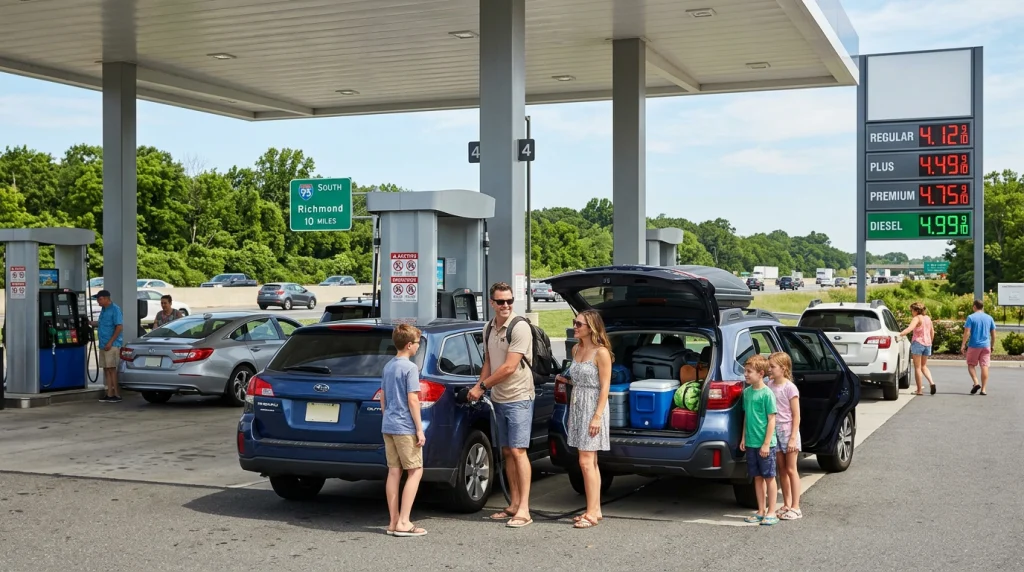
As the summer travel season kicks into high gear, a welcome trend has emerged for American entrepreneurs and commuters alike: the national average price of gasoline has declined for the third consecutive week. This downward shift—bringing the national average to $4.12 per gallon from a peak of $4.56—serves as a critical pressure release valve for a business community still grappling with the lingering effects of stubborn inflation and volatile supply chains.
While the drop offers a momentary respite, the energy landscape remains a complex tapestry of geopolitical tensions, shifting consumer behaviors, and the accelerating transition toward electrification. For small business owners, understanding these nuances is no longer just about tracking expenses; it is about strategic survival in an unpredictable economic environment.
The Current State of the Pump: Facts and Figures
The recent easing of fuel costs is largely attributed to crude oil prices stabilizing below the $100-per-barrel threshold. Historically, the summer months—characterized by the "summer driving season"—typically exert upward pressure on prices due to increased demand for gasoline and diesel. This year, however, market fluctuations have bucked the trend, providing a brief window of fiscal relief.
According to data from AAA, the national average has been on a consistent downward trajectory since May 21. This decline is not merely a statistical curiosity; it represents a tangible reduction in overhead costs for businesses that rely on fuel-intensive operations, including logistics, local delivery services, and regional sales fleets.
However, context is essential. Despite the recent decreases, fuel prices remain at elevated levels compared to historical norms. The shadow of the $5-per-gallon milestone reached in June 2022 serves as a sobering reminder of how quickly the market can pivot. For the modern small business, $4.12 per gallon is an improvement, but it is far from a return to pre-inflationary baselines.
A Chronological Look at the Recent Energy Shift
To understand how we arrived at this point, one must look at the timeline of the last several weeks.
- Mid-May: Crude oil markets began to show signs of cooling as global economic forecasts softened, leading to a plateau in retail gas prices.
- Late May: The consistent downward trend commenced. By the final week of May, the national average began to retreat from the $4.50 range, offering the first signs of relief for businesses preparing for summer operations.
- Early June: The current reporting period shows a stabilization, with gasoline demand ticking upward—from 8.59 million barrels per day to 8.73 million—while supply saw a marginal increase of 100,000 barrels, reaching 215.1 million.
This chronology suggests a fragile balance. While consumer demand is strengthening—a sign of economic resilience—the supply side remains tight. The modest increase in domestic gasoline stocks is a positive indicator, but it has yet to reach the levels necessary to guarantee a sustained, long-term price decline.
Official Responses and Market Analysis
Industry experts, including representatives from AAA, maintain a cautious outlook. The prevailing sentiment is one of "cautious optimism." While the current respite is welcomed, the underlying drivers of the energy market—specifically global crude inventories—remain a point of concern.
"Since May 21, the national average has dropped, signaling some respite for drivers and small businesses alike," a AAA spokesperson noted in a recent briefing. However, the organization is quick to highlight the volatility of the global market. Specifically, the report points to a decline in crude oil inventories by 7.2 million barrels, a sharp contraction that could force prices back upward if global demand continues to outpace production.
The geopolitical landscape, particularly tensions surrounding the Strait of Hormuz, continues to inject a "risk premium" into oil prices. Any disruption in this critical maritime chokepoint could instantly negate the gains made at the pump over the last three weeks. Consequently, industry analysts are advising businesses to treat the current price decline as a tactical advantage to improve cash flow rather than a permanent return to low-cost operations.
The Economic Implications for Small Businesses
For the average small business owner, the price of fuel is more than just a line item—it is a determinant of profit margins. The impact of the recent price drop manifests in three distinct ways:
1. Operational Cost Mitigation
Businesses involved in last-mile delivery, catering, or mobile services (such as plumbing or landscaping) have seen an immediate improvement in their daily operational costs. In a high-inflation environment, where the price of raw materials and labor has remained high, fuel savings provide a much-needed buffer, allowing owners to maintain service pricing without further squeezing their margins.
2. Employee Retention and Commuting
For businesses with brick-and-mortar locations, the cost of gas affects employee morale and retention. As commuting costs drop, the "hidden" pay cut that employees have been experiencing due to inflation is partially mitigated. This can indirectly improve staff stability, as employees are less likely to seek out remote work or local alternatives to avoid high fuel costs.
3. Regional Disparities and Fleet Management
A significant challenge for businesses operating in multiple states is the extreme variance in fuel prices. A delivery fleet operating in California ($5.80/gallon) faces a drastically different fiscal reality than a fleet in Indiana ($3.39/gallon) or Texas ($3.58/gallon). This geographical spread requires sophisticated logistics management. Businesses must now account for regional fuel pricing when setting delivery fees or regional service charges to ensure that operations remain profitable across all jurisdictions.
Navigating the Energy Transition: The Role of EVs
The recent volatility in gas prices has accelerated the conversation around alternative energy, specifically the adoption of Electric Vehicles (EVs). While EVs offer a hedge against the unpredictability of the oil market, they come with their own set of economic considerations.
The current national average for residential or public charging is approximately 42 cents per kilowatt-hour (kWh). While this is a slight increase from previous weeks, the long-term operational cost of an EV often remains significantly lower than a traditional internal combustion engine vehicle.
Regional Charging Disparities
Just as gasoline prices vary, so too does the cost of electricity. Small business owners looking to transition to an electric fleet should conduct a geographic audit:
- The Low-Cost Zones: States like Kansas, with rates around 30 cents per kWh, make a compelling case for early adoption of electric fleets.
- The High-Cost Zones: Conversely, in states like West Virginia, where rates can reach 52 cents per kWh, the ROI on an EV investment takes longer to realize.
Beyond the immediate cost per mile, businesses should leverage federal and state tax credits designed to incentivize the purchase of commercial electric vehicles. These financial vehicles can drastically reduce the initial capital expenditure, making the transition to green energy a sound fiscal decision as well as an environmental one.
Strategic Planning in an Unpredictable Market
How should a small business owner respond to the current landscape? The answer lies in data-driven planning and adaptability.
Leveraging Technology
Tools like the AAA TripTik Travel planner are no longer just for tourists. Business owners can use these resources to map out the most cost-effective routes for their delivery fleets, identifying not only the cheapest gas stations but also charging hubs for businesses beginning to pilot EV integration.
Budgetary Flexibility
The primary lesson from the 2022 price spikes and the current fluctuations is that the energy market is never "settled." Businesses should maintain "fuel contingency" lines in their budgets. By stress-testing their business models against the possibility of $5-per-gallon gas, owners can ensure they remain profitable even if the current downward trend reverses.
Strategic Procurement
For businesses with larger fleets, the current price dip may be an opportune time to lock in fuel contracts or evaluate the efficacy of current delivery routes. Efficiency is the best defense against market volatility; reducing idle times, optimizing route density, and performing regular vehicle maintenance are all ways to maximize the benefit of the current, lower-price environment.
Conclusion: A Window of Opportunity
The recent three-week decline in gas prices is a welcome relief for the American small business sector, providing a vital opportunity to stabilize finances and plan for the future. However, it is a reminder that the energy market remains as dynamic and precarious as ever.
By monitoring global oil inventories, factoring in the wide disparities in regional fuel and electricity costs, and strategically investing in more efficient or alternative-energy transport, small business owners can navigate these turbulent waters. The current situation is not a time to relax, but rather a time to shore up operations. With careful planning and a proactive approach, the modern entrepreneur can turn today’s market volatility into a competitive advantage, ensuring that their business remains robust, efficient, and ready for whatever the next chapter of the energy market holds.
For more in-depth data and real-time tracking of fuel costs, business owners are encouraged to monitor the latest updates from AAA Gas Prices.