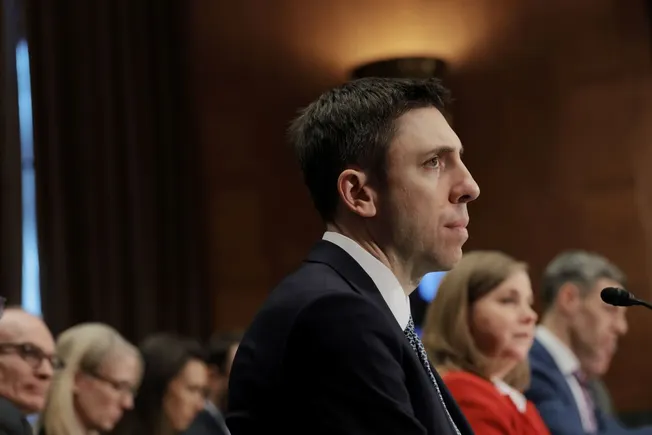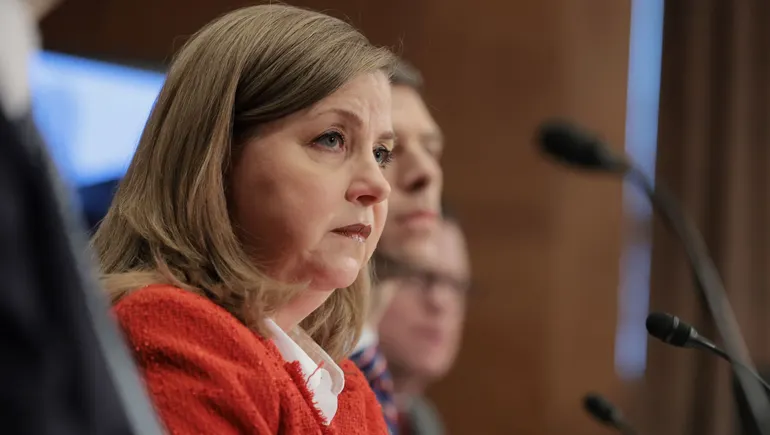








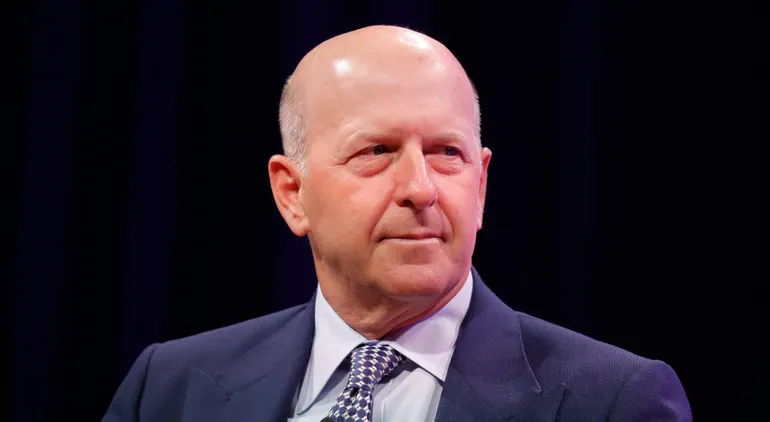
In a significant escalation of political pressure on Wall Street, two prominent Democratic lawmakers have formally challenged Goldman Sachs CEO David Solomon regarding the bank’s decision to retain outgoing Chief Legal Officer (CLO) Kathryn Ruemmler in an advisory capacity. The inquiry, led by Senator Elizabeth Warren (D-MA) and Representative Raja Krishnamoorthi (D-IL), follows a series of revelations concerning Ruemmler’s historical ties to the late convicted sex offender Jeffrey Epstein—ties that have sparked a firestorm of criticism regarding the bank’s vetting processes and corporate culture.
The controversy centers on why Solomon allegedly "pressed" Ruemmler to remain at the firm as a consultant even after her resignation in February 2026, which was prompted by the public release of documents detailing her extensive social and professional interactions with Epstein. The lawmakers’ letter does more than just ask for clarification; it explicitly questions Solomon’s "professional judgment and fitness" to lead one of the world’s most powerful financial institutions.
Main Facts: The Intersection of Wall Street and the Epstein Legacy
The crux of the matter lies in the nature of the relationship between Kathryn Ruemmler and Jeffrey Epstein, which came to light through Department of Justice (DOJ) document releases in early 2026. While Ruemmler was not accused of criminal activity, the optics of her relationship with Epstein—whom she referred to in emails as "Uncle Jeffrey"—have proved toxic for a firm that prides itself on being a paragon of "reputational risk management."
According to the documents, Ruemmler’s association with Epstein was not merely a peripheral professional acquaintance. The two reportedly met frequently for meals and social engagements. Epstein allegedly provided Ruemmler with various gifts, including luxury handbags and an Apple Watch, and funded personal services such as hair appointments, massages, and facials. More damagingly, allegations surfaced that Ruemmler had once advised Epstein on how to handle or discredit one of his accusers.
Despite these revelations, David Solomon has remained a steadfast supporter of Ruemmler. Following her resignation, Solomon praised her as an "extraordinary general counsel" and a "mentor and friend." However, when reports emerged in June 2026 that Solomon had encouraged her to stay on past her June 30 departure date as an advisor, Senator Warren and Representative Krishnamoorthi intervened.
The lawmakers have demanded a full accounting of Ruemmler’s compensation, her new role, and the specific disclosures she made to Goldman Sachs regarding Epstein before she was hired in 2020. They have set a deadline of June 26 for the bank to provide these answers.
Chronology: From the White House to the "Uncle Jeffrey" Emails
To understand the gravity of the current situation, one must look at the timeline of Ruemmler’s career and the subsequent emergence of the Epstein connection.
- Pre-2014: Kathryn Ruemmler establishes herself as a top-tier legal mind, eventually serving as White House Counsel under President Barack Obama. During this period and the years following her government service, she maintains a relationship with Jeffrey Epstein.
- 2019: Jeffrey Epstein dies in a Manhattan jail cell while awaiting trial on sex trafficking charges.
- 2020: Goldman Sachs hires Ruemmler as its Chief Legal Officer. The bank later claims she disclosed her association with Epstein during the hiring process.
- 2020–2025: Ruemmler ascends within Goldman, taking on roles that include chairing the firm’s conduct committee and serving as co-vice chair of the reputational risk committee.
- January 2026: The Department of Justice releases over 35 million pages of documents related to the Epstein investigation. These files contain the "Uncle Jeffrey" emails and details of the gifts and meetings between Epstein and Ruemmler.
- February 2026: Amid mounting public and internal pressure, Ruemmler resigns from her position as CLO, with an effective departure date of June 30.
- March 2026: Goldman’s proxy statement reveals that Ruemmler received an 11.1% pay increase in 2025, bringing her total compensation to $25 million.
- June 2026: Reports surface in Bloomberg and the Financial Times that Solomon "pressed" Ruemmler to stay on as an advisor. Simultaneously, reports emerge that Goldman’s outgoing chief of staff, Russell Horwitz, opposed Solomon’s decision to back Ruemmler so publicly.
- June 10, 2026: Senator Warren and Representative Krishnamoorthi send their formal letter of inquiry to David Solomon.
Supporting Data: Compensation and Internal Governance
The financial and structural data surrounding Ruemmler’s tenure at Goldman Sachs provides the fuel for the lawmakers’ "fitness to lead" argument.
The $25 Million Question
A primary point of contention is Ruemmler’s compensation. In 2025, even as the Epstein-related documents were beginning to circulate in legal and regulatory circles, Ruemmler received a significant raise. Her $25 million package places her among the highest-paid legal executives in the world. Lawmakers are now questioning the fiscal responsibility of this payout. Specifically, Warren and Krishnamoorthi asked Solomon to calculate how much the bank could have saved had her resignation been made effective immediately in February rather than being delayed until June.
The Irony of the Conduct Committee
Perhaps the most stinging criticism involves Ruemmler’s roles within the bank’s internal governance. She didn’t just lead the legal department; she was a central figure in the firm’s moral and ethical policing.
- Chair of the Conduct Committee: Responsible for overseeing employee behavior and adherence to firm values.
- Co-Vice Chair of the Reputational Risk Committee: Tasked with identifying and mitigating threats to Goldman’s brand.
The lawmakers’ letter asks pointedly: "What criteria were evaluated when selecting her for these positions? Did Ruemmler’s relationship with Mr. Epstein play a role in the bank’s willingness to put Ruemmler in these positions?" The implication is that Ruemmler’s history made her uniquely unfit to oversee "conduct" and "reputation."
Official Responses: Goldman’s Defense vs. Congressional Skepticism
The public discourse has become a battle of narratives. On one side, Goldman Sachs maintains that it followed proper protocols; on the other, lawmakers argue that those protocols were either flawed or ignored.
The Bank’s Position
A spokesperson for Goldman Sachs has defended the firm’s actions, stating that Ruemmler "disclosed her association with Epstein before joining the firm." The bank further asserts that Ruemmler has "answered every question the firm has ever asked" regarding the matter. Solomon’s personal statements have focused on Ruemmler’s professional competence, describing her as a vital asset to the firm’s legal operations.
The Lawmakers’ Rebuttal
Warren and Krishnamoorthi are not satisfied with the bank’s blanket assertions of "disclosure." Their letter demands granularity. They want to know:
- Exactly how Ruemmler described her relationship with Epstein during the 2020 hiring process.
- Whether she disclosed advising Epstein on discrediting accusers.
- Whether the bank notified federal regulators of her Epstein ties before hiring her.
- A full list of the questions the bank asked her and her verbatim responses.
The lawmakers argue that if the bank knew the extent of the relationship—the "Uncle Jeffrey" moniker and the thousands of dollars in gifts—and hired her anyway, it represents a failure of due diligence. If the bank didn’t know, it represents an even greater failure of investigative oversight.
Implications: Reputation, Leadership, and Regulatory Scrutiny
The fallout from the Ruemmler-Epstein connection has broader implications for David Solomon and the future of Goldman Sachs.
Solomon’s Leadership Under Siege
David Solomon’s tenure as CEO has been marked by both financial success and internal friction. He has faced criticism for his management style, his extracurricular activities as a DJ, and his aggressive push to return employees to the office post-pandemic. The Ruemmler situation adds a new, more serious layer to these criticisms. By "pressing" a scandal-plagued executive to stay on as an advisor, Solomon has tied his personal judgment to a highly controversial figure. The Financial Times report that his own Chief of Staff, Russell Horwitz, disagreed with this stance suggests a rift at the very top of the bank’s leadership.
The "Epstein Shadow" on Wall Street
Goldman Sachs is not the only bank to suffer from the Epstein legacy. JPMorgan Chase and Deutsche Bank have both paid hundreds of millions of dollars in settlements related to their dealings with Epstein. However, the Goldman case is different: it involves a top executive’s personal relationship rather than the bank’s client services. This distinction makes the issue one of "corporate culture" rather than just "compliance." It raises the question of whether Wall Street’s "old boys’ club" mentality still protects well-connected individuals regardless of their associations.
Regulatory and Shareholder Pressure
While the letter from Warren and Krishnamoorthi is a political move, it often serves as a precursor to more formal regulatory action or shareholder derivative suits. If the bank is found to have misled regulators or failed in its fiduciary duty to shareholders by paying out $25 million to an executive with significant reputational baggage, the financial consequences could escalate.
As the June 26 deadline approaches, the financial world is watching closely. The resolution of this inquiry will likely determine whether Kathryn Ruemmler quietly transitions into a consulting role or if her departure becomes a catalyst for a leadership shakeup at the highest levels of Goldman Sachs. For now, the "Uncle Jeffrey" emails remain a haunting reminder that in the world of high finance, your past associations can become your future liabilities.