







By PYMNTS | June 14, 2026
For decades, Hany Farid has stood as the global vanguard of digital forensics. As a professor at the University of California, Berkeley, and a long-time consultant to government agencies, law enforcement, and global media outlets, Farid has been the person the world turns to when the line between truth and fabrication begins to blur. He has spent a career building the mathematical frameworks used to expose manipulated imagery and deceptive audio.
However, as of June 2026, the man who spent his life teaching the world how to spot a lie is now admitting to a profound professional crisis. In a profile published by The New York Times, Farid confessed that the rapid, explosive evolution of generative artificial intelligence has left him questioning his own ability to discern reality from digital artifice.
"I feel like I’m going blind," Farid remarked, articulating a sentiment that is beginning to resonate throughout the cybersecurity, legal, and financial sectors. His disillusionment is not merely personal; it represents a systemic failure of traditional detection methods in the face of an AI-saturated landscape.
The Chronology of a Disappearing Reality
The timeline of digital manipulation has shifted from the "amateur hour" of early Photoshop to the sophisticated, real-time synthetic media of today.
- The Early Era (Pre-2018): Detection was primarily a matter of finding "artifacts"—pixel irregularities, lighting inconsistencies, or shadow mismatches. Experts like Farid relied on the fact that human manipulators were inconsistent.
- The Emergence of GANs (2018–2022): Generative Adversarial Networks allowed AI to "compete" against itself to create more realistic images. This forced forensic experts to pivot toward deep-learning detection models.
- The Democratization of Generative AI (2023–2025): The arrival of large-scale multimodal models meant that anyone with a smartphone could generate high-fidelity videos and voices. The barriers to entry for creating misinformation dropped to zero.
- The Current Crisis (2026): We have entered a stage where AI models are capable of creating self-consistent realities. Forensic detection is no longer just "costly"—it is frequently mathematically impossible in the timeframe required to prevent harm.
The Asymmetry of Detection: A Race Against the Clock
The core of the problem, as Farid explains to his students at Berkeley, is not just the sophistication of the fakes, but the velocity of the internet.
In a digital environment where the "half-life" of a social media post is under 90 seconds, the time required for a forensic expert to conduct a peer-reviewed analysis is an eternity. "Within 20 minutes, the whole ballgame’s basically over," Farid noted. By the time a video is debunked, it has already been viewed, shared, and internalized by millions. The fake has already become "fact" in the public consciousness.
This creates a dangerous, asymmetric warfare. One of Farid’s students summarized the current geopolitical and social reality succinctly: "The creation of deepfakes is easy, cheap, fast, and reliable. Detection is costly and difficult." This imbalance means that the burden of proof has effectively shifted. Where we once operated under a "seeing is believing" paradigm, we are now forced into a state of permanent skepticism—a condition that threatens the foundational trust required for democracy and social cohesion.
Financial Fraud: The Rise of the Synthetic Borrower
While the societal implications of deepfakes—such as political misinformation—are widely discussed, the most immediate and tangible impact is currently being felt within the global financial system. The emergence of the "synthetic borrower" represents a paradigm shift in how criminal organizations exploit banking and lending infrastructure.
As PYMNTS has extensively reported, the new frontier of fraud is not the simple theft of an identity; it is the engineering of an identity. Fraudsters are now combining deepfake video, cloned voices, AI-generated employment histories, and fabricated financial behaviors to create "persona-based" fraud.
Anatomy of a Synthetic Persona:
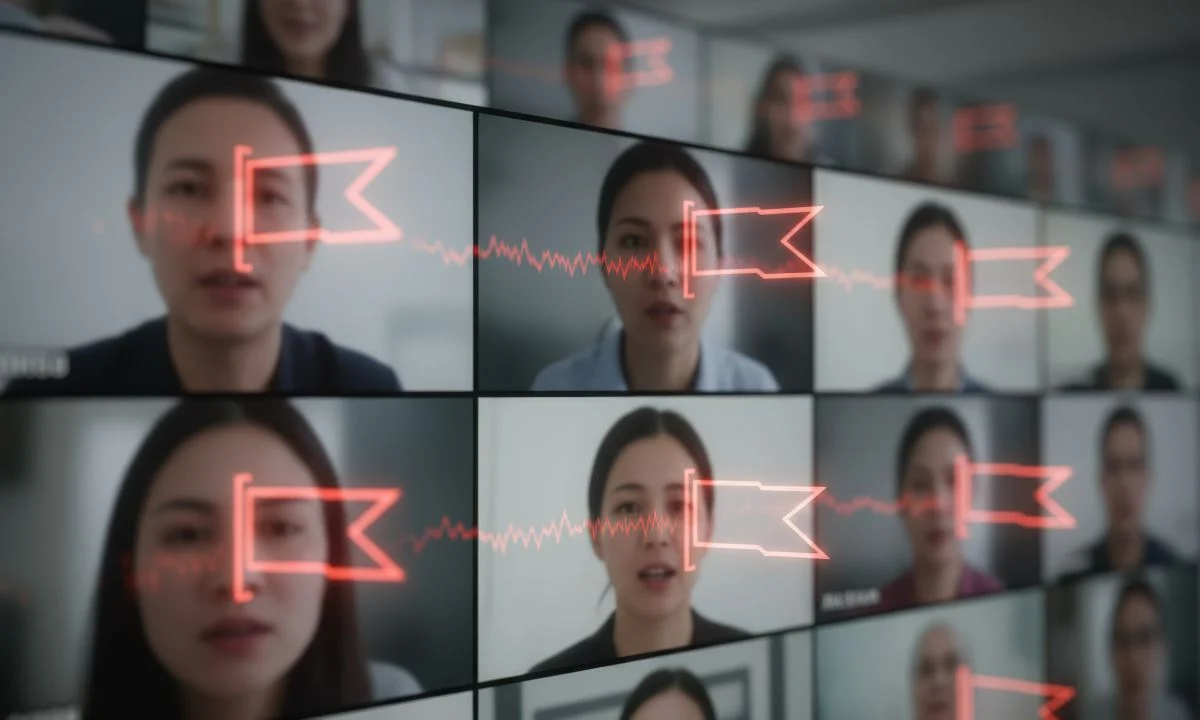
- Biometric Bypass: Deepfake video and audio are used to pass "liveness" checks during remote account onboarding.
- Credit History Fabrication: Using AI, criminals simulate years of consistent financial behavior, creating a credit file that appears legitimate to automated underwriting models.
- Employment Simulation: Synthetic companies, complete with AI-generated websites and voice-verified HR departments, are used to "confirm" employment for loan applications.
- Disappearance: Once the loan is funded, the persona—and the AI that sustained it—simply vanishes, leaving no digital footprint to trace.
This is a direct challenge to the fundamental premise of modern credit risk management. For decades, banks, credit unions, and FinTech lenders have operated on the assumption that "more data equals more certainty." The logic was that if a borrower provided enough documentation—pay stubs, tax history, utility bills—the risk of default could be mathematically calculated.
Synthetic borrowers invert that premise entirely. In an era of generative AI, more data does not mean more certainty; it simply creates a more convincing illusion.
Data Security and the Corporate Response
The corporate world is struggling to keep pace. According to the PYMNTS Intelligence report, The AI MonitorEdge Report: COOs Leverage GenAI to Reduce Data Security Losses, approximately 55% of companies are aggressively pivoting to AI-powered cybersecurity measures.
However, there is a clear "investment gap." A lender may invest millions of dollars into developing a proprietary anti-fraud infrastructure, only to be bypassed by a criminal organization using an open-source generative AI tool that costs pennies to operate. The democratization of AI has leveled the playing field, but it has done so by empowering the attacker, not the defender.
This creates a cycle of "cat and mouse" that is increasingly unsustainable. Companies are spending record amounts on security, yet the sophistication of the fraud is rising at a faster rate than the efficacy of the defense.
The Human Toll: Why Experts are Leaving
The personal toll of this environment is perhaps best exemplified by Farid’s decision to leave Silicon Valley for a rural farm in Vermont. When the world’s leading expert in digital forensics reaches a point of exhaustion, it serves as a stark warning to the rest of the professional world.
The stress of defending truth against an infinite supply of manufactured lies is leading to a form of "reality fatigue." For professionals in law, journalism, and finance, the psychological impact of working in a field where the "truth" is constantly under siege is profound. If our experts feel they are "going blind," what hope does the average consumer have?
Implications for the Future
The current situation suggests that we are at an inflection point. The following trends are likely to define the next decade of digital interaction:
- The Death of Passive Trust: We can no longer rely on digital signatures or standard biometric checks. We are moving toward a future where "verified" identity must be anchored in offline, physical trust or hardware-based cryptographic keys that cannot be spoofed by generative models.
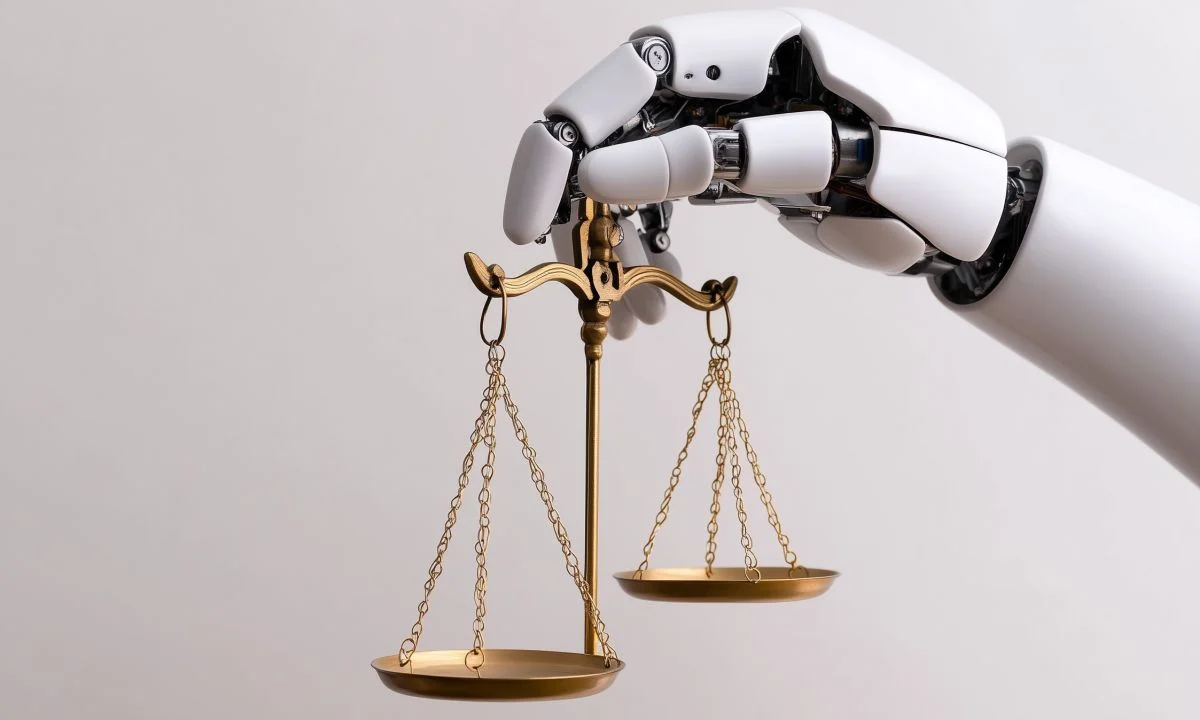
- The Legal Crisis: Courts are already struggling to determine the admissibility of digital evidence. If deepfakes are indistinguishable from reality, the foundational evidence for criminal and civil litigation becomes suspect, potentially leading to a crisis of justice.
- The Economic Re-calibration: Financial institutions will be forced to move away from fully digital, automated onboarding. We may see a return to human-in-the-loop verification, which will inevitably increase the cost of financial services and slow down the speed of digital commerce.
- The Regulatory Catch-Up: While governments discuss AI regulation, the technology is moving at an exponential pace. Regulations focusing on disclosure (watermarking AI content) may help, but they do little to stop bad actors who operate outside the law.
As Hany Farid’s career trajectory highlights, the battle for truth is no longer just about technical prowess; it is about the sustainability of our information ecosystem. We have created a world where the most sophisticated machines are being used to manufacture the most convincing lies. As we move forward, the challenge will be not just to build better detectors, but to decide how much of our digital life we are willing to continue trusting in an age where seeing is no longer believing.