







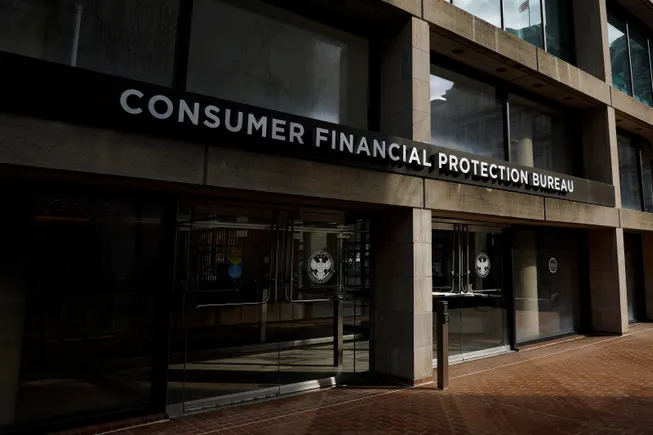
WASHINGTON, D.C. — In a move that signals a strategic shift from administrative dismantling toward conservative institutionalism, President Donald Trump has officially nominated Brian Johnson to serve a five-year term as the Director of the Consumer Financial Protection Bureau (CFPB). The announcement, sent to the Senate on Wednesday afternoon, marks a pivotal moment for the nation’s primary consumer watchdog, which has faced a period of existential uncertainty under interim leadership.
Johnson, a seasoned veteran of the agency who served as its Deputy Director from 2018 to 2020, currently serves as a senior executive at Capital One. If confirmed, he will succeed Acting Director Russ Vought, whose brief but tumultuous tenure since February 2025 was defined by an explicit agenda to shutter the agency entirely. Johnson’s nomination suggests that the administration may be moving away from the "abolitionist" rhetoric of the early Trump 2.0 era in favor of a "regulatory tailoring" approach that aligns with traditional Republican financial principles.
The Core Mandate: Transitioning from Dismantling to Direction
The nomination of Brian Johnson is, first and foremost, a stabilizing signal to the financial services industry. While the CFPB has been a lightning rod for political controversy since its inception following the 2008 financial crisis, the prospect of its total dissolution under Russ Vought created a vacuum of regulatory certainty. Vought’s efforts to "dismantle" the agency in a matter of months led to significant internal upheaval and a freeze on various mandatory rulemaking processes.
By selecting Johnson, the White House has tapped an individual with deep "institutional memory." During his previous tenure, Johnson was a key architect of the agency’s policy framework under Director Kathy Kraninger. His return is expected to pivot the bureau away from the aggressive, enforcement-heavy posture of the Biden-era director, Rohit Chopra, without necessarily seeking to burn the building down.
Industry analysts suggest that Johnson’s primary mission will be to recalibrate the bureau’s focus: moving away from what Republicans have termed "regulation by enforcement" and toward a more collaborative, innovation-friendly environment that prioritizes "clear rules of the road" for banks and fintech companies.
A Chronology of the CFPB: From Inception to the Trump 2.0 Era
To understand the significance of Johnson’s nomination, one must look at the pendulum of the CFPB’s decade-plus history.
- The Formative Years (2011–2017): Established by the Dodd-Frank Wall Street Reform and Consumer Protection Act, the CFPB was the brainchild of then-Professor Elizabeth Warren. Under its first director, Richard Cordray, the agency took a confrontational stance against large financial institutions, securing billions in relief for consumers.
- The First Trump Transition (2017–2020): Following Cordray’s resignation, the agency underwent a radical shift. After a brief stint by Mick Mulvaney, Brian Johnson joined the leadership team as the No. 2 official. This era was marked by a reduction in fines and a focus on "innovation," including the creation of the "regulatory sandbox."
- The Chopra Era (2021–2024): Under Director Rohit Chopra, the CFPB returned to an activist footing. Chopra targeted "junk fees," pushed for open banking rules, and increased scrutiny on Big Tech’s entry into the payments space. He also recast Johnson’s "Office of Innovation" into the "Office of Competition and Innovation," signaling a shift in philosophy.
- The Vought Interregnum (2025–Present): Following the 2024 election, Russ Vought was installed as Acting Director. Vought, a staunch critic of the "administrative state," openly advocated for the closure of the CFPB, viewing it as unconstitutional and redundant.
- The Johnson Nomination (June 2026): The nomination of Brian Johnson represents the start of a new chapter—one that seeks to preserve the agency’s structure while fundamentally redirecting its ideological compass.
Supporting Data: The "Innovation" Legacy and the Policy Sandbox
One of the most significant aspects of Johnson’s previous tenure was his stewardship of the Office of Innovation. This office was designed to allow companies to test new financial products without the immediate threat of regulatory litigation.
Under Johnson, the office developed a "no-action letter" policy. This allowed companies to apply for a "safe harbor" status, where the CFPB would agree not to take enforcement action against a specific product for a set period, provided the company shared data and adhered to certain consumer protections. Critics, including many consumer advocacy groups, argued this created a "get out of jail free" card for predatory lenders. Proponents, however, argued it was essential for the U.S. to keep pace with global fintech developments.
Data from the agency’s website indicates that while Director Chopra renamed the office to emphasize "Competition," the core infrastructure for innovation remains. Johnson is widely expected to revive the "sandbox" model, potentially expanding it to include emerging sectors like decentralized finance (DeFi) and AI-driven credit scoring.
Furthermore, Johnson was instrumental in the Taskforce on Federal Consumer Financial Law, which produced a massive two-volume report in 2021. This report provided a roadmap for modernizing consumer protection laws, much of which focused on reducing "regulatory burden" and harmonizing overlapping rules between the CFPB, the OCC, and the FDIC. This report is likely to serve as the blueprint for Johnson’s five-year term.
Official Responses: A Divided Washington
The reaction to Johnson’s nomination has been split along predictable but revealing lines, highlighting the tension between the "pro-business" and "pro-consumer" camps.
Industry Optimism
Lindsey Johnson, President and CEO of the Consumer Bankers Association (CBA), expressed a sense of relief and forward-looking cooperation. She noted that the industry is seeking "certainty" above all else.
"A transparent, accountable CFPB focused on its core mission will strengthen outcomes for consumers, financial institutions, and the U.S. economy," she stated. For the banking sector, Brian Johnson represents a "known quantity"—a regulator who understands the complexities of bank operations and is unlikely to pursue "novel" legal theories to extract large settlements.
Democratic Opposition
On the other side of the aisle, the architect of the CFPB, Senator Elizabeth Warren (D-MA), issued a scathing critique. She characterized Johnson not as a moderate, but as a more sophisticated version of his predecessor.
"Brian Johnson is the next hatchet man to try to finish [Vought’s] job and gut an agency that has returned more than $21 billion to cheated consumers," Warren said in a statement. Her concern is that Johnson will use "regulatory tailoring" as a euphemism for "de-fanging" the agency’s enforcement division.
Expert Analysis
Todd Baker, a senior fellow at Columbia University’s Richman Center for Business, Law & Public Policy, provided a more nuanced perspective on LinkedIn. He described Johnson as a "pretty normal type of Republican financial regulator," distinguishing him from "ideological Trump 2.0-era figures like Russell Vought."
Baker noted that while enforcement activity would likely be minimal under Johnson, the nominee would probably proceed with mandatory parts of the regulatory agenda, such as finalizing the Dodd-Frank Section 1033 rules regarding personal financial data rights (Open Banking).
Implications: The "Trump 2.0" Regulatory Landscape
The nomination of Brian Johnson does not happen in a vacuum. It is part of a broader effort by the current administration to synchronize the leadership of the nation’s financial regulators.
1. The End of "Abolitionism," the Rise of "Effectiveness"
While Russ Vought’s goal was to shutter the CFPB, Johnson’s goal will likely be to make it "work" for the current administration’s priorities. This includes the elimination of Diversity, Equity, and Inclusion (DEI) mandates within the agency’s hiring and oversight practices—a key priority for the Trump White House.
2. Crypto and Fintech
Under Johnson, the CFPB is expected to become significantly more "crypto-friendly." By leveraging the Office of Innovation, Johnson could provide the legal clarity that the crypto industry has long sought, potentially positioning the CFPB as a more favorable regulator than the SEC or the CFTC has been in the past.
3. Section 1033 and Data Privacy
One of the most critical looming issues is the implementation of Section 1033 of the Dodd-Frank Act. This rule governs how consumers can share their financial data with third-party apps (like Mint or Venmo). While the Chopra administration pushed for a version that limited the "rent-seeking" behavior of large banks, Johnson may seek a version that provides more protections for the incumbent institutions that currently hold the data, citing "security and sound banking practices" as the primary justification.
4. Enforcement Strategy
Under a Johnson-led CFPB, the public should expect a shift from "high-profile" lawsuits against major banks to a more "targeted" enforcement approach. This would likely focus on clear-cut fraud or "bad actors" in the non-bank lending space, rather than systemic challenges to the fee structures of the nation’s largest lenders.
Conclusion: A Measured Return to Conservative Oversight
The nomination of Brian Johnson marks a strategic retreat from the brink of institutional destruction. By choosing an experienced hand with deep ties to both the regulatory world and the private sector, the Trump administration is signaling that it intends to govern the financial sector through traditional conservative principles: deregulation, innovation-first policies, and a skepticism of administrative overreach.
However, the path to confirmation may not be smooth. While Johnson is a "normal" Republican regulator, his ties to the Federalist Society and his history of rolling back consumer protections will ensure a contentious Senate hearing. For the financial industry, the hope is that Johnson can provide the stability they have lacked for years. For consumer advocates, the fear remains that his "normalcy" is simply a more effective tool for dismantling the protections they have fought to maintain.
As the Senate prepares for confirmation hearings, the future of the CFPB hangs in the balance—no longer threatened with immediate closure, but facing a fundamental redefinition of its mission that could last well into the next decade.