







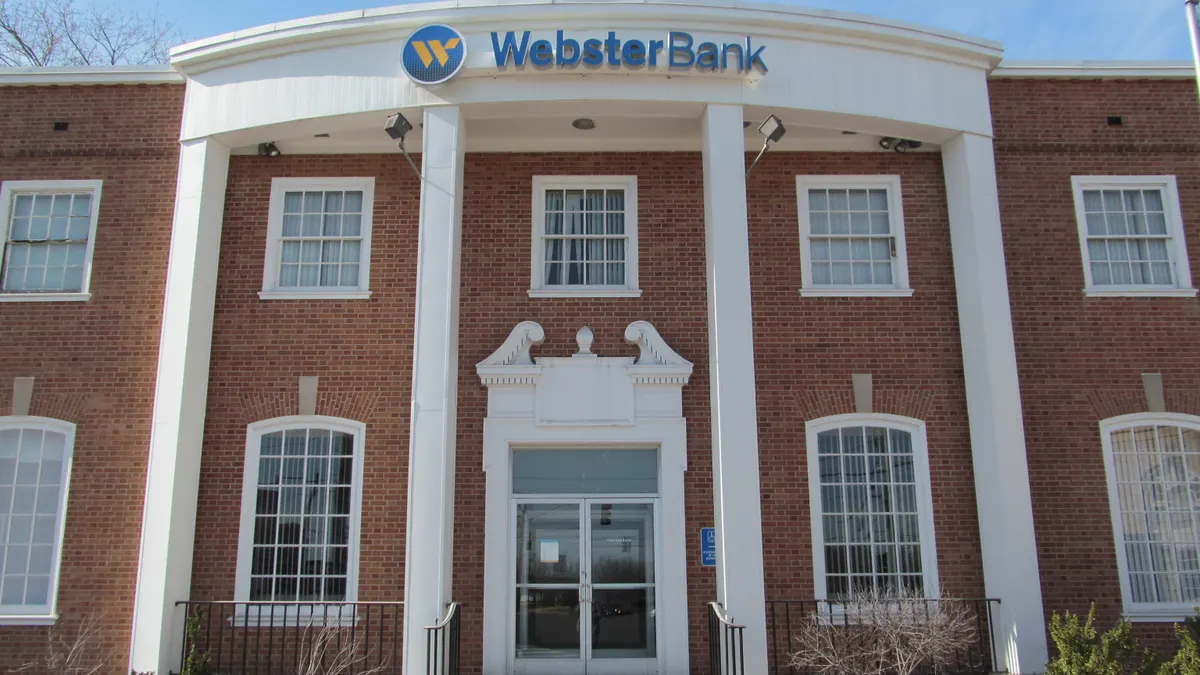
BOSTON & WATERBURY – In a move that signals a profound shift in the American financial regulatory landscape, the Office of the Comptroller of the Currency (OCC) has officially greenlit Banco Santander’s $12.3 billion acquisition of Webster Bank. The approval, disclosed in a Tuesday filing with the Securities and Exchange Commission (SEC), marks a pivotal milestone for the Spanish banking giant as it seeks to aggressively expand its footprint in the United States.
The approval, dated June 12, 2026, comes a mere 74 days after Santander formally submitted its application to the OCC. This expedited timeline is being viewed by industry analysts as a hallmark of the "new normal" in Washington, where a return to deregulatory policies has significantly shortened the gestation period for large-scale bank mergers. While the transaction still requires the "green light" from the Federal Reserve and the European Central Bank (ECB), the OCC’s swift endorsement removes one of the most significant domestic hurdles for the tie-up.
The Core of the Deal: Building a $327 Billion Powerhouse
The acquisition of the Connecticut-based Webster Bank by Santander is not merely a regional consolidation; it is a strategic play to create a top-tier U.S. lender. Upon completion, the combined entity is expected to hold approximately $327 billion in assets. This would place the new Santander-Webster entity firmly within the ranks of the most influential financial institutions in the country, bridging the gap between super-regional players and the "Big Four" money-center banks.
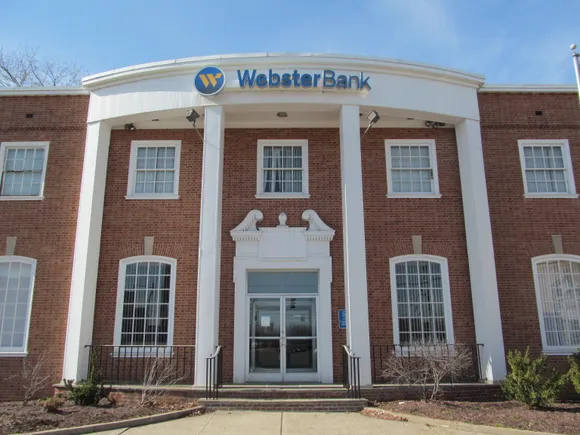
For Santander, which has spent years refining its U.S. strategy through Santander Holdings USA, the acquisition of Webster Bank provides a dense, lucrative branch network in the Northeast, particularly in Connecticut, Massachusetts, and Rhode Island. Webster Bank, known for its strong middle-market commercial lending and a robust HSA (Health Savings Account) platform, offers Santander a diversified revenue stream that complements its existing retail and auto-lending strengths.
Chronology of a Rapid Merger
The path to this week’s OCC approval has been notably brisk compared to the protracted merger sagas of the early 2020s. The timeline of the transaction reflects a disciplined approach by both institutions and a receptive regulatory environment:
- February 3, 2026: Santander and Webster Bank go public with the merger proposal, announcing a $12.3 billion deal value.
- March 30, 2026: Santander formally submits its application for the acquisition to the OCC, initiating the official regulatory clock.
- April 2026: The banks begin sketching out a "second layer of management," signaling confidence in the deal’s progression. During this month, Webster also discloses that the Justice Department’s antitrust division has commenced its review of the competitive effects of the merger.
- May 26, 2026: Webster Bank shareholders overwhelmingly approve the tie-up during a special meeting, clearing the way for the final regulatory push.
- June 12, 2026: The OCC grants its approval, just 74 days after the application was filed.
- June 18, 2026: The approval is publicly disclosed via SEC filings.
Santander has maintained its projection that the deal will close in the second half of 2026, pending the remaining approvals from the Fed and the ECB.
Supporting Data: The Regulatory Pendulum Swings
The speed of the Santander-Webster approval is not an isolated incident but rather part of a broader trend of accelerated bank combinations since the change in administration in January 2025. Under the current executive branch, the time frame from announcement to regulatory blessing has shrunk dramatically.
To understand the magnitude of this shift, one must look at the data from the previous four years. During the Biden administration, the $35.3 billion acquisition of Discover by Capital One—the largest proposed deal of that era—languished in the regulatory pipeline. It took 424 days for the OCC to grant a conditional approval, as regulators scrutinized the deal’s impact on "junk fees," credit card competition, and community reinvestment.
In contrast, the second half of 2025 and the first half of 2026 have seen a flurry of activity:

- Huntington’s $7.4 billion acquisition of Cadence: Approved by the OCC in just 56 days.
- PNC’s $4.1 billion acquisition of FirstBank (Colorado): Approved by the Fed in 94 days.
- Fifth Third’s $10.9 billion acquisition of Comerica: Approved by the Fed in 99 days.
- Pinnacle and Synovus’s $8.6 billion merger of equals: Approved in 124 days.
Santander’s 74-day window sits comfortably within this new accelerated bracket. While the Spanish bank waited nearly two months between the public announcement and the formal application, once the paperwork was in the hands of the OCC, the process moved with a velocity that would have been unthinkable two years ago.
Official Responses and Management Restructuring
While the banks have remained quiet since the Tuesday filing, previous statements highlight the strategic intent. Santander leadership has emphasized that the U.S. market remains a "growth engine" for the global group. The acquisition of Webster is seen as a way to deploy capital more efficiently in a market with higher interest rate margins than many of its European territories.
Internal restructuring is already underway to prepare for the integration. In April, the banks announced a second layer of management to oversee the transition. However, this period of change has also seen high-level departures. Swati Bhatia, a prominent executive who joined Santander to lead its retail efforts after a stint at Goldman Sachs, is among those leaving the organization as the new management structure takes shape.
The Justice Department (DOJ) remains a wild card, though its role has evolved. In April, Webster disclosed that the DOJ’s antitrust division would analyze the potential competitive effects of the deal. Historically, the DOJ has focused on branch overlaps and deposit concentration. Given that Santander and Webster have complementary rather than identical footprints in many areas, analysts expect the DOJ to focus on specific urban clusters in the Northeast rather than issuing a wholesale challenge to the merger.
Market Implications and the Future of Regional Banking
The implications of the Santander-Webster deal extend far beyond the two institutions involved. This merger is a bellwether for the future of the American regional banking sector.

1. The "Mid-Tier" Squeeze:
The creation of a $327 billion-asset lender highlights the increasing difficulty of remaining a mid-sized regional bank. With rising technology costs and the need for massive investment in digital banking, institutions like Webster are finding that "scale is the only shield." We are likely to see more banks in the $50 billion to $100 billion range seeking partners to cross the $200 billion threshold.
2. Foreign Investment in U.S. Infrastructure:
Santander’s commitment to the U.S. market stands in contrast to other foreign lenders, such as HSBC or Mitsubishi UFJ, which have scaled back their American retail operations in recent years. Santander’s success in navigating the OCC could encourage other international players to reconsider the U.S. as a viable theater for expansion.
3. The Deregulatory Momentum:
The 74-day approval window is a clear signal to the market that the "pro-growth" stance of the current administration is yielding tangible results for the C-suite. For investors, this reduces the "deal risk" associated with bank M&A. When a merger takes 400 days to approve, market conditions can change, and "deal fatigue" can set in. At 74 days, the momentum remains high, and synergies can be realized much faster.
4. Impact on Consumers:
While the banks argue that the merger will lead to better technology and more robust product offerings, community advocates remain watchful. The rapid pace of approvals has raised concerns among some consumer groups that the "public interest" test—a requirement of the Bank Merger Act—is being applied less rigorously than in the past. The combined Santander-Webster will need to prove that its increased scale translates into better service and competitive rates for its Northeast customer base.
Conclusion
The OCC’s approval of the Santander-Webster acquisition is a landmark event in the 2026 financial calendar. It validates Santander’s U.S. ambitions and serves as a definitive marker of the current administration’s desire to streamline corporate consolidation. As the industry awaits the final word from the Federal Reserve and the ECB, the banking world is watching closely. If the remaining approvals follow the same expedited trajectory, the second half of 2026 could witness the birth of a new American banking titan, forever changing the competitive landscape of the Northeast.