








Executive Summary
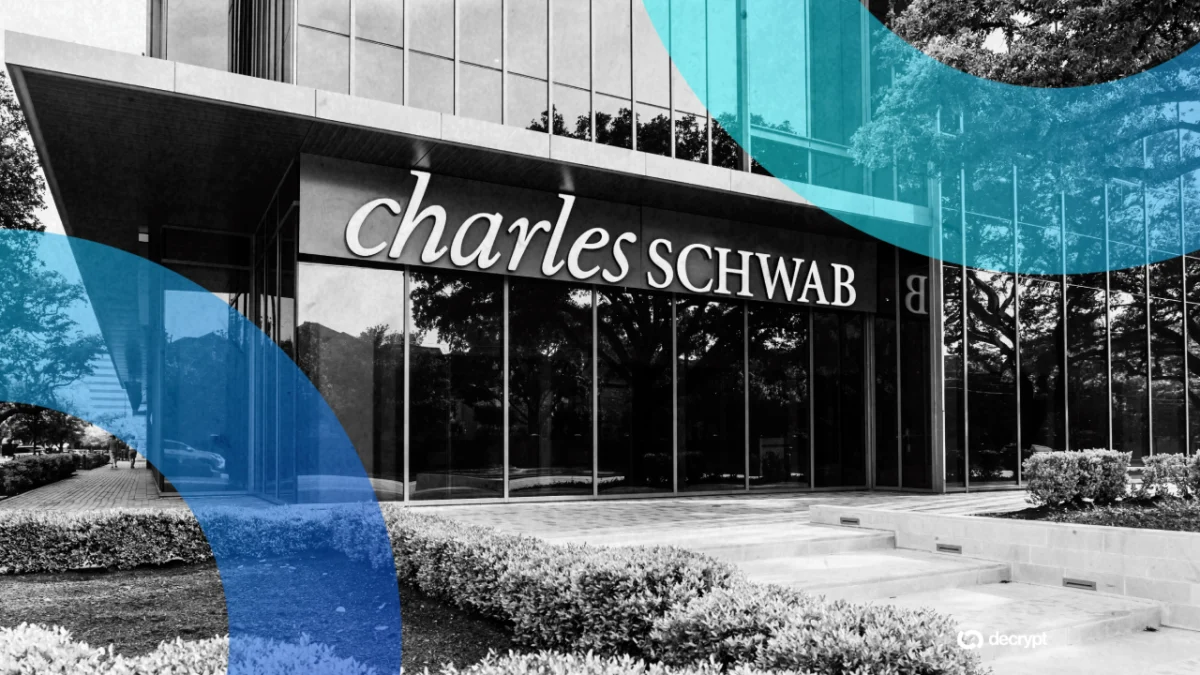
Financial services titan Charles Schwab is officially preparing to enter the rapidly evolving world of prediction markets. According to recent reports, the brokerage giant plans to leverage its massive $11.8 trillion platform to offer retail investors new ways to speculate on the performance of major financial benchmarks. By partnering with Cboe Global Markets, Schwab is positioning itself to capture the burgeoning interest in binary options and event-based trading, signaling a significant shift in the landscape of retail financial products. This move distinguishes Schwab from competitors by focusing on economic indicators rather than the political or entertainment-focused wagering that currently dominates the headlines in the prediction market sector.
The Chronology of an Expansion
The trajectory toward this announcement has been carefully calculated. While the recent Wall Street Journal report confirms the specifics of the rollout, the foundation was laid earlier this year.
- Q1 Earnings Call: During its first-quarter earnings presentation, Charles Schwab CEO Rick Wurster first teased the company’s interest in the space, confirming that the firm would "likely have prediction markets." This served as the initial signal to shareholders that Schwab intended to modernize its product suite.
- The Pilot Phase: Parallel to its exploration of prediction markets, Schwab successfully completed an internal employee pilot for spot cryptocurrency trading. This provided the firm with the necessary infrastructure and regulatory framework to begin handling high-frequency, digital-asset-style trading.
- Expansion into Digital Assets: Last month, the firm officially launched spot trading for Bitcoin and Ethereum for a select group of retail users, confirming that the firm was ready to move beyond traditional equities and ETFs.
- The Upcoming Rollout: With the framework for the "Plus Zone" and S&P 500 contracts established, the firm is currently in the final stages of integration with Cboe, with a full rollout expected in the coming months.
Mechanics of the New Market Offerings
The essence of Schwab’s new offering lies in its simplicity. Much like existing platforms such as Kalshi or Polymarket, Schwab will provide users with binary contracts. These are "yes/no" propositions—for instance, whether the S&P 500 will close above or below a specific price point on a given day.
The "Plus Zone" Innovation
Beyond standard binary outcomes, Schwab is introducing a proprietary feature dubbed the "Plus Zone." This represents a sophisticated evolution of the traditional prediction model. Unlike binary markets that result in a "winner-take-all" outcome, the Plus Zone offers a nuanced payout structure. If an investor’s prediction is "mostly right"—meaning they are within a specific range of the actual market closing number—they will receive a discounted multiple of their wager. This feature is designed to attract risk-averse retail traders who want the excitement of speculative markets without the "all-or-nothing" volatility typically associated with traditional derivatives.
Supporting Data and Market Context
To understand why a firm with $11.8 trillion in assets is entering this niche, one must look at the current market sentiment.
- The Retail Shift: Retail investors have increasingly sought out high-volatility, short-term trading opportunities. Traditional equities often involve longer holding periods and are subject to macroeconomic headwinds that can frustrate short-term traders. Prediction markets offer an immediate feedback loop.
- Platform Assets: With nearly $12 trillion in assets under management, Schwab possesses an unparalleled distribution network. By integrating these products directly into the Schwab portal, they effectively eliminate the friction associated with moving capital to niche, third-party prediction startups.
- Regulatory Positioning: By focusing exclusively on financial indexes like the S&P 500, Schwab is bypassing the regulatory quagmire associated with betting on political elections—a space that has faced intense scrutiny from the Commodity Futures Trading Commission (CFTC) and other governing bodies.
Official Responses and Strategic Intent
CEO Rick Wurster has been careful to frame this pivot within the broader context of the firm’s commitment to "choice." In previous public comments, he explicitly drew a line between financial prediction markets and the broader "betting" ecosystem.
"We want to offer our clients the tools they need to hedge or speculate on the market in ways that align with their personal financial goals," a company representative noted. By emphasizing that these markets are linked to "financial benchmarks," the firm is shielding its reputation as a serious wealth management institution while simultaneously catering to the gamification trends currently gripping the retail investor base.
Furthermore, the interest in stablecoins—which Wurster described last July as "something we do want to be able to offer"—suggests that this prediction market entry is merely one pillar of a broader "Web3-integrated" brokerage strategy. Schwab is clearly aiming to become a one-stop-shop for both traditional retirement planning and modern, high-velocity digital speculation.
Implications for the Financial Industry
1. The Institutionalization of Prediction Markets
Historically, prediction markets have been the domain of decentralized protocols and boutique startups. Schwab’s entry legitimizes the sector. When a firm of this size enters the market, it forces competitors—such as Fidelity or Vanguard—to reconsider their own product roadmaps. This could lead to a "race to the bottom" regarding fees and an increase in the variety of available contracts.
2. Market Efficiency vs. Speculation
Critics argue that these products could lead to increased market volatility. However, proponents, including many academics, suggest that prediction markets provide valuable data regarding market sentiment. If a massive volume of traders is betting on a specific S&P 500 movement, that data becomes a real-time indicator of investor confidence, potentially adding a layer of transparency to the markets that was previously absent.
3. Impact on Traditional Derivatives
The success of binary contracts on the S&P 500 could cannibalize some volume from traditional options trading. Retail traders who find the Greeks (Delta, Gamma, Theta) of traditional options confusing may find the "Yes/No" simplicity of binary markets more intuitive. This could shift the retail trading landscape away from complex option spreads toward simplified binary outcomes.
The Road Ahead: Potential Risks and Challenges
Despite the optimism surrounding the launch, the road ahead is not without obstacles.
- Regulatory Oversight: While the firm is currently focusing on financial benchmarks, any expansion into other sectors—such as interest rate movements or economic policy decisions—could draw the attention of regulators who are currently debating the legal definition of a "bet."
- Client Education: The "Plus Zone" and binary contracts require a degree of financial literacy. Schwab will need to ensure that its user interface clearly explains the risks associated with these instruments, particularly for older demographics who may be more accustomed to traditional long-term equity investing.
- Market Sentiment: Shares of Schwab (SCHW) recently faced headwinds, finishing down nearly 3% following the announcement. This suggests that some institutional investors are cautious about the firm’s move into speculative products, fearing it may dilute the brand’s reputation for stability.
Conclusion
Charles Schwab’s foray into prediction markets is a landmark moment for the financial industry. By bridging the gap between traditional retail brokerage and the high-octane world of binary outcomes, the firm is attempting to capture the next generation of traders.
Whether this move proves to be a lucrative revenue stream or a regulatory headache remains to be seen. However, one thing is certain: the definition of what a "brokerage" does is changing. As the firm prepares for the rollout in the coming months, the entire industry will be watching to see if the world’s largest retail platforms can successfully turn speculative wagering into a mainstream financial product. With the impending integration of crypto-trading, stablecoin ambitions, and now prediction markets, Schwab is signaling that it is not merely observing the evolution of finance—it is actively driving it.