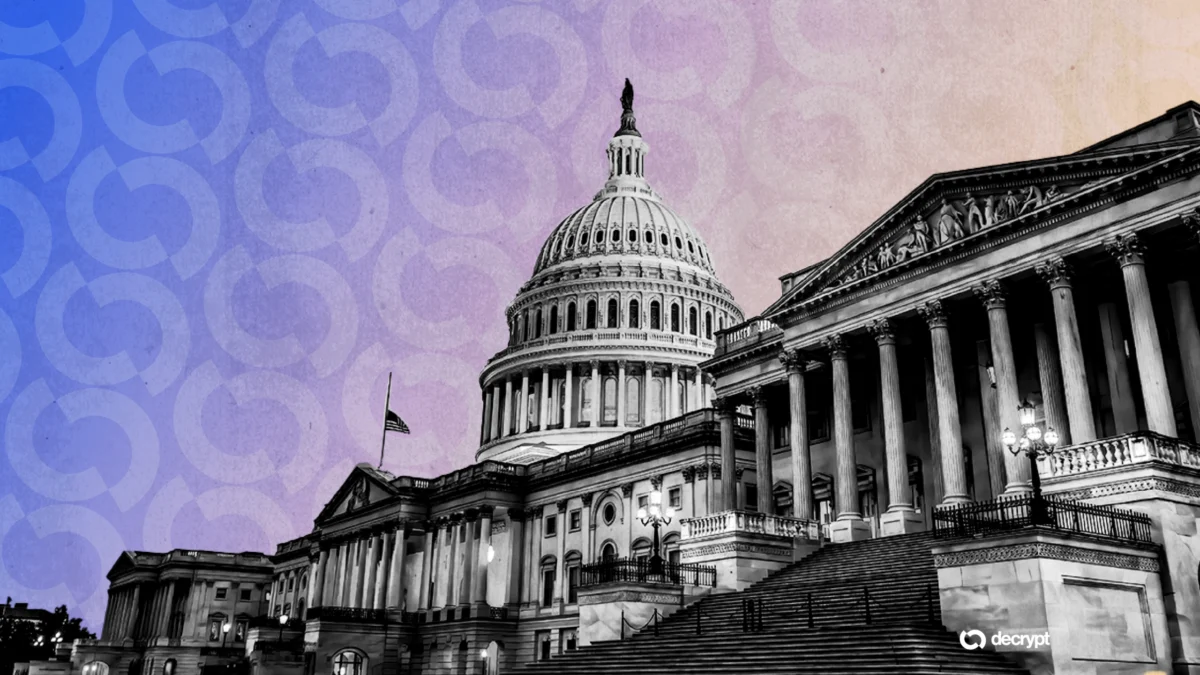








In a significant move aimed at fortifying public trust in the halls of power, a senior House Republican has introduced legislation designed to prohibit members of Congress, their spouses, and their dependent children from wagering on prediction markets linked to government actions, legislative outcomes, or electoral results. The proposed "Stop Lawmakers from Predicting Act" marks the latest escalation in a growing legislative and regulatory battle against the potential for insider trading within the burgeoning political betting industry.
Main Facts: The "Stop Lawmakers from Predicting Act"
Rep. Bryan Steil (R-Wis.), serving as the Chairman of the House Administration Committee, unveiled the legislation this Thursday. The bill seeks to close a perceived loophole in current federal ethics standards that has allowed lawmakers to potentially profit from non-public information.
The core tenets of the bill are clear:
- The Prohibition: It explicitly bans members of Congress, their spouses, and dependent children from placing wagers on prediction markets that involve federal legislation, government policy, or election results.
- Enforcement and Penalties: Violators would face stiff financial penalties, calculated as either $2,000 or 10% of the total wager’s value—whichever figure is higher. Additionally, any profits realized from such wagers would be subject to forfeiture.
- Non-Delegable Responsibility: A critical feature of the bill is the restriction on how fines are paid. Lawmakers are strictly forbidden from using official office funds, taxpayer-funded allowances, or campaign contributions to satisfy these penalties.
- Accountability: For those who vacate their office without fulfilling these obligations, the bill provides a pathway for the Justice Department to initiate civil enforcement proceedings.
Chronology: A Growing Web of Regulatory Scrutiny
The push for this legislation did not emerge in a vacuum. It is the culmination of a year marked by mounting unease regarding the intersection of decentralized prediction markets and federal oversight.
Early 2024: Initial Momentum
In January, the House Administration Committee advanced the "Stop Insider Trading Act," a broader piece of legislation intended to restrict stock trading among lawmakers. Rep. Steil’s office has framed the new prediction market bill as a natural extension of these efforts.
April 2024: Senate Action and High-Profile Scandal
The urgency surrounding the issue was amplified by the arrest of Army Master Sergeant Gannon Ken Van Dyke. Van Dyke was accused of leveraging confidential, high-level information to place bets on the political instability of Venezuela, specifically the removal of President Nicolás Maduro. The operation reportedly netted him over $400,000. Van Dyke has pleaded not guilty, with his trial currently scheduled for December.
Following this scandal, the Senate moved to pass a resolution in April that prohibited its own members and staff from participating in prediction markets.
May 2024: House Investigations
The House Oversight Committee launched formal investigations into major prediction platforms, including Kalshi and Polymarket. The inquiry focused on allegations that these platforms were facilitating a pattern of "insider trading" by individuals with access to classified or proprietary government data.
June 2024: The Introduction of the New Bill
With the broader stock-trading bill currently stalled, Chairman Steil moved to formalize the prohibition of prediction market betting as a distinct, actionable piece of legislation, emphasizing that the integrity of the institution cannot wait for the broader reform package to clear the legislative logjam.
Supporting Data: The Rise of Prediction Markets
Prediction markets like Polymarket and Kalshi have seen explosive growth over the last 24 months. These platforms allow users to buy and sell "shares" in the outcome of future events. While proponents argue that these markets provide "wisdom of the crowd" data—often more accurate than traditional polling—critics contend that they are rife with moral hazard.
When a government official participates in these markets, they are not merely "predicting" the future; they are often in a position to influence it. For example, a lawmaker who sits on a committee determining the outcome of a specific subsidy or tax credit possesses information that could guarantee a favorable return on a prediction market contract. The lack of federal transparency on these platforms has made them a "black box" for ethics watchdogs, who argue that the risk of conflicts of interest is too great to ignore.
Official Responses and Political Rhetoric
The rhetoric surrounding the bill has been markedly bipartisan, reflecting a shared anxiety about the erosion of public confidence in federal institutions.
"The American people deserve to know their Member of Congress is not profiting off insider information," Chairman Steil stated during the unveiling. "The Stop Lawmakers from Predicting Act ensures that cannot happen. This legislation is critical to restoring the public’s trust in their elected officials. Lawmakers should be writing policy, not wagering on its outcome."
The sentiment is mirrored by those who believe the current rules are outdated. While the Stop Insider Trading Act remains the "flagship" reform, the focus on prediction markets highlights a modern challenge: the digital transformation of gambling.
However, the path forward is not without resistance. Some members of Congress have questioned the feasibility of enforcement, noting that anonymous accounts or the use of proxies could allow unscrupulous actors to circumvent the rules. Steil has addressed this by ensuring the bill covers spouses and dependent children, closing the most common avenue for "hidden" trading.
Implications: A Shift in Ethical Standards
The introduction of this bill signals a potential paradigm shift in how Washington views financial disclosures. If passed, the legislation would necessitate a new reporting structure where the House Ethics Committee would likely need to monitor digital wallet activity and prediction market accounts of all members.
Impact on Lawmakers
For the average member of Congress, the legislation represents a narrowing of personal financial autonomy. For those who argue that members should be allowed to invest their personal assets, this bill serves as a firm reminder that public service necessitates a sacrifice of certain private opportunities for profit.
Impact on the Prediction Market Industry
Platforms like Kalshi and Polymarket may face a more hostile regulatory environment. The bill forces these companies to consider their "Know Your Customer" (KYC) protocols. If they wish to continue operating within the U.S., they may be forced to implement stricter vetting processes to identify and exclude government officials, potentially requiring them to integrate with federal databases to cross-reference user identities.
A Test for Congressional Efficacy
The bill serves as a litmus test for the House of Representatives. With the broader congressional stock-trading ban having stalled since February, the prediction market bill provides a narrower, perhaps more palatable, path to victory. If the House succeeds in passing this, it could build the political capital necessary to revive the stalled stock-trading legislation, which would impose even stricter limits on the portfolios of lawmakers.
Conclusion: The Path Forward
As the December trial for Gannon Ken Van Dyke approaches, the pressure on Congress to "clean up its own house" will likely intensify. The "Stop Lawmakers from Predicting Act" is not just a regulatory measure; it is a symbolic attempt to reclaim the moral authority of the legislative branch. By drawing a hard line between the role of a policymaker and the role of a gambler, Chairman Steil is attempting to steer the House toward a more transparent future—one where the outcome of American law is determined by debate, not by the shifting odds of an online betting platform.
Whether this legislation finds enough support to clear both chambers remains to be seen. However, the move signifies that the era of unfettered, private financial gain by those in power is facing its most significant legislative challenge in decades. The public will be watching to see if this bill becomes law, or if it joins the ranks of other well-intentioned reforms that have withered in the legislative process.