









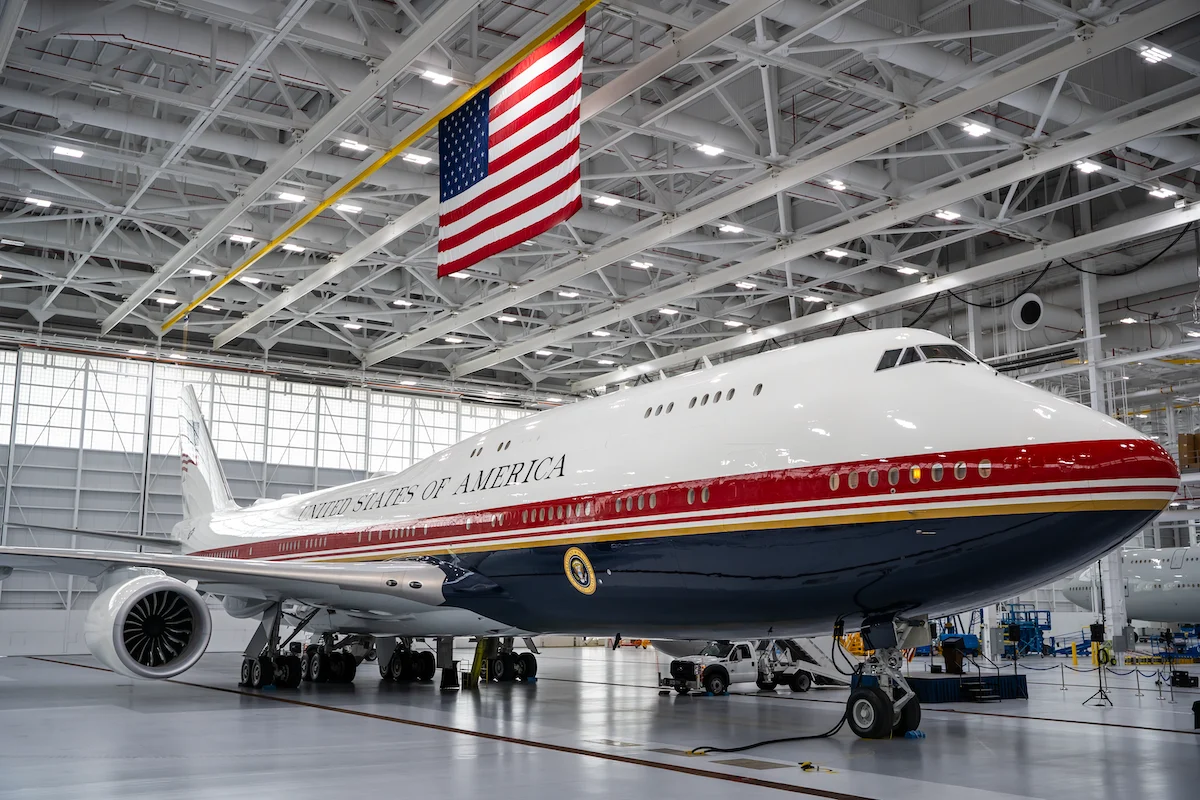
In a move that has sparked intense debate across Washington, the United States Air Force has taken delivery of a modified Boeing 747-8 to serve as a supplemental presidential aircraft. Unveiled at Joint Base Andrews on Friday, June 19, 2026, the aircraft—previously held by the Qatari royal family—represents a radical departure from the long-standing traditions of the American executive fleet. While President Donald Trump has lauded the jet as a pinnacle of national prestige and a masterstroke of fiscal negotiation, critics are pointing to profound ethical concerns, questions regarding foreign influence, and the unusual post-presidential disposition of the asset.
Main Facts: A "Gift" from the Gulf
The aircraft, a high-performance Boeing 747-8, arrives at a time when the official VC-25B presidential replacement program remains years behind schedule and billions of dollars over budget. President Trump, who had long expressed dissatisfaction with the existing aging fleet of modified 747-200Bs, championed the acquisition of this specific airframe.
The transaction is uniquely unconventional: the aircraft was provided as a gift to the United States from the State of Qatar. President Trump has framed the acquisition as a triumph for the American taxpayer, arguing that the government secured a $400 million asset at no initial capital cost. In a statement posted to social media, the President noted: "Why should our military, and therefore our taxpayers, be forced to pay hundreds of millions of dollars when they can get it for FREE from a country that wants to reward us for a job well done? Only a fool would not accept this gift on behalf of our country."
However, the "free" nature of the aircraft is deceptive. While the airframe itself was a gift, the U.S. Air Force has invested hundreds of millions of dollars into retrofitting the interior, installing secure communication suites, and integrating the defensive systems required for presidential transport.
A Chronology of the Acquisition and Refit
The path to the June 19 unveiling began in the spring of 2025, when the administration signaled its intent to bypass traditional, slower procurement channels to modernize the presidential fleet.
- Spring 2025: Initial reports emerge that the President is seeking an alternative to the delayed VC-25B program.
- Late 2025: Negotiations with the State of Qatar conclude, with the Gulf nation offering a lightly used Boeing 747-8 from its royal fleet.
- Early 2026: The aircraft undergoes extensive modifications at a secure military facility to bring it up to "Air Force One" standards. These modifications include advanced encryption for communications, missile defense systems, and interior alterations designed to accommodate the presidential mission.
- June 19, 2026: The aircraft is officially unveiled at Joint Base Andrews. It sports a new, bold red, white, and blue livery—a striking change from the iconic white and baby-blue scheme designed by Jackie Kennedy and Raymond Loewy in the 1960s.
- July 4, 2026: The aircraft is scheduled for its public debut, featuring a ceremonial flyover of Washington D.C. in celebration of the nation’s 250th birthday.
Supporting Data: Costs, Logistics, and Fleet Strategy
The integration of this 747-8 creates a complex logistical landscape. The Air Force has maintained a policy of prioritizing operational readiness over aesthetic refinement, though the interior of this particular jet is notably more opulent than its predecessors.
The financial reality of the project is multifaceted. While the initial asset was donated, the lifecycle costs remain significant. Critics note that the Air Force recently purchased two additional Lufthansa-operated Boeing 747-8s to serve as support aircraft for the fleet. These purchases were made through traditional federal procurement channels, highlighting a discrepancy: if the Qatari jet is meant to be a permanent fixture of the presidential fleet, why does the government continue to spend hundreds of millions on other 747-8 platforms for support?
The answer, perhaps, lies in the intended afterlife of the Qatari jet. Unlike every previous iteration of Air Force One, which remains property of the U.S. government until decommissioned and scrapped or sent to a museum, this aircraft is slated for inclusion in President Trump’s presidential library upon his departure from office in 2029.
Official Responses and Ethical Implications
The administration’s stance is clear: the acquisition represents a modernization of the executive branch’s image. During the unveiling, President Trump remarked, "A normal president wouldn’t do this; a normal president wants to stay away from aircraft, but our country has to be represented properly. This plane was transformed into a flying White House at a level of luxury that nobody has ever seen before."

The defense community has remained largely neutral in its public statements, focusing on the technical readiness of the craft. An Air Force spokesperson confirmed that the plane is "safe, secure, and equipped with the most advanced technologies necessary to meet the requirements of the presidential mission."
However, the ethics community and congressional oversight committees have raised significant red flags. The acceptance of a high-value asset from a foreign power—specifically a non-democratic government—presents an unprecedented conflict of interest. The precedent of a sitting President accepting a "gift" of this magnitude, only for that asset to be transferred into a private presidential library after the term ends, has ignited fierce debate.
Ethicists argue that such an arrangement blurs the line between public property and private estate. There is also the lingering question of the "quid pro quo." While the administration maintains the gift was a gesture of goodwill, the lack of transparency regarding what, if any, political concessions were made to secure the jet remains a point of contention for foreign policy analysts.
Future Implications: The 2029 Question
As the 250th anniversary of the United States approaches, the new jet serves as a polarizing symbol of the current administration’s approach to governance. The long-term implications are particularly concerning to those who worry about the stability of the presidential fleet.
The purpose-built VC-25B aircraft, which were meant to be the definitive replacements for the aging fleet, remain plagued by technical and budgetary setbacks. With a projected entry-to-service date of 2028, there is little margin for error. If those programs suffer further delays, and the Qatari jet is moved to a private presidential library in 2029, the United States could find itself in a precarious position regarding executive mobility.
Furthermore, there is the lingering suspicion among critics that the "presidential library" designation is merely a formality. Given the President’s affinity for the aircraft, observers wonder if there are plans for it to remain a functional, flying asset under private or semi-private control, effectively bypassing the decommissioning process that typically marks the end of an aircraft’s service to the Commander-in-Chief.
Conclusion: A New Era of Executive Travel
The arrival of the new 747-8 is more than just an aviation milestone; it is a manifestation of the shift in American political norms. It combines the grandeur of presidential tradition with the complexities of modern, high-stakes international diplomacy.
For supporters, the aircraft is a symbol of strength and a rejection of the "business as usual" mentality that allowed the previous fleet to become outdated. For detractors, it is a dangerous precedent—a luxury item acquired through murky channels that challenges the boundaries of executive ethics and taxpayer stewardship.
As the plane takes to the skies over Washington this July, the American public is left to consider what this says about the presidency itself. Is it a testament to the nation’s ability to "represent properly" on the world stage, or is it a sign that the most powerful office in the world is becoming increasingly detached from the conventional standards of governance? Regardless of the perspective, one thing is certain: the sky over Washington will look very different, and the legacy of this "gift" will be debated for years to come.