








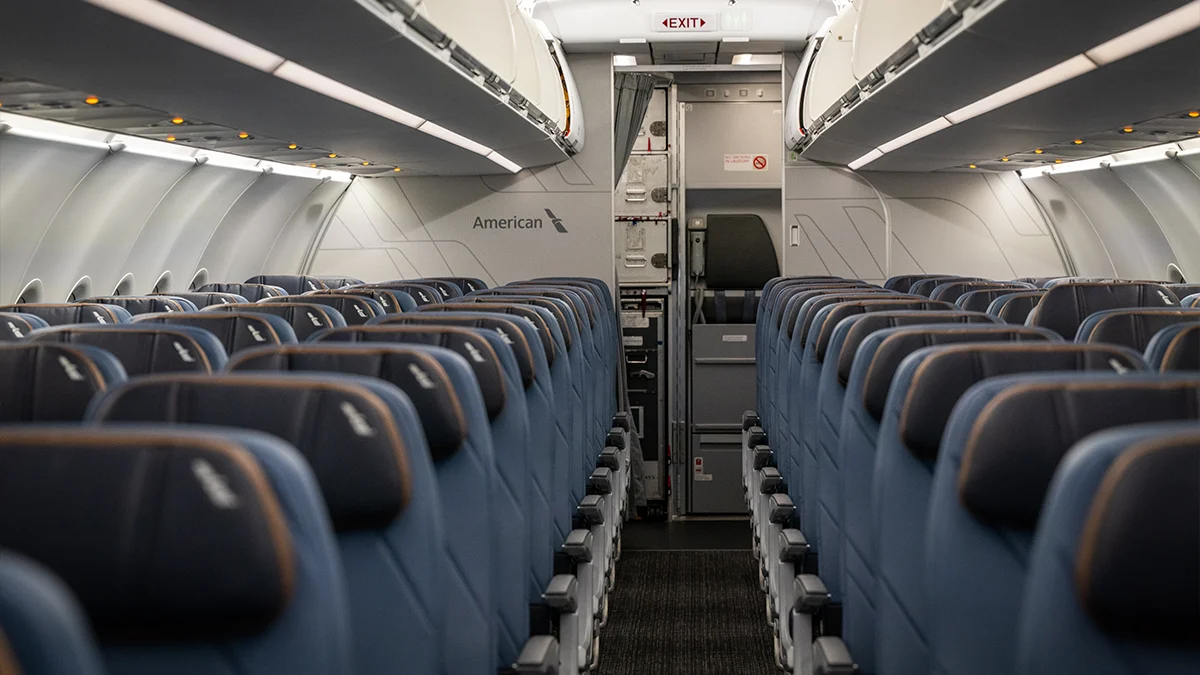
American Airlines has officially entered a new phase in its domestic fleet strategy, embarking on a comprehensive interior retrofit program for its entire Airbus A319 and A320 aircraft families. Announced in March 2024, the project represents a significant capital investment aimed at standardizing the passenger experience, increasing premium cabin capacity, and aligning the aging Airbus fleet with the modern aesthetic found on the carrier’s newer wide-body and XLR aircraft.
As the first retrofitted A320 joins its A319 counterpart in active service, passengers are beginning to see the tangible results of this overhaul. While the project brings much-needed modern amenities to these legacy jets, it also signals a transition toward higher-density cabin configurations that prioritize premium revenue over economy-class comfort.
The Chronology of the Retrofit Program
The modernization effort began in earnest earlier this year, targeting the oldest workhorses in the American Airlines fleet. Following the merger with US Airways, American inherited a vast, fragmented collection of Airbus narrow-body aircraft, many of which have served for over two decades.
- February 2026: The inaugural retrofitted Airbus A319 entered commercial service, marking the start of the cabin refresh initiative.
- June 2026: The first retrofitted Airbus A320 commenced operations, introducing the updated cabin layout to the larger of the two aircraft types.
- The Roadmap: The program is set to span the next two years, systematically cycling through the 132 A319s and 48 A320s currently in the fleet. The reconfiguration priority is currently focused on the legacy American A319 fleet, with legacy US Airways airframes to follow.
- Future Integration: Looking toward 2027, American plans to integrate Starlink high-speed, low-latency Wi-Fi across these aircraft, though this remains a distinct technological upgrade separate from the current interior overhaul.
Strategic Objectives: Balancing Premium Demand and Operational Efficiency
American Airlines has explicitly stated that the primary driver for these changes is the sustained and growing demand for premium seating. In an era where domestic travelers are increasingly willing to pay for extra legroom and priority service, the airline is pivoting to ensure its narrow-body fleet can capture this revenue.
The core of the retrofit involves an expansion of the First Class cabin. By reconfiguring the interior, the airline is adding an entire row of premium seating to its A319 and A320 jets. This results in a 33% to 50% increase in First Class capacity, depending on the specific aircraft type.

For the frequent flyer, this represents a potential increase in complimentary upgrade opportunities through the AAdvantage program. However, industry analysts note that the current trend toward "instant" cash-based upgrades—where airlines sell premium seats at a discount rather than offering them to elite status holders—may dilute the perceived value of these additional seats for loyal travelers.
Modernization of Amenities and Aesthetic Design
The cabin refresh goes beyond seat counts. American is aiming for a unified brand identity, mirroring the design language found on its new Boeing 787-9 Dreamliners and Airbus A321XLRs.
Key Upgrades Include:
- Enhanced Connectivity: Every seat is being outfitted with individual power ports, a long-overdue addition for the aging A319 and A320 fleets.
- Storage Solutions: Larger overhead bins are being installed to accommodate the modern influx of carry-on luggage, a common pain point for passengers on older aircraft.
- Refined Interiors: The cabin will feature updated trim, finishes, and color palettes, moving away from the dated aesthetic of the early 2000s and toward a cleaner, more contemporary look.
However, this modernization comes with a notable subtraction: the removal of seat-back entertainment screens on the 32 legacy American A319s that currently feature them. For many, these screens represented the last vestige of American’s previous, more premium-focused service strategy. Their removal signals a definitive move toward a "Bring Your Own Device" (BYOD) entertainment model, consistent with the rest of the airline’s domestic narrow-body fleet.
The Cost of Density: Implications for Economy Passengers
While the premium cabin is expanding, the reality for economy-class passengers is more nuanced. To facilitate the installation of an extra row of First Class seats without losing total passenger capacity, American is optimizing cabin space in ways that reduce personal space.
The "Tighter" Cabin Experience
The increased capacity is achieved through a combination of reduced seat pitch—the distance between a point on one seat and the same point on the seat in front of it—and a radical reconfiguration of the rear galley.

By shrinking the rear galley space, American is moving the lavatories to the absolute rear of the aircraft. While this optimizes the fuselage footprint, it introduces several operational challenges. The crew workspace is significantly reduced, and the placement of jump seats on the rear of lavatory doors is a design choice that rarely improves the working environment for cabin staff.
Comparative Fleet Metrics
The operational philosophy varies between the two aircraft types:
- A319: Capacity is increasing from 128 to 132 seats. This aligns American with the configuration density of competitors like Delta Air Lines, which operates its A319s with a similar 12/120 split.
- A320: American is choosing to maintain a total capacity of 150 seats, even while adding First Class capacity. This is likely a strategic decision to avoid the regulatory requirement for an additional flight attendant, which is triggered at the 151-seat threshold.
Industry Context and Future Outlook
The age of these aircraft remains a significant factor in the long-term viability of this project. With an average age of 21 years for the A319 fleet and 24 years for the A320 fleet, these planes are in the final stages of their useful lives within a major legacy carrier. The decision to invest heavily in their interiors suggests that American intends to keep these assets in service for at least another decade, or until a more comprehensive fleet replacement cycle begins.
Notably, this project does not extend to the Boeing 737 or the newer Airbus A321 fleets, which have their own established premium-to-economy ratios. By limiting the scope to the legacy Airbus fleet, American is creating a bridge of consistency for its Northeast-heavy routes where these aircraft are most frequently deployed.
Conclusion: A Mixed Bag for the Traveling Public
The comprehensive retrofit of American Airlines’ Airbus fleet is a double-edged sword. From a corporate perspective, it is a necessary evolution, allowing the airline to extract more revenue from premium customers while modernizing the cabin experience with power, storage, and a cohesive design language.

For the average traveler, the changes are a mixed bag. Those who prioritize space and comfort in the back of the bus may find the cabin environment increasingly cramped, as the focus on efficiency continues to squeeze the footprint of economy class. Conversely, the growth of the First Class cabin—while potentially leading to more aggressive seat-selling tactics by the airline—does provide a mathematical increase in the availability of premium seating.
As the retrofit program continues through 2026 and into 2027, the success of this initiative will be measured not just in balance sheets and revenue per available seat mile, but in passenger sentiment. The transition to a more "premium-heavy" but "higher-density" fleet reflects the broader, often contentious shift in the airline industry toward maximizing every square inch of the aircraft cabin. Whether this results in a "premium" experience or simply a more crowded one remains a point of contention for frequent flyers and aviation enthusiasts alike.