








Morning Minute is a daily analysis newsletter curated by Tyler Warner. The views expressed herein are those of the author and do not necessarily reflect the editorial stance of Decrypt.
Executive Summary: The Shifting Sands of Web3
The landscape of digital finance and blockchain technology is currently defined by three distinct movements: the entry of Big Tech into speculative markets, the aggressive financialization of physical collectibles, and a complex collision between emerging legislative frameworks and established moral advocacy. From Meta’s internal experiments with "Arena" to the meteoric rise of Collector Crypt’s $CARDS token, the industry is proving that it is no longer a peripheral experiment but a central focus for global capital and social policy.
I. Meta’s "Arena": The Social Media Giant Eyes Prediction Markets
The Main Facts
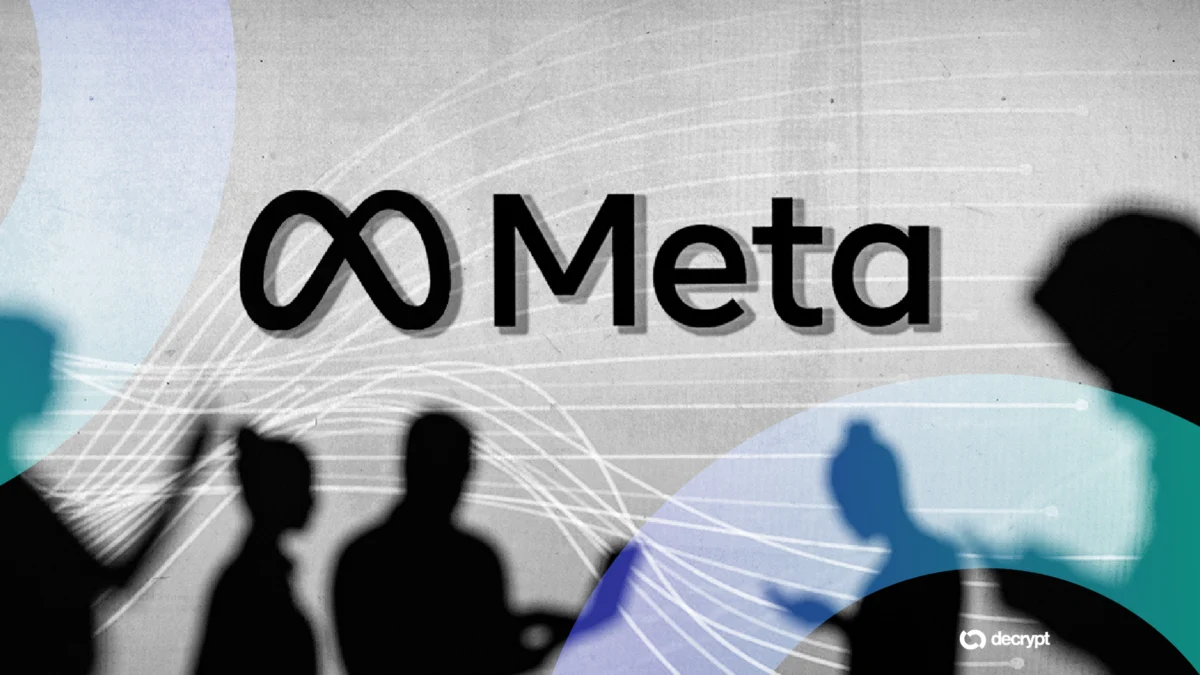
Mark Zuckerberg’s Meta is quietly testing the waters of the prediction market industry. According to reports from The New York Times, the company is developing an internal product codenamed "Arena." Currently functioning as a points-based system, the platform allows users to forecast outcomes without the use of real money. By avoiding cash settlements, Meta is skillfully bypassing the stringent regulatory hurdles that currently constrain major players like Polymarket and Kalshi.
Chronology & Evolution
Meta’s journey toward decentralized-adjacent finance has been long and fraught with difficulty. The company’s history includes:
- The Libra/Diem Era: A failed attempt to create a global stablecoin, which faced intense regulatory scrutiny and eventual dissolution.
- The Metaverse Pivot: A multi-billion dollar investment into virtual reality and persistent digital spaces (Horizon Worlds).
- Current Strategy: Leveraging existing social infrastructure. Unlike startups that must spend millions on user acquisition, Meta possesses the two most critical assets in the prediction market ecosystem: a massive, engaged user base and the algorithmic social feeds where speculation thrives.
Implications
The primary question is one of "product-market fit" within a social context. While standalone platforms like Polymarket are designed for high-conviction traders, Meta’s integration would bring prediction markets to the casual user. Will the average Instagram user want to bet on geopolitical events while scrolling through their feed? If the answer is yes, Meta could achieve near-instant dominance, potentially rendering standalone prediction apps obsolete.
II. The Maelstrom Thesis: $CARDS and the Disruption of Collectibles
The Main Facts
Arthur Hayes’s family office, Maelstrom, has issued a highly bullish outlook on $CARDS, the native token of the Collector Crypt protocol. Maelstrom has set a target price of $4 by the end of the summer—a projected 13x increase from its recent valuations.
Supporting Data: The "Gacha" Engine
Collector Crypt has effectively digitized the physical trading card market by tokenizing graded items on the Solana blockchain. Their business model relies on:
- Bulk Acquisition: The protocol buys cards in bulk at a 5–15% discount.
- The Gacha Model: Digital pack openings allow users to either keep the cards or sell them back to the protocol at a slight discount.
- Profitability: The protocol reported an annualized profit of $54 million in May, with projections trending toward a $109 million run-rate in June. This is particularly impressive given that these figures are generated by a lean base of roughly 800 daily active users.
The Disruption Narrative
Maelstrom’s thesis is rooted in the "eBay Disruption" theory. Trading cards are a multi-billion dollar industry, yet the incumbent, eBay, charges fees and shipping costs that can eat up 16–20% of a transaction. Collector Crypt charges a 2% fee, settles transactions instantly, and provides insured physical custody. In the eyes of the Maelstrom analysts, Collector Crypt is doing to trading cards what stablecoins did to global payments—stripping away legacy friction through on-chain efficiency.
III. The CLARITY Act: A Moral Collision in Washington
The Main Facts
The crypto industry’s most significant legislative objective—the CLARITY Act—has encountered an unexpected and formidable opponent: a coalition of 82 Catholic leaders. The bill, intended to establish clear market-structure rules, includes a provision that shields blockchain software developers from criminal liability for how their code is used by others.
Official Responses and Moral Framing
The Catholic coalition is attacking this provision from a moral, rather than a technical, standpoint. They argue that:
- The "Loophole" Argument: By shielding developers, the bill could inadvertently protect the infrastructure used by human traffickers and bad actors to move illicit funds.
- The Industry Defense: Crypto advocates maintain that code is speech and that developers cannot be held liable for the actions of malicious third parties any more than the creators of the internet can be blamed for illegal website content.
Implications
This intervention has significantly altered the bill’s trajectory. By framing the debate around the prevention of human trafficking, the coalition has made it difficult for lawmakers to support the bill without appearing ethically compromised. As a result, the perceived probability of the CLARITY Act passing in 2026 has dropped from a confident 75% to a tenuous 43%. This represents a pivot point for the industry, which must now defend its core philosophical principles on a moral battlefield it is ill-equipped to navigate.
IV. Synthesis and Future Outlook
The convergence of these three narratives highlights a critical juncture for the digital asset space.
- Institutionalization of Speculation: With Meta’s entry and the rise of niche protocols like Collector Crypt, the barriers between "real-world" assets and digital betting are eroding. Financialization is reaching deeper into daily human activity.
- The Regulatory Tightrope: While the industry seeks to define itself through legislation like the CLARITY Act, it is finding that the "code is law" defense is failing to resonate with traditional moral authorities.
- The Market Heat: Simultaneously, the broader prediction market ecosystem is under intense scrutiny. From the CME’s legal battle with the CFTC regarding derivative regulation to the Wall Street Journal’s investigation into $1.9 million in faked bets on Polymarket, the industry is facing a "growing pains" period.
Concluding Analysis
The success of these initiatives will depend on their ability to integrate with the existing social and legal order. Meta’s experiment with "Arena" suggests that the future of finance may be increasingly social, while the $CARDS token success underscores that the most lucrative opportunities lie in disrupting "clunky" Web2 processes. However, the legislative hurdles posed by faith-based organizations serve as a potent reminder: in the eyes of the public and the halls of power, technical innovation is never purely a matter of code—it is always a matter of ethics.
As we look toward the remainder of the year, the market will be watching to see if Meta’s social distribution can validate the prediction market model, if Collector Crypt can maintain its aggressive growth, and if the crypto industry can find a way to navigate the moral concerns now defining the legislative debate.
Check out our new daily news show covering all of the top stories in 5 minutes, available on Apple Podcasts or Spotify.