








In an incident that highlights the delicate intersection of regional geopolitics and aviation safety, Indian aviation authorities have taken decisive action against key personnel following an unauthorized—though coordinated—incursion into Pakistani airspace. The Directorate General of Civil Aviation (DGCA) has officially suspended an Air India pilot and an air traffic controller (ATC) after an Airbus A321 strayed across the international border during a routine domestic flight.
While the event itself—a "marginal" three-mile breach—might seem trivial in the context of global aviation, the high-stakes political climate between India and Pakistan turns every such occurrence into a matter of national security. However, the regulatory backlash is centered less on the breach itself and more on the systemic failure to document the event, leaving industry experts to question why both the flight deck and the control tower opted for silence.
Chronology of the Flight AI479 Incident
The incident unfolded on the night of Monday, June 22, 2026, beginning with a standard short-haul operation from Delhi’s Indira Gandhi International Airport (DEL) to Sri Guru Ram Dass Jee International Airport in Amritsar (ATQ).
The Departure and Holding Pattern
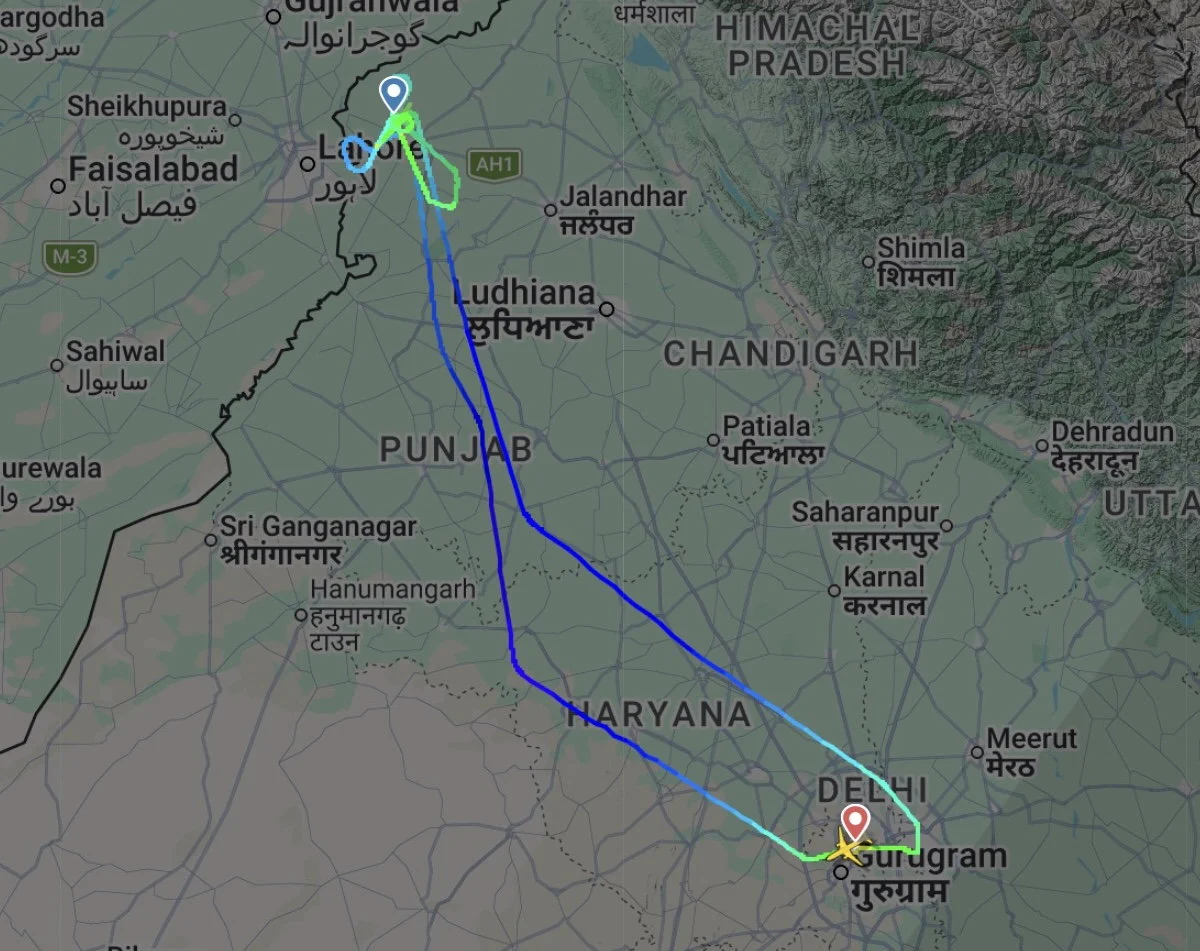
Air India flight AI479, operated by an Airbus A321 (registration VT-PPT), departed Delhi at 9:18 PM local time. The flight path was routine, traversing the short 257-mile corridor toward Amritsar. However, upon approaching the destination, the crew was informed of an operational delay. Amritsar’s runway had been temporarily closed for a mandatory inspection following a bird strike involving a preceding aircraft.
As the flight entered a holding pattern, the aircraft was subject to radar vectors provided by Indian ATC. With the airport effectively off-limits, the aircraft began orbiting in the vicinity of the India-Pakistan border.
The Border Incursion
At approximately 10:08 PM, while operating outside the operational hours of standard surveillance services at Amritsar, the aircraft maneuvered into Pakistani airspace. The incursion extended approximately three miles beyond the international boundary.
Crucially, the maneuver was not an act of rogue navigation; it was coordinated with Pakistani air traffic controllers in Lahore. Faced with limited maneuvering space and a busy holding environment, the Indian ATC directed the flight toward the boundary, and the aircraft proceeded to enter the neighboring nation’s sovereign sky.
The Return to Delhi
The aircraft remained in Pakistani airspace for a brief window before re-entering Indian territory by 10:20 PM. By this time, the operational realities of the flight had shifted. Running low on fuel and faced with an uncertain timeline for the reopening of the Amritsar runway, the flight crew made the command decision to divert back to Delhi. The flight landed safely at its origin at 11:27 PM, concluding a total mission time of two hours and nine minutes.
Supporting Data and Technical Context
To understand the severity of the regulatory response, one must consider the operational environment. Amritsar is located in a highly sensitive zone, geographically proximate to the border. During the hours the incident occurred, the airport was operating under limited surveillance capacity, increasing the reliance on clear, documented communication between ground control and the cockpit.
The Airbus A321 involved, VT-PPT, is a standard narrow-body workhorse. At the time of the incident, the crew was operating under strict fuel management protocols, which is common for short-haul domestic legs. The diversion back to Delhi was a logical, safety-first outcome; however, the lack of a post-flight report regarding the boundary crossing created a significant information vacuum.
The Geopolitical Landscape
Since the suspension of bilateral civil aviation agreements, Pakistani airspace has been largely closed to Indian commercial carriers. This makes any crossing—even those cleared by local controllers in Lahore—a highly sensitive administrative act. While air traffic control units often coordinate in emergency situations or to ensure flight safety, these actions are governed by strict protocols requiring immediate post-event documentation to ensure both nations remain aware of the nature of the flight.

Official Responses and Regulatory Action
The DGCA’s decision to "de-roster" (suspend) the involved pilot and the air traffic controller represents a stern warning regarding the importance of protocol.
The DGCA Position
The Indian regulator views the failure to report the incident as a breach of "standard operating procedure" (SOP). In the eyes of the DGCA, the "marginal" nature of the infringement does not excuse the lack of transparency. The regulator’s internal investigation is currently scrutinizing the communication logs between the pilot and the Indian ATC to determine why both parties seemingly agreed to bypass the mandatory reporting requirements.
The Airline’s Stance
Air India has officially acknowledged the incident, characterizing it as a "marginal infringement." The airline has pledged full cooperation with the DGCA’s ongoing inquiry. Internally, the carrier is reviewing its training modules to ensure that crews are fully briefed on the specific reporting requirements when operating in proximity to sensitive international borders, regardless of the coordination levels reached with foreign controllers.
Implications for Aviation Safety and Diplomacy
The fallout from this incident raises several critical questions about the intersection of safety and bureaucracy in South Asian aviation.
The "Silent" Coordination Dilemma
The most baffling aspect of the case is the apparent coordination between the Indian and Pakistani controllers, contrasted with the silence toward domestic regulators. Industry observers have pointed out that if the flight path was cleared by Lahore, the crews likely viewed the maneuver as a safe and necessary deviation to manage the holding pattern. However, by failing to file a report, they effectively neutralized the "legal" cover that such a report would provide.
This raises the question: Was the silence a result of complacency, or were the participants fearful that disclosing the entry into Pakistani airspace—even with permission—would trigger an unnecessary political firestorm? If the latter is true, it highlights a dangerous disconnect between the reality of operational safety and the political constraints placed on pilots and controllers.
Future Operational Risks
This incident sets a precedent that will likely lead to more rigid, and perhaps more cautious, behavior among pilots flying in the Punjab region. In the future, crews may be less inclined to follow ATC vectors that bring them near the border, even if it could lead to better fuel management or traffic flow, for fear of falling into the same regulatory trap.
Furthermore, this case underscores the necessity for more robust, automated reporting systems. If an aircraft’s transponder data shows an entry into restricted or foreign airspace, the system should ideally trigger an automatic notification to both the airline and the regulator, removing the burden of manual reporting from the crew and ATC.
A Lesson in Accountability
Ultimately, the suspension serves as a reminder that in the aviation industry, "permission" is only half the battle. Documentation is the mechanism by which accountability is maintained. By failing to report the event, the flight crew and the controller denied the DGCA the ability to track the event in real-time, thereby creating an appearance of negligence.
As the investigation concludes, the aviation community will be watching to see if the punishment remains focused on the lack of reporting or if the precedent of the "infringement" itself will lead to broader changes in how flights near the border are managed. For now, the incident remains a stark example of how even a minor flight deviation, when shrouded in silence, can lead to major professional consequences.
This article is based on ongoing investigations by the Directorate General of Civil Aviation. Updates will follow as the inquiry into the operational logs and the decision-making process of the flight crew reaches its conclusion.