









Real estate investing is often romanticized as a pursuit for the wealthy or those with ample free time to hunt for "perfect" deals. However, the true landscape of the industry is often forged in the fires of necessity. For many, the decision to enter the market isn’t born from a desire for a passive income side-hustle, but from a fundamental need to secure their family’s future when traditional employment paths hit a ceiling.
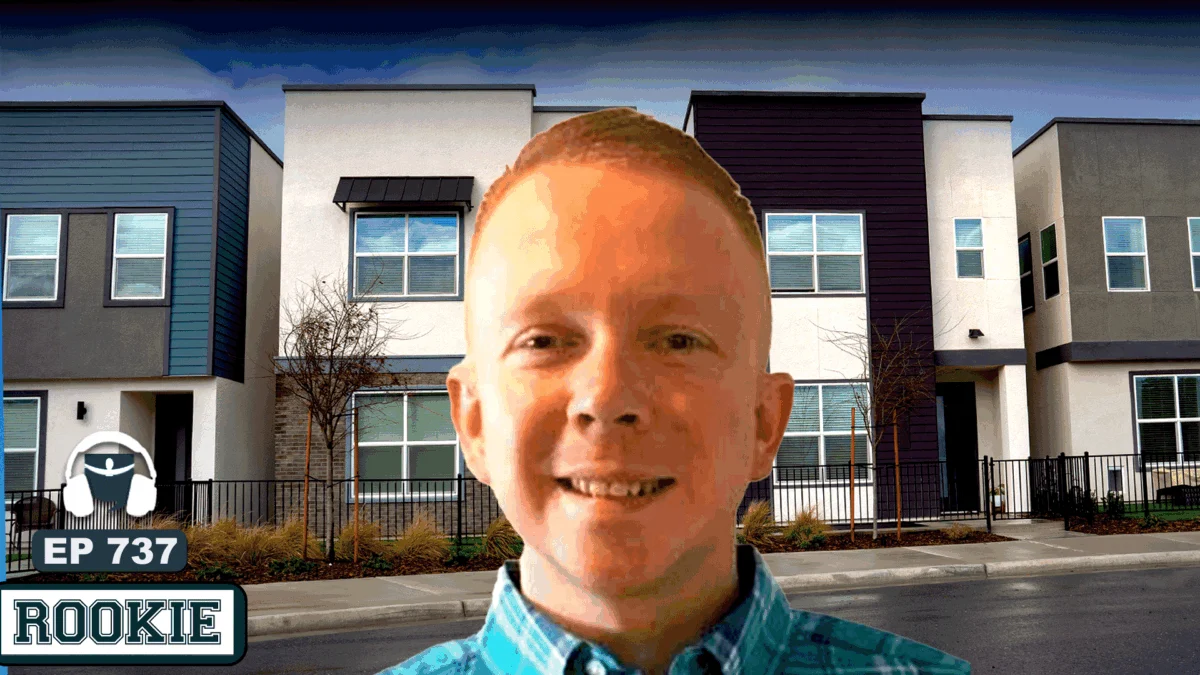
Brent Beard, a Kansas City-based investor and aspiring real estate agent, is the embodiment of this reality. Balancing a demanding W-2 career in the tech industry, service in the National Guard, and the sudden, life-changing responsibility of raising his granddaughter, Beard didn’t wait for the "perfect market" to launch his career. In 2025, he closed on his first duplex, proving that while the path is far from polished, it is entirely possible to build wealth even when your back is against the wall.
The Catalyst: A Life-Altering Shift
For years, Brent Beard and his wife lived a modest, predictable life. He managed an engineering calibration lab for a tech firm, while his wife worked in banking. They were comfortable, but they were coasting. The status quo was shattered in late 2023 when the couple was awarded custody of their granddaughter following a protracted legal battle.
"We could no longer coast on our salaries like we used to," Beard explained during an appearance on the Real Estate Rookie podcast. The realization that their existing financial trajectory was insufficient to support their expanded family prompted a radical shift in perspective. Faced with the immediate need for a higher income floor, Beard looked beyond traditional corporate promotions and began educating himself on wealth-building vehicles. After consuming literature like Robert Kiyosaki’s Rich Dad, Poor Dad, he identified real estate as the most practical, scalable path toward long-term financial security.
Chronology of a First Deal
Beard’s journey was defined by a methodical, if not frantic, approach to time management. While most investors focus on finding the "perfect" property, Beard focused on finding a profitable one.
- Mid-2024: Beard commits to self-education, listening to podcasts and reading foundational real estate texts during his limited free time.
- Late 2024: He abandons the pursuit of an MBA or additional professional certifications, deciding that real estate offers a higher return on time and capital.
- October 2025: After rigorous analysis, Beard closes on a duplex in Leavenworth, Kansas. The property was outside his original "buy box"—lacking his desired side-by-side configuration and garage space—but the numbers were undeniable.
- Post-Closing: Beard immediately takes on the role of landlord, self-managing the property to understand the intricacies of maintenance, plumbing, and tenant relations before eventually moving toward professional management.
The Anatomy of the Deal: Numbers and Strategy
Beard’s success was not a result of luck; it was the product of conservative underwriting. When analyzing the Leavenworth duplex, he utilized a self-developed spreadsheet alongside BiggerPockets’ analytical tools to ensure the deal would perform even under stress.
The "Buy Box" Pivot
Beard’s initial criteria for a property included specific amenities and layout features. However, he quickly learned that market reality rarely mirrors a wish list. By staying flexible, he found a deal that cash-flowed even at a 10% discount from the list price.
Data-Driven Cash Flow
The property, consisting of a two-bedroom and a three-bedroom unit, was acquired with a 30-year fixed loan at 6.99%. By setting rents conservatively—listing the three-bedroom unit at $1,100—Beard ensured the property met his requirements for cash-on-cash return. Even after accounting for a 10% property management fee, 20% for CapEx (Capital Expenditures), vacancy, and maintenance, the property produced an 8% cash-on-cash return.
The Tax Lesson: A Cautionary Tale
No rookie investor’s journey is without its stumbles. Beard shared a harrowing "operator error" regarding property taxes that serves as a critical lesson for anyone looking to enter the market.
In the state of Kansas, a property’s purchase price often resets its market value for tax assessment purposes. Beard had underwritten for a standard 15% increase in property taxes, based on historical year-over-year trends. However, upon closing, he was hit with an 87% increase in his tax bill.
"It was 100% operator error and a complete oversight on my end," Beard admitted. Because he had underwritten the deal so conservatively, the massive tax hike did not derail his investment, but it served as a stark reminder: never rely solely on a previous owner’s tax bill without understanding the local reassessment laws.
Implications for the Aspiring Investor
Beard’s experience challenges the common narrative that you must wait for the "right time" to start. His story offers several key takeaways for those currently sitting on the sidelines.
The Power of the "Small and Mighty" Model
Inspired by investors like Chad Carson, Beard is not aiming to scale to hundreds of units immediately. His strategy is to build a "small and mighty" portfolio—fewer properties, but higher performance. He intends to prune his portfolio over the next decade, keeping only the high-performers to facilitate his goal of retiring within 10 years.
The Networking Advantage
While many view becoming a licensed real estate agent as a way to save on commissions, Beard views it primarily as a networking tool. By becoming an agent, he gains direct access to a wider circle of contractors, lenders, and property managers. This, he argues, is the true value of the license: the ability to build a team that can scale with his future acquisitions.
The "75% Rule"
Beard advocates for a threshold of knowledge before taking action. He believes that once an investor understands roughly 75% of the fundamentals, the remaining 25% must be learned through direct, hands-on experience. "There comes a point where you’ve educated yourself enough," Beard noted. "You have to get hands-on. You have to make those mistakes."
Conclusion: The Biggest Mistake is Inaction
Brent Beard’s story is not one of a polished success story, but a realistic blueprint for the working professional. His ability to manage a W-2 job, military service, and family responsibilities while successfully acquiring and managing a rental property demonstrates that the primary obstacle to success is rarely the market—it is the hesitation of the investor.
For those waiting for interest rates to drop or the market to "cool off," Beard offers a blunt assessment: if the numbers work, the time is now. As he continues his journey toward his 10-year retirement goal, his progress stands as a testament to the fact that when you have every reason to keep real estate on the back burner, you have the most compelling reason to prioritize it.
His advice to the next generation of rookies is simple: "Don’t just buy anything. Be strategic and practical. Understand your goals, know your numbers, and once you hit that threshold of knowledge, stop reading and start acting."