







A high-profile narcotics interception at Melbourne Airport has sent shockwaves through the aviation industry, as a 26-year-old Thai Airways flight attendant remains in custody following the discovery of a significant quantity of illicit substances hidden within her personal luggage. The arrest, which occurred on the morning of June 25, 2026, has highlighted the persistent challenges authorities face in securing international borders against sophisticated smuggling attempts, even when those attempts involve personnel traditionally considered to be "trusted travelers."
The accused, whose identity has been withheld by authorities pending further legal proceedings, was apprehended after landing on Thai Airways flight TG465. The flight, which originated at Bangkok’s Suvarnabhumi Airport (BKK), had arrived in Melbourne (MEL) in the early hours of the morning. While the flight crew is subject to specific customs and immigration protocols, they are not immune to the scrutiny of the Australian Border Force (ABF), a fact that became starkly apparent during the suspect’s transition through the arrivals terminal.
The Chronology of the Arrest
The incident began as a routine arrival procedure for the crew of the Airbus A350-900. After deplaning, the flight attendant proceeded through the standard customs clearance lane. According to reports from the Australian Federal Police (AFP), the situation shifted from routine to criminal when a canine unit—a dog trained to detect narcotics—showed a positive reaction to the attendant’s baggage.
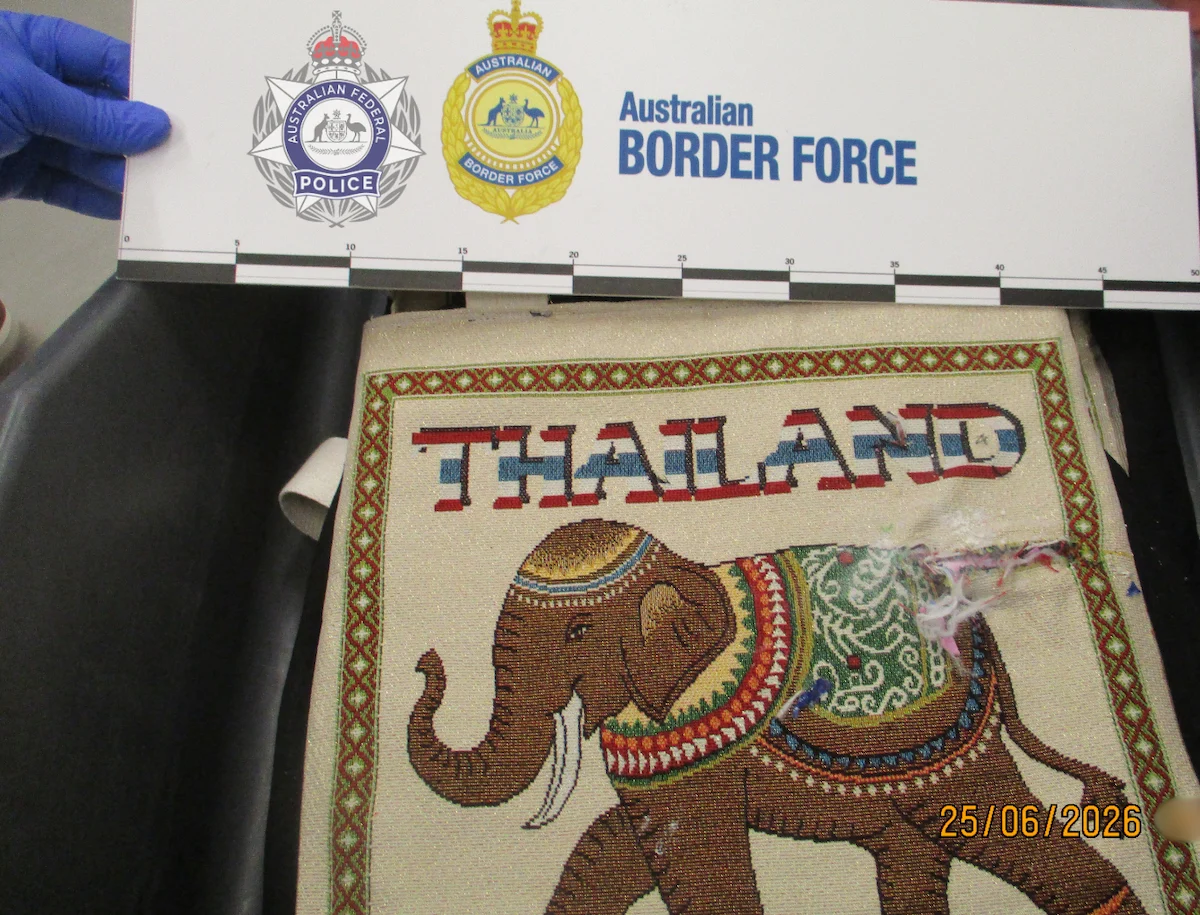
The reaction of the sniffer dog triggered an immediate secondary inspection. Officials moved the luggage to an X-ray screening station, where the density and internal structure of the bags raised further alarms. Upon performing a physical deconstruction of the suspect’s belongings, customs officials uncovered 12 tote bags, each meticulously modified with heroin concealed within the lining.
Subsequent forensic testing confirmed the substance was indeed high-grade heroin, totaling approximately one kilogram. Given the street value of the narcotics, which authorities estimate to be roughly 500,000 AUD (approximately 345,000 USD), the find is considered a significant disruption of a potential distribution chain. The suspect was promptly arrested and transported to an AFP facility for questioning before being charged.
Official Charges and Legal Consequences
The Australian Federal Police have taken a hard-line stance on the case, reflecting Australia’s stringent drug importation laws. The woman has been formally charged with two serious counts:
- Importing a marketable quantity of a border-controlled drug.
- Possessing a marketable quantity of a border-controlled drug.
Under the Australian Criminal Code, each of these charges carries a maximum penalty of 25 years in federal prison. The severity of the potential sentence underscores the Australian government’s commitment to combating the entry of illicit substances, regardless of the offender’s employment status or professional background.
The suspect is currently being held in remand and is scheduled to reappear before the Melbourne Magistrates’ Court on September 14, 2026. Legal experts suggest that the prosecution will likely focus on the premeditated nature of the concealment—the modification of the tote bags—as evidence of intent to bypass border security.
The Complexity of Airport Security and "Insider Threats"
The arrest of a flight attendant brings to the forefront the issue of "insider threats" in aviation. While the vast majority of aviation staff operate with the highest level of integrity, the unique access they enjoy has historically made them a target for criminal syndicates.
The Vulnerability of Global Travel
Flight crews are granted specific privileges that facilitate the ease of international movement. These include expedited customs lines, less frequent physical luggage searches compared to the general public, and the ability to travel across borders with high frequency. Criminal organizations often view these privileges as a "low-hanging fruit" opportunity to move illicit goods without triggering the standard security infrastructure designed for passengers.

In many cases, smugglers prey upon individuals experiencing financial instability. When an airline employee is struggling to meet rising living costs or supporting family members in economically disadvantaged regions, the lure of a "quick payout" can be framed by criminal recruiters as a low-risk endeavor. However, as this case demonstrates, the risk is anything but low.
Airport Operations vs. Flight Crew
While this incident involves a flight attendant, security analysts often note that the greatest risk in the aviation sector comes from ground operations and logistics personnel. Airport ground staff have direct, unmonitored access to baggage holds, cargo containers, and restricted airside areas. Unlike flight attendants, who must pass through public-facing customs checkpoints, ground personnel often have access to areas where luggage is loaded and unloaded outside the view of border enforcement agencies.
Nevertheless, the AFP and the Australian Border Force maintain a robust "intelligence-led" approach to screening. This involves not only canine and X-ray detection but also passenger profiling, which monitors travel patterns, flight histories, and behavioral cues.
Societal and Industry Implications
The implications of this arrest extend far beyond the legal fate of the individual involved. For Thai Airways, the incident represents a significant reputational challenge. Airlines go to great lengths to vet their employees, but the "bad apple" phenomenon is a reality that plagues every major global industry.
The Human Toll of Narcotics
Beyond the legal repercussions for the smuggler, the seizure of one kilogram of heroin represents a victory for public health. Heroin remains a major driver of addiction-related crime and healthcare costs. By intercepting this shipment, Australian authorities have prevented a dangerous, addictive substance from reaching the local market, thereby sparing the community from the downstream effects of its distribution.
Deterrence and Future Screening
This case serves as a stern reminder to all travelers—including airline personnel—that border security in Australia is uncompromising. The use of advanced imaging technology and highly trained canine units remains the frontline defense against international trafficking. Following this arrest, it is likely that authorities will increase the frequency of random screenings for flight crews arriving from "high-risk" transit points to ensure that internal protocols remain impenetrable.
Conclusion: A Cautionary Tale
As the legal process unfolds in Melbourne, the case of the 26-year-old Thai Airways flight attendant will likely serve as a cautionary tale for those who might consider exploiting their professional status for criminal gain. The glamour and ease associated with international aviation are tempered by the absolute rigor of border enforcement.
For the suspect, the next chapter involves a courtroom battle where the stakes could not be higher. For the aviation industry, it serves as a wake-up call to bolster internal security and vigilance. As the Melbourne Magistrates’ Court prepares for the September hearing, the aviation community remains focused on the outcome, hoping that this incident remains an outlier in an industry that relies fundamentally on trust, transparency, and international cooperation.
The message from the Australian authorities is clear: no matter who you are or what uniform you wear, if you attempt to facilitate the movement of illicit drugs across the border, you will be caught, charged, and prosecuted to the fullest extent of the law.