








The landscape of federal student loan repayment is shifting once again. As borrowers seek stability in an era of evolving legislative policy, the introduction of the Repayment Assistance Plan (RAP) has emerged as a critical—albeit complex—tool for managing debt. For many, the transition to this new framework is not merely a matter of administrative compliance; it is an opportunity to optimize cash flow and minimize the long-term "tax" of student loan interest.
Understanding how to navigate RAP requires a deep dive into its unique mathematical structure and a strategic approach to tax filing. This guide examines the mechanics of the plan, the implications for your household finances, and the sophisticated maneuvers available to lower your monthly obligations.
The Mechanics of RAP: How the Math Works
Unlike previous iterations of Income-Driven Repayment (IDR) plans, which often utilized a flat percentage of discretionary income, the Repayment Assistance Plan employs a nuanced, stepwise function. This structure is designed to scale payment obligations based on Adjusted Gross Income (AGI), ensuring that borrowers contribute what they can reasonably afford while providing a floor for lower-income earners.
The Stepwise Payment Structure
The minimum payment under RAP is set at $10 per month, providing a safety net for those with limited income. Beyond that baseline, the plan transitions into a tiered system that begins at 1% of AGI and climbs to a maximum of 10%.
| Adjusted Gross Income (AGI) | Monthly RAP Payment |
|---|---|
| $10,000 or less | $10 per month |
| $10,001 to $20,000 | 1% of AGI |
| $20,001 to $30,000 | 2% of AGI |
| $30,001 to $40,000 | 3% of AGI |
| $40,001 to $50,000 | 4% of AGI |
| $50,001 to $60,000 | 5% of AGI |
| $60,001 to $70,000 | 6% of AGI |
| $70,001 to $80,000 | 7% of AGI |
| $80,001 to $90,000 | 8% of AGI |
| $90,001 to $100,000 | 9% of AGI |
| Above $100,000 | 10% of AGI |
This tiered approach creates a "cliff" effect at various income levels. For borrowers hovering just above a threshold, the marginal cost of earning additional income can be significantly higher than expected, as the percentage of AGI applied to the payment increases.
Implications: The Shift in Deductions
A significant point of divergence between RAP and its predecessors, such as the SAVE plan, lies in how the government treats "discretionary income." Previous plans were characterized by generous income exclusions, which effectively protected tens of thousands of dollars from being counted toward the repayment calculation.
RAP, by contrast, adopts a far more restrictive posture. Borrowers are only permitted to reduce their calculated income by $50 per month per dependent. For families with significant student debt and high costs of living, this reduction is often insufficient to offset the impact of the tiered payment structure. Consequently, the onus shifts to the borrower to proactively manage their AGI through legal financial planning.
Strategic Optimization: Reducing Your AGI
To minimize your monthly RAP payment, the primary strategy involves lowering your AGI without reducing your actual earning power. This is a common practice among savvy borrowers who view student loan interest as a "tax" that can and should be mitigated.
Leveraging Pretax Accounts
The most effective way to lower AGI is by maximizing contributions to pretax retirement and benefit accounts. By shifting income into these vehicles, you effectively reduce the "taxable" portion of your earnings that the Department of Education uses to calculate your RAP obligation.
Key accounts to consider include:
- 401(k) or 403(b) plans: Contributing the maximum allowable amount to an employer-sponsored retirement account is the most straightforward method for most employees.
- Health Savings Accounts (HSA): If you are enrolled in a high-deductible health plan, HSAs offer a "triple tax advantage" while simultaneously reducing your AGI.
- Defined Benefit Plans: For high-earning professionals—specifically practice owners—these plans can allow for six-figure deductions, creating a significant impact on annual AGI.
While it is tempting to focus on common deductions like mortgage interest or charitable contributions, it is vital to note that these do not reduce your AGI for student loan purposes. Financial planning for RAP must be focused on "above-the-line" deductions.

Tax Filing Strategies and the "Middle-Class Loophole"
The choice between filing taxes as "Married Filing Jointly" (MFJ) or "Married Filing Separately" (MFS) is the most powerful lever for married couples in the RAP landscape.
The Case for Filing Separately
When both spouses have high levels of student debt, or when only one spouse carries significant loans, filing separately can often lead to substantial monthly savings.
Consider the "Middle-Class RAP Loophole": In a scenario where two spouses each earn $55,000, filing jointly would subject them to a 10% payment obligation based on their combined income. However, by filing separately, each spouse is assessed at the 5% tier. This strategic filing can save the household thousands of dollars annually.
Balancing Tax Costs vs. Loan Savings
Filing separately often results in a higher overall tax liability. Borrowers must perform a cost-benefit analysis: Does the reduction in student loan payments outweigh the increase in federal and state income taxes?
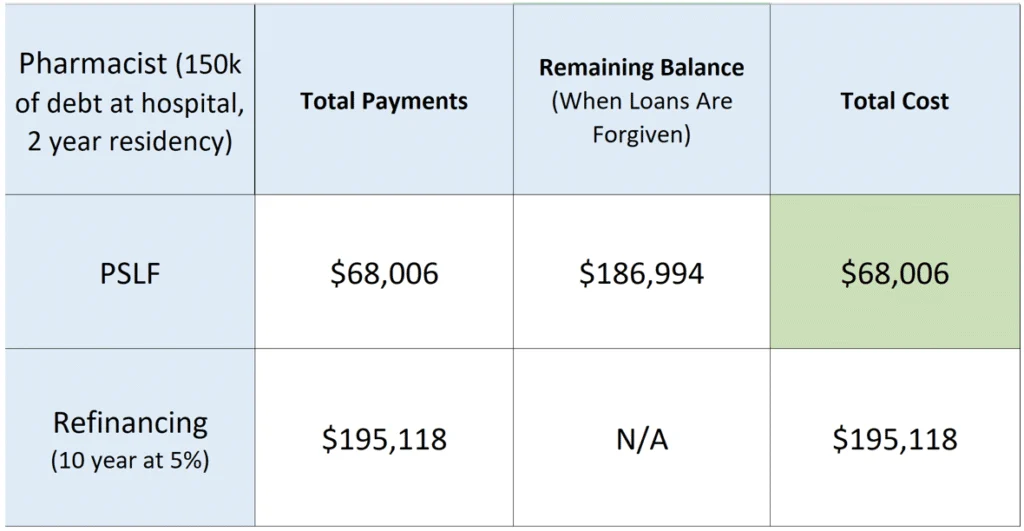
For those pursuing Public Service Loan Forgiveness (PSLF), this calculation is even more complex. Because PSLF is tax-free upon forgiveness, it may make sense to pay a higher tax rate in the short term to maximize the amount of debt forgiven over a 10-year period. In some cases, couples may even file separately during the repayment years and later use an amended return (Form 1040-X) to return to joint status, provided it aligns with their broader financial goals.
The Role of Expert Consultation
The complexity of the Repayment Assistance Plan cannot be overstated. With legislative guidelines subject to interpretation and individual financial situations varying wildly based on geography, state tax law, and career trajectory, a "one-size-fits-all" approach is rarely effective.
Over the past decade, the trend in financial planning for highly educated professionals has shifted toward highly customized strategies. Whether you are a resident physician, a private practice owner, or a professional working in the public sector, the goal remains the same: to pay the lowest legally permissible amount on your student loans while ensuring you remain in good standing for potential forgiveness.
Why Expert Guidance Matters
- Interest Subsidies: Strategic reduction of your RAP payment can sometimes trigger increased interest subsidies, effectively lowering your total debt balance over time.
- Tax Efficiency: Professional advisors can help weigh the trade-offs between current tax burdens and long-term debt relief.
- Future-Proofing: As federal policies change, having a flexible, expert-backed strategy allows you to pivot your plan without incurring penalties or losing progress toward forgiveness.
Conclusion: A Proactive Future
The introduction of the Repayment Assistance Plan is a reminder that the federal student loan system is not a static environment. For the borrower, success requires vigilance and a willingness to utilize the tax code as a tool for debt management.
By understanding the stepwise nature of RAP, maximizing pretax contributions, and carefully selecting your tax filing status, you can effectively manage the "student loan tax" and regain control over your financial future. Whether you are aiming for PSLF or simply seeking to pay off your balance as efficiently as possible, the right plan can save you significant capital and provide peace of mind in an uncertain economic landscape.
Disclaimer: This article is intended for educational purposes and does not constitute formal tax or financial advice. Because individual financial situations depend on specific income, debt-to-income ratios, and state-level tax implications, borrowers are encouraged to consult with a qualified tax professional or a certified student loan planner before making significant changes to their tax filing or repayment strategies.