








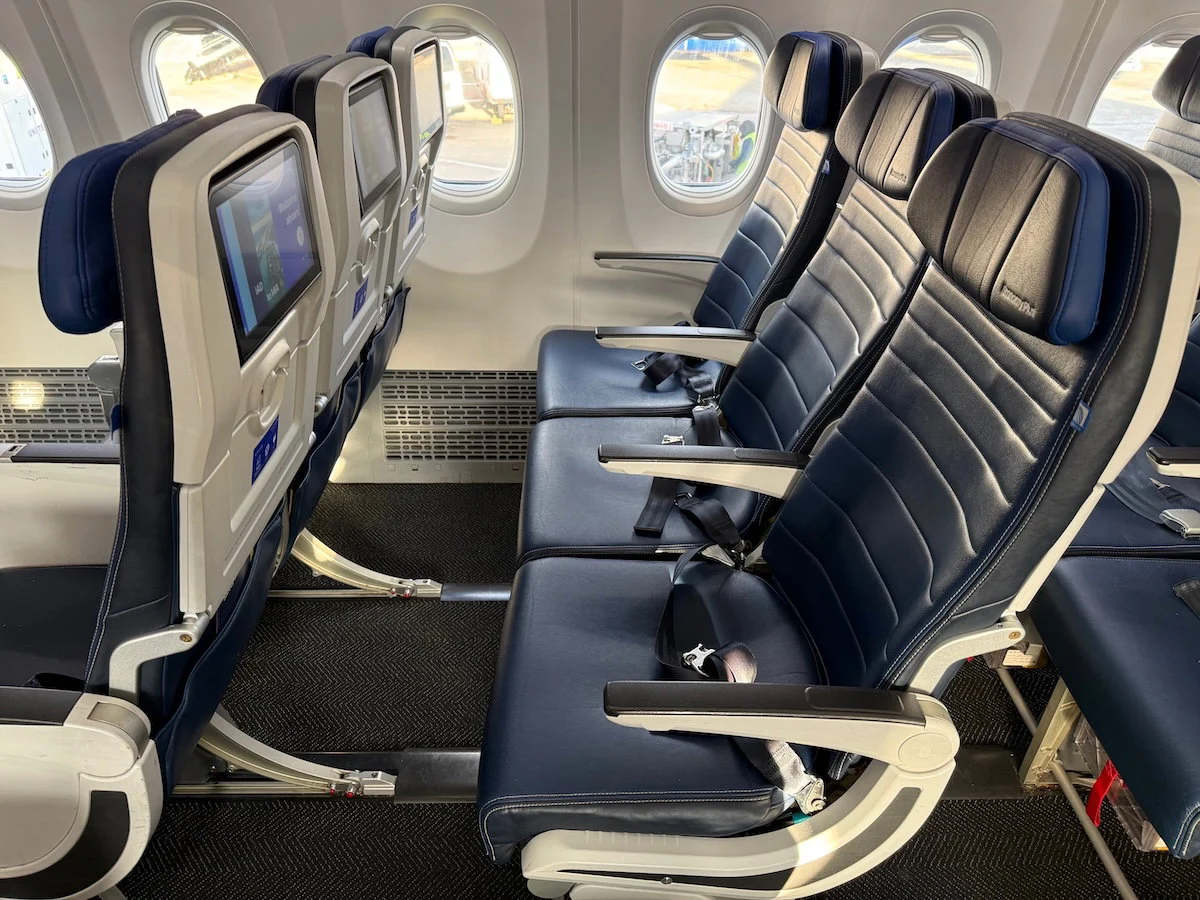
For millions of travelers, the experience of flying is punctuated by the inevitable moment of truth: the walk down the narrow aisle to a designated seat. As you approach, a question hangs in the pressurized air—to speak or not to speak? The social contract of the airplane cabin is a unique, unspoken agreement that varies wildly from passenger to passenger. For some, the seat mate is a potential friend; for others, they are an intrusion on a precious, confined solitude.
As frequent travelers navigate the skies, the debate over "seat mate small talk" has evolved into a fascinating study of modern manners. Is silence cold, or is it a respectful acknowledgment of personal boundaries?
The Social Dilemma: To Converse or Not to Converse?
The dilemma of airplane small talk is fundamentally about the management of personal space in a high-density environment. When we board a plane, we are entering a "non-place"—a transitional zone where typical social hierarchies are suspended, yet the need for decorum remains high.
For many, including frequent flyer and industry analyst Ben Schlappig, the preference is clear: keep it brief and keep it quiet. "I’m not a misanthrope," Schlappig notes. "I find humans to be fascinating. But I absolutely dread small talk. If I talk to someone, I’d like for it to be meaningful, rather than just something to fill the time, which I find draining."
This sentiment captures a growing trend among business travelers and commuters who view the airplane as a sanctuary for work, rest, or digital consumption. The risk, they argue, is not in the conversation itself, but in the lack of an exit strategy. Once a conversation begins in a middle or aisle seat, the social pressure to maintain it can feel like a captive situation.
A Chronology of the "Cabin Conversation"
To understand the social rhythm of a flight, one must look at the timeline of the interaction:
- The Boarding Phase (The Assessment): This is the high-stakes moment. As passengers navigate the aisle, they perform a split-second assessment of their seat mate. Are they wearing headphones? Are they reading? Do they make eye contact? This phase dictates the "tone" for the next several hours.
- The Settling Phase (The Boundary Setting): Once seated, the actions taken—placing a bag, adjusting a seatbelt, or pulling out a laptop—serve as non-verbal cues. Those who wish to avoid interaction often employ "boundary-setting" tools: noise-canceling headphones, sleep masks, or open books.
- The Departure/Cruise Phase (The Engagement): This is where the social contract is tested. If a passenger initiates a conversation, the neighbor must decide whether to participate, ignore, or offer a polite but brief response.
- The Descent Phase (The Exit): As the plane lands, social dynamics shift again. The pressure to continue the conversation dissipates as the reality of deplaning takes over, often leading to a final, polite exchange of "have a safe trip."
Supporting Data: Why Silence is Often Preferred
While scientific data on airplane small talk is limited, behavioral psychology suggests that individuals in high-stress or high-density environments—such as airports and aircraft—experience a "cognitive load" that makes social interaction feel taxing.
A 2022 survey regarding travel habits found that nearly 65% of frequent flyers prefer "minimal to no" interaction with seat mates during domestic flights. The top three reasons cited for this preference include:
- The Desire for Productivity: In an era where "always-on" culture is the norm, the plane serves as one of the few places without reliable internet connectivity, making it the perfect "deep work" zone.
- The Stress of Travel: Flying is inherently stressful, involving security checkpoints, luggage management, and timing constraints. By the time a passenger reaches their seat, their social battery is often depleted.
- The Lack of Privacy: The proximity of a seat mate—often within inches—makes conversation feel intimate, even if the subjects are mundane. Many passengers feel that the lack of physical distance should be balanced by a respectful distance in dialogue.
Implications: The "Earbud Barrier" and Modern Manners
The most visible manifestation of this desire for solitude is the "Earbud Barrier." By wearing noise-canceling headphones, passengers signal that they are in a private digital space.
However, this has led to a new class of etiquette issues. Is it rude to tap someone on the shoulder to initiate conversation if they are wearing headphones? Most etiquette experts argue that it is. The headphones are a visual "Do Not Disturb" sign, and ignoring them is seen as a breach of contemporary cabin decorum.
"I’ve had situations where I briefly had a friendly conversation and then put my AirPods in, only to have them then tap me on the shoulder to continue talking," says Schlappig. "It highlights the struggle of maintaining boundaries in a confined metal tube."
This behavior also highlights a generational divide. Older generations may view silence as unfriendly or "stiff," while younger, digital-native generations often view unprompted conversation with strangers as a violation of their digital sanctuary.
Official Responses and Industry Trends
Airlines themselves have remained largely neutral on the topic, though some have experimented with "social seating" features. A few years ago, some carriers piloted programs that allowed passengers to view the social media profiles of their seat mates before boarding, hoping to facilitate networking or friendship. The programs were met with overwhelming public pushback and were largely abandoned.
Most airlines recognize that the primary commodity they sell is not just transportation, but comfort. For many, comfort is defined by peace and quiet. Consequently, crew members are trained to act as mediators. If a passenger is being harassed or made uncomfortable by an overly chatty seat mate, flight attendants are instructed to intervene, often offering the uncomfortable passenger a seat change if availability permits.
Finding the Middle Ground
Is there a way to balance social humanity with the need for personal space? Experts suggest a "Polite Acknowledgement" approach:
- The Nod: A simple, friendly smile and a nod upon sitting down acknowledges the other person’s humanity without inviting a dialogue.
- The Brief Greeting: "Hi, how are you?" is acceptable, but it should be followed by an immediate return to one’s own activities.
- The "Out" Clause: If a conversation does start, it is perfectly acceptable to gently end it. A phrase like, "I’m sorry, I have a lot of work to catch up on, but it was nice meeting you," is a professional and polite way to reclaim one’s space.
Ultimately, the airplane cabin is a microcosm of society at large. We are forced into proximity with people we did not choose, from backgrounds we may not understand. While we are not obligated to be best friends with our neighbor, a baseline level of kindness—even in silence—remains the hallmark of a civilized traveler.
Whether you are the type to share your life story or the type to pull a hoodie over your eyes the moment the wheels leave the tarmac, the most important rule of the skies remains: respect the space of others as you would have them respect yours. The next time you find yourself boarding a flight, remember that the person next to you might be a friend you haven’t met, or simply someone who just wants to get to their destination in peace. Either way, a little bit of awareness goes a long way.