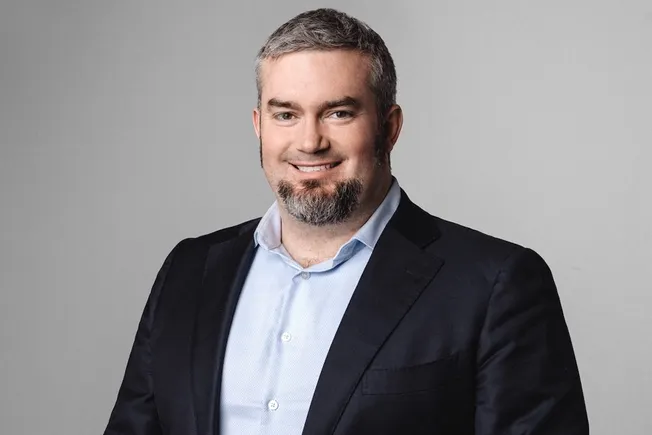










MILWAUKEE — Fiserv, the global fintech and payments processing titan, finds itself at a critical leadership crossroads following the high-profile resignation of Dhivya Suryadevara. The departure of the former Stripe and General Motors executive, announced Tuesday, comes at a tumultuous time for the Milwaukee-based firm, which is currently navigating a period of executive instability and a rigorous effort to modernize its core financial solutions.
In tandem with Suryadevara’s exit, Fiserv announced the elevation of two senior executives to fill the operational void, signaling an attempt to project stability to shareholders and clients alike. However, the move has reignited questions regarding the company’s long-term strategic continuity following a series of rapid-fire changes in the C-suite.
Main Facts: A Star Executive Departs
Dhivya Suryadevara, who served as Fiserv’s Head of Financial Solutions, Sales, and Operations, and was recently positioned as a Co-President, has officially stepped down. Her resignation marks the end of a relatively short tenure at the company, where she was initially brought in to inject a sense of "New Tech" agility into a legacy powerhouse.
Suryadevara’s departure is the latest in a string of high-level exits. It follows the June promotion of Takis Georgakopoulos to the Chief Executive Officer position—a move necessitated by the abrupt departure of former CEO Mike Lyons, who left to lead Truist Financial.
To mitigate the impact of Suryadevara’s exit, Fiserv has promoted two internal veterans to expanded leadership roles. While the company maintains that its "strategy, priorities, and key actions" remain unchanged, the market response suggests a degree of skepticism. Analysts have noted that Suryadevara was a key architect of the company’s "Financial Solutions" modernization plan, and her exit leaves a vacuum in the execution of that strategy.

Chronology: A Year of Upheaval
The leadership timeline at Fiserv over the past twelve months reveals a company in the midst of a radical, and at times painful, transition.
October 2025: The "Reality Check"
The seeds of the current instability were sown in the third quarter of 2025. Then-CEO Mike Lyons delivered a sobering address to analysts, admitting that the company had "embedded unrealistic assumptions" into its financial guidance. These assumptions concerned volume growth, sales activity, and productivity improvements that failed to materialize. The admission led to a significant miss in sales and net income projections, shaking investor confidence in Fiserv’s ability to forecast its own growth in a tightening economic environment.
December 2025: The Co-President Model
In an attempt to stabilize operations and focus on distinct business segments, Fiserv appointed Dhivya Suryadevara and Takis Georgakopoulos as Co-Presidents, effective December 1, 2025. This "two-headed" leadership structure was intended to marry Georgakopoulos’s deep merchant acquiring expertise (honed at JPMorgan) with Suryadevara’s financial and technological pedigree.
Spring 2026: The Lyons Exit
The stability of the Co-President model was short-lived. In early 2026, Mike Lyons announced he was leaving the top post at Fiserv to become the CEO of Truist. This move was viewed as a blow to Fiserv, as Lyons had been the primary recruiter for much of the new leadership talent, including Suryadevara.
June 2026: The Georgakopoulos Promotion
Following Lyons’ departure, the board moved to appoint Takis Georgakopoulos as the sole CEO. While Georgakopoulos was seen as a steady hand, observers noted an unusual silence regarding Suryadevara’s status. Despite internal moves to elevate her to a more prominent presidency role, the company declined to issue a public confirmation of her new duties at the time—a move that analysts now see as an early indicator of her impending exit.

July 2026: The Final Resignation
On July 8, 2026, the company confirmed Suryadevara’s resignation. The announcement was paired with the promotion of two internal executives, an effort to demonstrate that the company’s "deep bench" of talent remains intact.
Supporting Data: Financial Headwinds and Growth Misses
Fiserv’s leadership churn is occurring against a backdrop of financial pressure. The company has struggled to balance its legacy "Financial Solutions" segment—which provides core processing for banks—with its high-growth "Merchant Solutions" segment, led by the Clover point-of-sale platform.
- Guidance Misses: In Q3 2025, Fiserv reported sales and net income that fell roughly 4% below consensus analyst estimates. This was attributed to a slowdown in core banking contract renewals and a deceleration in consumer spending volumes.
- The "Modernization" Cost: Fiserv has committed billions to cloud-native transformations of its legacy tech stacks. However, the return on investment (ROI) on these projects has been slower than anticipated, leading to the "unrealistic assumptions" cited by Mike Lyons.
- Market Position: While Fiserv remains a dominant player, it faces increasing pressure from digital-native competitors like Adyen and Stripe. Suryadevara, a former Stripe CFO, was specifically hired to help Fiserv bridge this competitive gap. Her exit is seen by some as a sign that the "old guard" culture of legacy processing may be resisting the rapid changes required to compete with fintech disruptors.
Official Responses: Projecting a "Business as Usual" Front
In a statement following the announcement, a Fiserv spokesperson emphasized that the company’s strategic trajectory remains fixed. "Our strategy, priorities, and key actions remain unchanged. We are focused on delivering value to our clients and shareholders through innovation and operational excellence," the spokesperson said.
However, independent analysts are offering a more nuanced—and concerned—take on the situation.
Robert W. Baird & Co. Analysts:
In a note to clients, Baird analysts characterized the departure as "somewhat disruptive but not overly surprising." They pointed out the "Lyons Connection," noting that Suryadevara joined specifically under Mike Lyons’ leadership. "With Lyons leaving within 12 months of her joining, the ‘glue’ that held this leadership team together has dissolved. This departure could reignite investor concerns over the durability of Fiserv’s Financial Solutions strategy."

TD Cowen Insights:
Analysts at TD Cowen had previously flagged the "unusual move" by Fiserv spokespeople to decline comment on Suryadevara’s role during the June CEO transition. They suggested that the lack of public commitment to her as a long-term President was a "red flag" that has now culminated in her resignation.
Implications: What Lies Ahead for Fiserv?
The resignation of Dhivya Suryadevara leaves CEO Takis Georgakopoulos with a significant challenge: he must now stabilize the "Financial Solutions" wing of the business while maintaining the momentum of the merchant-facing side.
1. The Talent Retention Crisis
Suryadevara’s exit raises questions about Fiserv’s ability to retain "outsider" talent. Bringing in executives from Stripe, Google, or JPMorgan is a common strategy for legacy firms attempting to modernize, but if those executives leave within a year or two, it suggests a cultural mismatch or a lack of internal support for radical change.
2. Strategy Execution Risk
Fiserv is in the middle of a multi-year "core modernization" plan. This involves moving thousands of financial institutions from on-premise servers to cloud-based environments. Suryadevara was the executive lead for this transition. With her gone, there is a risk of project delays or a loss of strategic vision, which could allow competitors like Jack Henry or FIS to gain ground in the regional bank market.
3. Investor Confidence and Valuation
Fiserv’s stock has historically traded at a premium compared to some legacy peers due to its successful integration of First Data and the growth of Clover. However, the recent string of executive departures and the admission of "unrealistic" growth goals may lead to a valuation re-rating. Investors typically dislike uncertainty, and the "revolving door" at the top of the organization creates a narrative of instability.

4. The Path Forward for Georgakopoulos
As the sole CEO, Takis Georgakopoulos must now prove that he can manage the entire portfolio without a Co-President. His background is heavily tilted toward merchant acquiring; he will need to quickly demonstrate a mastery of the "Financial Solutions" side—the very segment Suryadevara was hired to fix—to satisfy bank clients who are wary of their technology partner’s internal drama.
Conclusion
Fiserv remains a cornerstone of the global financial infrastructure, processing trillions of dollars in transactions annually. However, the departure of a high-caliber leader like Dhivya Suryadevara is more than just a personnel change; it is a symptom of a larger struggle to define the company’s identity in a post-digital world. Whether the elevation of internal veterans can provide the necessary stability remains to be seen, but for now, the "Milwaukee Giant" faces a period of intense scrutiny from both the market and its competitors.