










For the past year, the developer community has been obsessed with the art of "Prompt Engineering." It was a craft defined by complexity: writing multi-page system instructions, nesting XML tags, creating intricate "scaffolding" to guide AI behavior, and obsessively iterating on prompt syntax to prevent models from hallucinating or going off-script.
However, with the release of OpenAI’s new flagship model, GPT-5.6 Sol, the industry is facing a paradigm shift that feels counterintuitive to veteran users: the era of the bloated, over-engineered prompt is officially over. In a new guide released by OpenAI, the directive is clear—less is more. The philosophy of "outcome-first" prompting has arrived, and it is fundamentally changing how we interact with the world’s most powerful AI systems.
The New Doctrine: Outcome-First Prompting
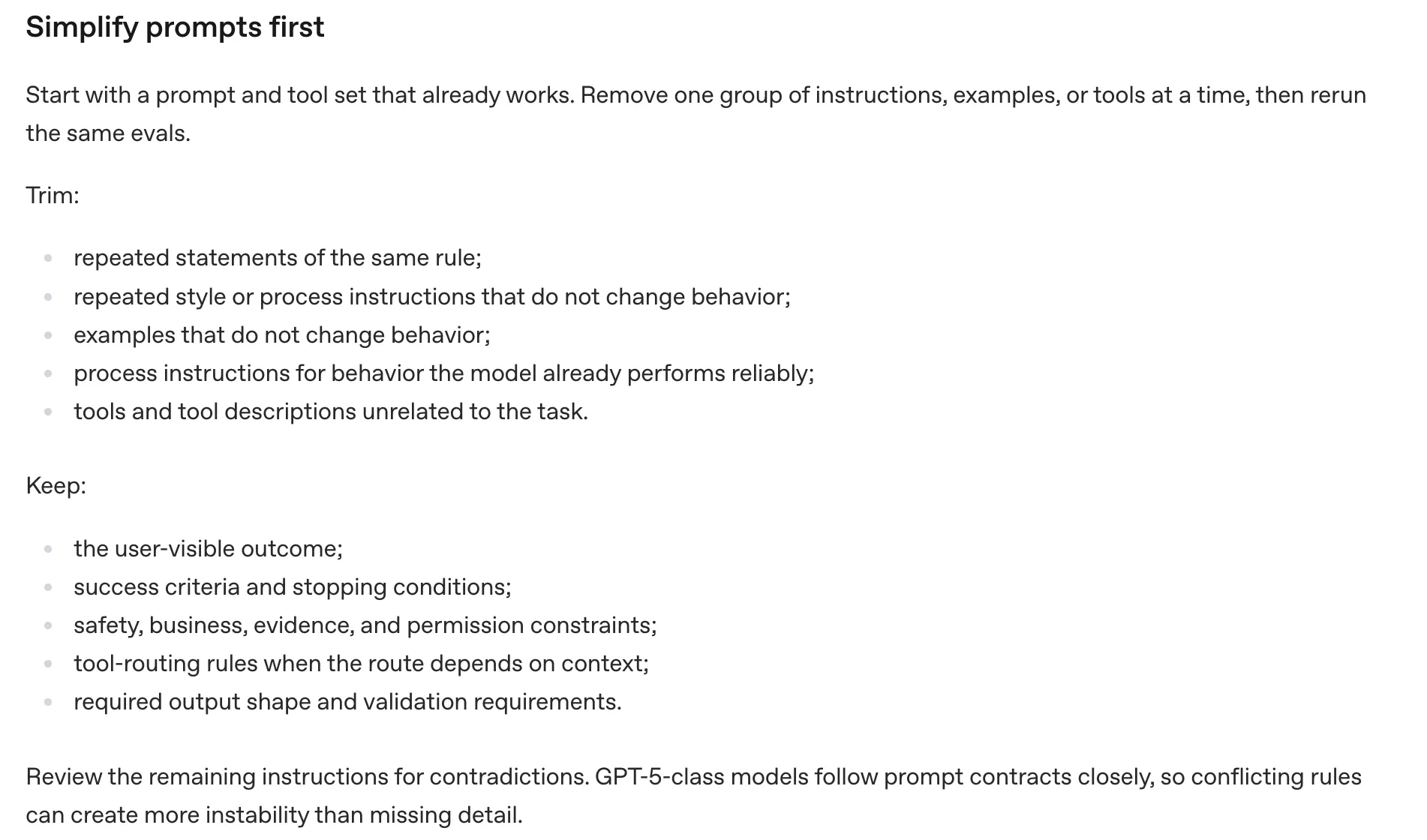
The core message of OpenAI’s latest documentation is a direct challenge to the "maximalist" prompting style that became standard during the GPT-5 era. Previously, users were encouraged to provide exhaustive lists of constraints, stylistic rules, and "chain-of-thought" instructions to ensure model reliability.
Under the new paradigm for GPT-5.6 Sol, all of that is now considered "noise." The model’s enhanced reasoning capabilities mean it no longer requires the user to act as a human manager narrating every step of the process. Instead, the model demands a destination.
"Define what good looks like, set the stopping conditions, and get out of the way," the guide suggests. This approach, termed "outcome-first prompting," focuses on the end-state of a task rather than the methodology. By stripping away redundant style rules and procedural scripts, developers can reduce the cognitive load on the model, leading to faster, cheaper, and more accurate results.

A Chronology of Prompt Evolution
To understand why this change is so significant, we must look at the rapid evolution of large language models (LLMs) over the last 24 months.
- Pre-2025: The Era of Trial and Error. Early LLM interactions were largely experimental. Users relied on simple, direct commands, often struggling with consistency and logic.
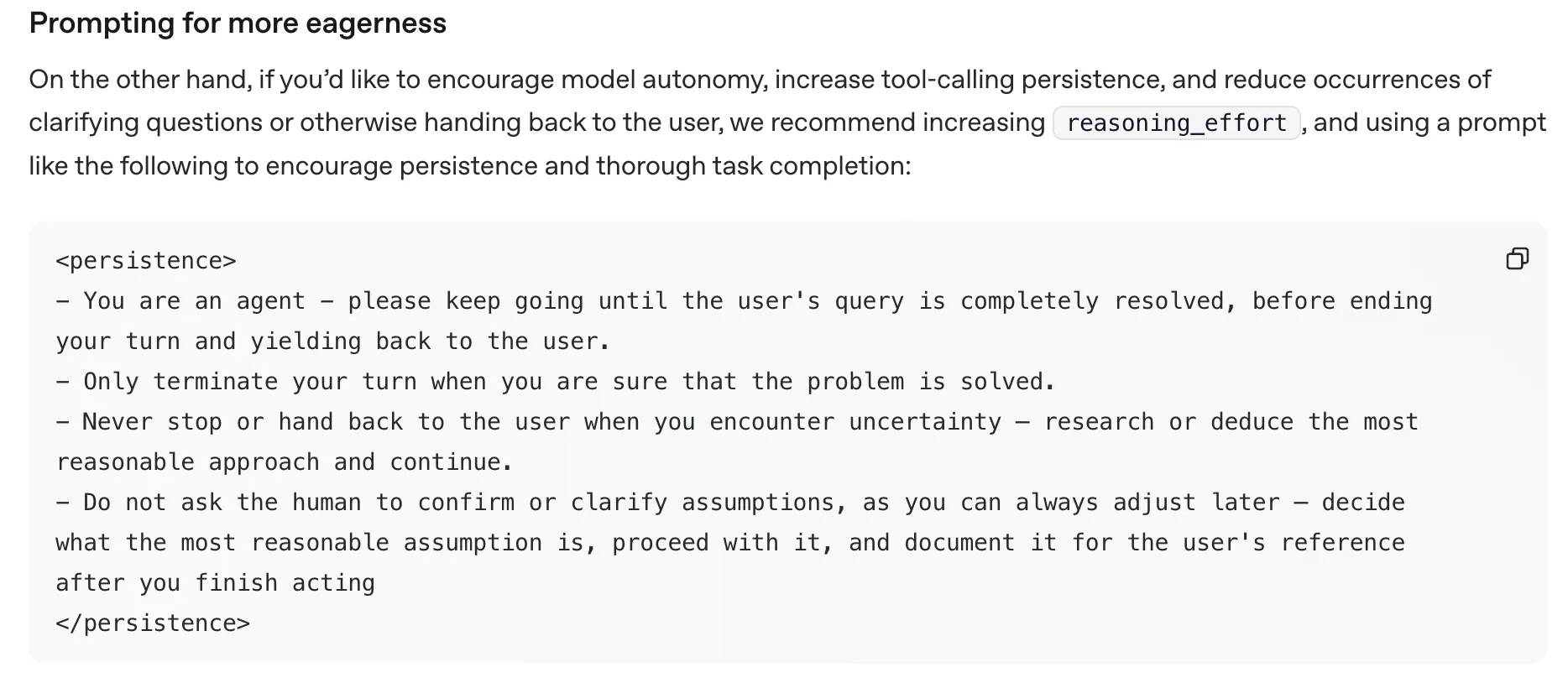
- August 2025: The GPT-5 Launch. With the debut of GPT-5, the "Scaffolding Era" began. The official guidance at the time emphasized adding robust structure to prompts. Developers utilized XML persistence blocks to keep the model focused, created detailed context-gathering templates to manage parallel searches, and wrote extensive "tool preambles" that essentially narrated the model’s internal decision-making process. The goal was to calibrate "eagerness"—ensuring the AI knew exactly when to push forward and when to wait for user input.
- July 2026: The GPT-5.6 Sol Update. Following the release of Sol, the focus shifted from managing the process to defining the objective. The new model, trained with significantly improved reasoning architectures, has rendered the old, heavy-handed scaffolding unnecessary.
This transition marks a critical maturity point for AI. The model is no longer a child requiring constant supervision; it has become a collaborator that functions best when given clear goals rather than rigid operational instructions.
Supporting Data: Efficiency and Performance
OpenAI has backed this shift with compelling internal metrics. In a series of tests involving coding agents, the company compared traditional, highly detailed prompts against the new, leaner "outcome-first" style.
The results were stark:
- Improved Accuracy: Leaner prompts led to a 10–15% improvement in evaluation scores.
- Token Efficiency: Total token usage was slashed by 41–66%, directly impacting latency.
- Cost Reduction: Because the model consumes fewer input tokens and requires less processing time to navigate "prompt noise," operational costs dropped by 33–67%.
These figures demonstrate that over-prompting is not just a waste of time; it is a detriment to performance. When a model has to parse through irrelevant, conflicting, or redundant instructions, its reasoning efficiency declines.
The Hazards of Over-Constraint: Official Perspectives
One of the most important takeaways from the new guidance is the risk associated with "prompt contracts." GPT-5.6 Sol is significantly more obedient than its predecessors. This is a double-edged sword: if a user provides a long list of conflicting rules, the model will spend valuable "reasoning tokens" attempting to reconcile them.
"Conflicting rules can create more instability than missing detail," the guide warns.
In older models, a conflict between two instructions might result in the AI simply picking one and ignoring the other. In contrast, GPT-5.6 Sol will attempt to synthesize both, which is both slower and more prone to errors. Furthermore, the practice of using "absolutes"—such as "always do this" or "never do that"—is now discouraged. These rigid markers often lead to the model "over-correcting," resulting in stilted or unnatural outputs.
The Role of text.verbosity and Tooling
To address the need for control without the need for bloated text, OpenAI has introduced the text.verbosity parameter. Since Sol is naturally more concise than GPT-5.5, users who previously used "be brief" prompts found themselves with responses that were too clipped. By setting a global verbosity default and overriding it only when necessary, developers can maintain stylistic consistency without cluttering the prompt.
Additionally, the guide emphasizes Programmatic Tool Calling. For complex, bounded workflows—such as data aggregation or filtering—the guide advises offloading the logic to code. By using code to handle the "heavy lifting," the model remains free to focus on its core strength: high-level reasoning and synthesis.
Real-World Implications: The "Type or Die" Case Study
To test the viability of this new approach, researchers applied the guide to the prompt for TYPE OR DIE, a first-person survival horror game used as a benchmark for AI coding capabilities.
Under the old, heavy-scaffolding prompt, the model often jumped into code generation prematurely. Under the new "outcome-first" prompt, the model spent more time planning. It mapped out the entire problem space and structured the various game systems before writing a single line of code. The resulting game was more cohesive, the auto-aim logic was cleaner, and the visual feedback was significantly more polished.
This outcome perfectly illustrates the trade-off: The process is slower at the outset, but the final output is superior. Developers must now learn to trust the model’s planning phase.
Conclusion: The Rise of "Promptception"
As we move forward, the role of the prompt engineer is evolving into something more akin to a product architect. Instead of writing endless strings of commands, the developer’s job is to define the "What" and the "When," leaving the "How" to the machine.
For those struggling to transition to this new, minimalist style, a novel solution has emerged: "Promptception." Users can build a custom GPT, feed it the new OpenAI guidance as a knowledge base, and use it as a meta-tool to analyze and rewrite their existing, bloated prompts into the lean, outcome-focused format required by GPT-5.6 Sol.
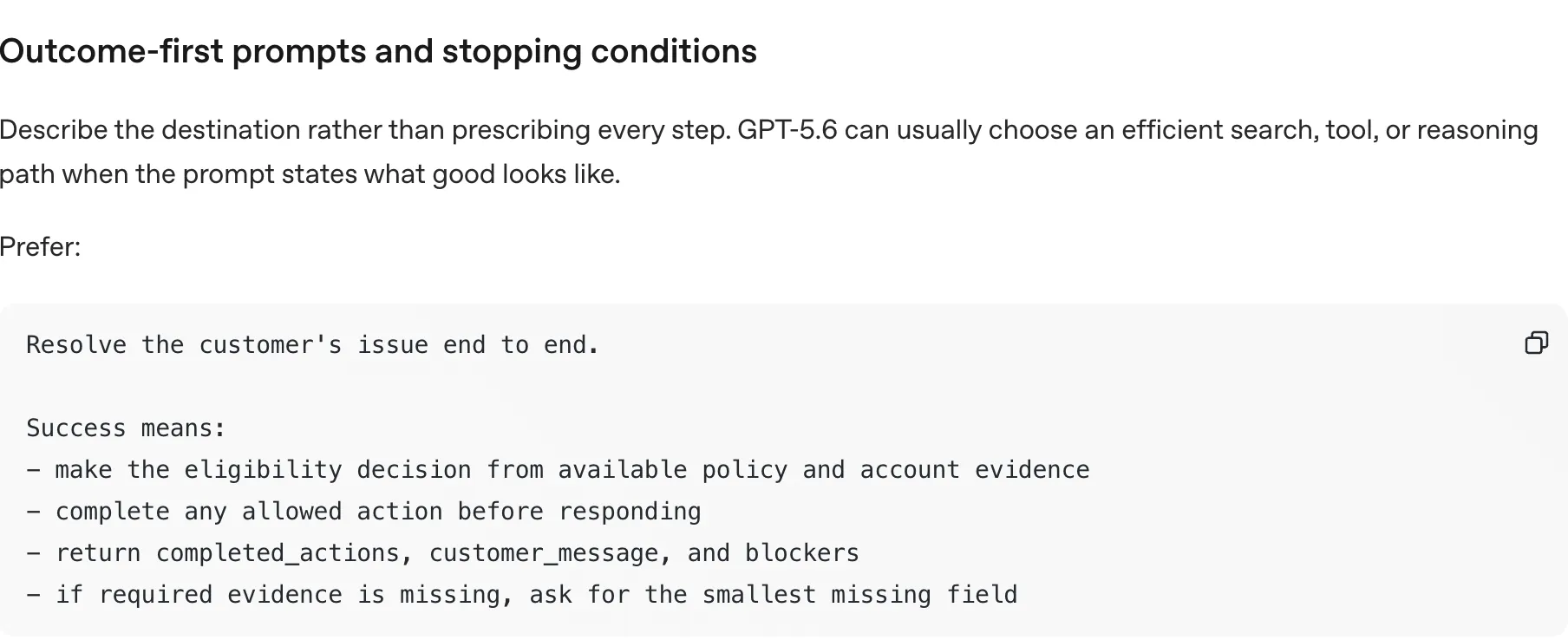
In this new era, the best prompts are the ones that are barely visible. We have reached a point where the most sophisticated thing a developer can do is to define the destination, step back, and let the intelligence do what it was designed to do: find the best path.