






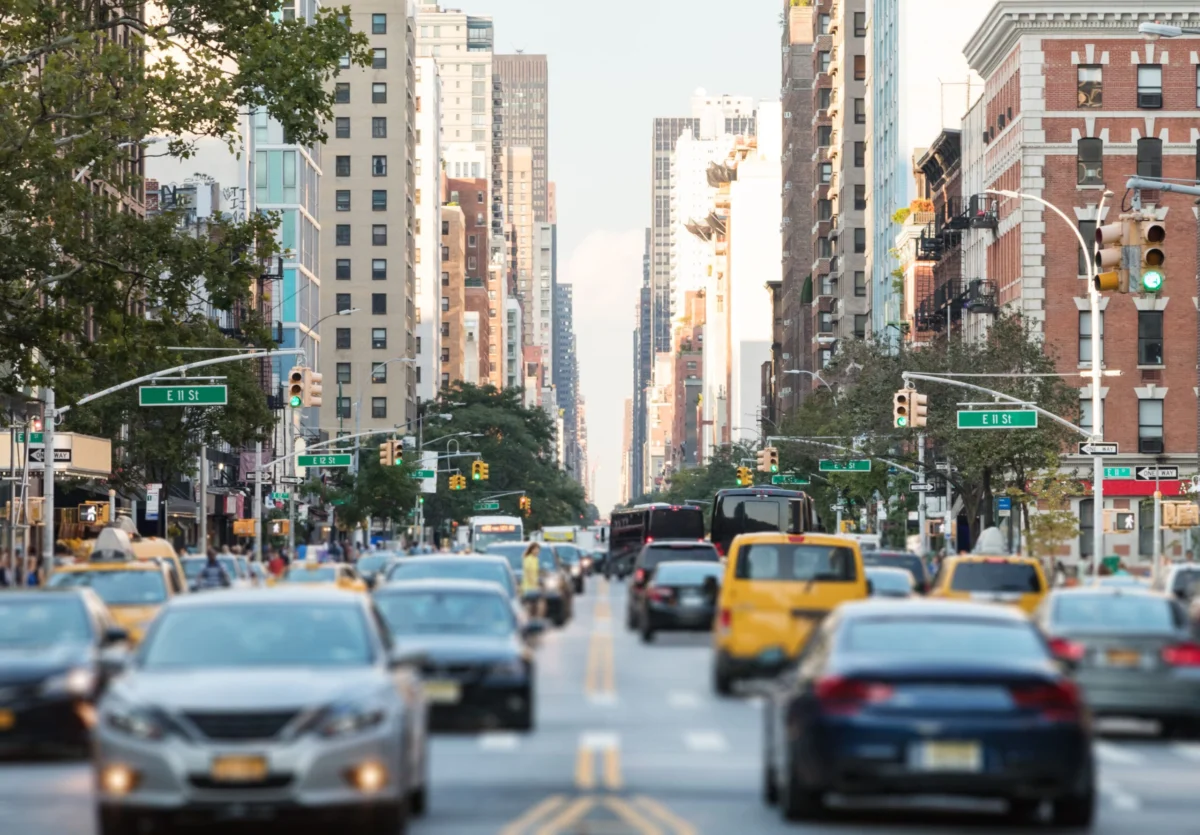
For decades, New York City has been the undisputed capital of gridlock. In 2024, the city’s traffic woes reached a historic zenith, with the average driver losing an staggering 102 hours per year to congestion. This bottleneck did more than just frustrate commuters; it served as a primary symptom of a crumbling infrastructure ecosystem. As the Metropolitan Transportation Authority (MTA) grappled with an $8.3 billion deficit, the resulting decline in service quality prompted a mass exodus from subways and rails to private vehicles. This shift created a vicious feedback loop: fewer transit riders led to less revenue for the MTA, while an influx of cars further paralyzed the city’s arteries.
In January 2025, New York City attempted to break this cycle by implementing a landmark congestion pricing program. Drawing inspiration from global models in London, Singapore, and Milan, the policy levies a $9 daily fee on vehicles entering the city’s most congested zones. Early data suggests the program is not only functioning as intended but is providing a compelling case study for other major U.S. metropolitan areas currently considering similar measures.
The Mechanics of Urban Gridlock: Why Pricing Works
To understand why economists and city planners advocate for congestion pricing, one must first view traffic through the lens of economic efficiency. Traffic congestion is a classic example of an "externality." When a driver chooses to enter a crowded city center during peak hours, they impose a time cost on every other driver on the road. Because there is no inherent mechanism to account for this marginal impact, the cost of driving does not reflect its true societal burden.
Congestion pricing addresses this through two primary economic vehicles:
- The User Fee: By charging a fee for entry into the Congestion Relief Zone (CRZ), the city collects revenue that directly covers the wear and tear on roads and bridges. This ensures that those who benefit from the infrastructure contribute to its maintenance.
- The Pigouvian Tax: Named after economist Arthur Pigou, this tax is designed to correct market inefficiencies. By putting a price on the negative externalities—namely, traffic delays and vehicular pollution—the policy forces drivers to incorporate the true cost of their trip into their decision-making.
The MTA implemented this system with a focus on seamless integration. Using a combination of E-ZPass transponders and a network of 1,400 high-definition license plate scanners, the system captures data in real-time, allowing for automated compliance without the need for traditional toll booths that would otherwise exacerbate the very congestion the program aims to reduce.
A Tiered Approach to Tolls
Recognizing that not all vehicles create the same level of disruption, the MTA adopted a tiered fee structure. Large trucks and sightseeing buses, which occupy significant space and contribute to higher levels of air and noise pollution, face a $21.60 entry fee. Motorcycles, conversely, are charged $4.50.
Taxis and rideshare services, which represent a significant portion of urban traffic, are treated differently. Rather than a flat daily fee, they pay a per-entry toll of $0.75 for taxis and $1.50 for rideshare vehicles, ensuring that high-frequency commercial transit remains viable while still discouraging unnecessary cruising. Furthermore, the program is time-sensitive. Peak hours—defined as 5 a.m. to 9 p.m. on weekdays and 9 a.m. to 9 p.m. on weekends—carry the full toll, while off-peak travel is incentivized with a 75 percent discount. This dynamic pricing model encourages commuters to shift their travel to less busy hours, effectively flattening the demand curve for road space.
Data-Driven Results: The First Year of Progress
The MTA’s First Evaluation Report provides empirical evidence that the program has fundamentally altered the city’s traffic landscape. When comparing the first year of operation (2025) to the baseline year (2024), the results are stark:
- Volume Reduction: Vehicle entries into the CRZ fell by 11 percent.
- Transit Shift: Public transit ridership increased by 9 percent, indicating a successful migration from private cars to subways and commuter rails.
- Velocity Gains: Average vehicle speeds within the CRZ increased by 4.6 percent. More notably, speeds on crossings leading into Manhattan improved by 23 percent.
Perhaps the most human-centric benefit of the policy is the improvement in emergency response times. Because "time is tissue" in medical emergencies, the 5-6 percent reduction in EMS response times—saving approximately 63 to 70 seconds per call—is a critical metric. By clearing the roads of unnecessary traffic, the city has created a more reliable environment for life-saving services.
Financially, the program has been a resounding success. The CRZ has generated an average monthly revenue of $55 million. This steady influx of capital has enabled the MTA to bond $15 billion toward its capital improvement plan, providing the funds necessary to modernize subway signaling, repair stations, and improve service reliability.
A Legal Hurdle: The Conflict with Federal Authority
The road to implementation was far from smooth. In early 2025, shortly after the tolls went live, the program faced a significant legal challenge from the federal government. Secretary of Transportation Sean Duffy moved to withdraw federal approval and funding for the project, alleging that the MTA had bypassed critical federal regulatory requirements.
The subsequent lawsuit became a flashpoint for debates over local versus federal control of urban infrastructure. While the case remains active and is currently awaiting review by the 2nd Circuit Court of Appeals, the courts have thus far denied the federal government’s request for a preliminary injunction to stop the tolling. This indicates a judicial leaning toward allowing the city’s initiative to continue while the legal arguments are hashed out in higher courts.
Implications for the American Metropolis
The success of New York’s congestion pricing program has sent shockwaves through the American urban planning community. Cities like Los Angeles and Washington, D.C., have already begun exploring similar proposals, citing the NYC model as a potential roadmap for their own traffic woes.
However, caution is warranted. New York City is an outlier in the American landscape. It possesses the nation’s largest population, the highest density of jobs in the world in Manhattan, and an extensive, albeit struggling, mass transit backbone. For many other U.S. cities, the post-pandemic work-from-home era has left downtown business districts hollowed out. Implementing a congestion tax in cities that are already struggling to attract workers and businesses back to their centers could potentially exacerbate economic decline.
Furthermore, the "New York model" relies heavily on the availability of reliable, high-capacity public transit. In cities where transit options are sparse or geographically impractical, congestion pricing risks becoming a regressive tax on workers who have no choice but to drive, rather than an incentive to switch modes of transportation.
Conclusion: A Vital Data Point for Future Policy
Despite the unique nature of New York City, the 2025 congestion pricing initiative has provided a vital data point for global urban policy. It has demonstrated that when the incentives are aligned, human behavior can shift rapidly to accommodate more efficient transit solutions.
As other cities watch from the sidelines, the lessons from New York are clear: congestion pricing is a powerful, if complex, tool for managing the modern metropolis. Whether it becomes the standard for American cities or remains a unique solution for the most densely populated urban centers will depend on how successfully these cities can balance the need for revenue, the goal of reducing traffic, and the necessity of maintaining a vibrant, accessible downtown economy. For now, New York City stands as a pioneer in a high-stakes experiment that may very well redefine how we move through the cities of the future.