









ASTORIA, NEW YORK — In a move signaling a significant shift in its regulatory standing, Quontic Bank announced on July 16, 2026, that the Office of the Comptroller of the Currency (OCC) has officially terminated a consent order that had governed the institution’s operations for several years. The lifting of the order marks the end of a rigorous remediation period for the Astoria-based digital bank, which had been under heightened federal scrutiny due to historical concerns regarding its capital management and internal governance.
The termination of the 2022 order represents a pivotal moment for Quontic, a bank that has frequently positioned itself at the intersection of traditional community banking and financial technology innovation. While the bank celebrates this achievement as a "testament to extraordinary commitment," the path forward remains nuanced by a separate, ongoing enforcement action from the Federal Reserve.
Main Facts: The Lifting of Federal Oversight
The Office of the Comptroller of the Currency, the primary federal regulator for national banks, issued a formal document on Thursday stating that the safety and soundness of Quontic Bank no longer require the constraints of the 2022 Consent Order. This decision follows a comprehensive review of the bank’s internal controls, capital levels, and risk management frameworks.
For Quontic, the removal of the order is more than a legal formality; it is a validation of a multi-year "infrastructure overhaul." Consent orders are among the most severe tools used by regulators to compel banks to fix systemic issues. Their presence often limits a bank’s ability to open new branches, launch certain products, or engage in mergers and acquisitions. By satisfying the OCC’s requirements, Quontic regains a level of operational autonomy that has been restricted since the early 2020s.
Key highlights of the announcement include:
- Regulatory Clearance: The OCC has retracted the specific mandates regarding capital ratios and board oversight.
- Institutional Strengthening: Bank leadership confirmed that the remediation process involved a "thoughtful and thorough" restructuring of every department.
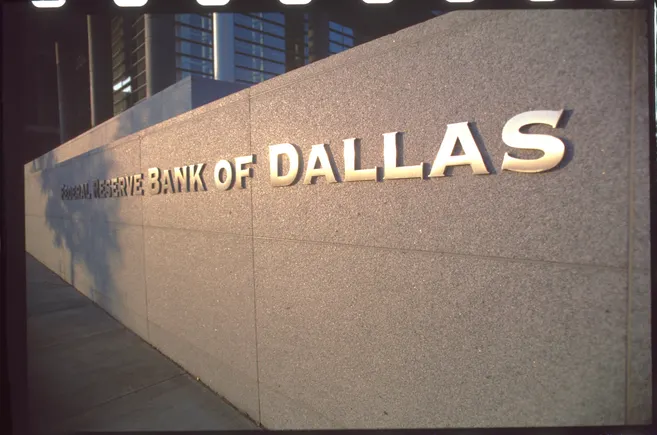
- Ongoing Scrutiny: Despite the OCC’s exit, a 2023 enforcement action from the Federal Reserve Bank of Philadelphia regarding capital distribution remains "open and effective."
Chronology: A Decade of Growth and Regulatory Friction
The regulatory journey for Quontic Bank has been characterized by rapid innovation met with increasing federal oversight. To understand the significance of the 2026 termination, one must look back at the sequence of events that led to the initial enforcement.
2018: The Initial Formal Agreement
The roots of Quontic’s regulatory challenges date back to 2018. The OCC entered into a formal agreement with the bank following an examination that identified "unsafe or unsound banking practices." At the time, the concerns were centered on board oversight and funds management. The 2018 agreement served as a "warning shot," requiring the bank to revise its capital plan and improve its liquidity management strategies.

2022: The Escalation to a Consent Order
By 2022, the OCC determined that Quontic had failed to sufficiently address the concerns outlined in the 2018 agreement. This led to the issuance of a formal Consent Order (EA2022-048). Unlike a formal agreement, a consent order is a public, legally binding document that carries heavier penalties for non-compliance. It imposed strict "well-capitalized" requirements, mandating a total capital ratio of at least 13% and a leverage ratio exceeding 9%.
2023: The Federal Reserve Intervenes
While Quontic worked to satisfy the OCC, the Federal Reserve Bank of Philadelphia issued its own enforcement action in 2023. This action specifically restricted Quontic from distributing capital—such as paying dividends to shareholders—without express written permission from regulators. This action ensured that capital remained within the bank to act as a buffer while the OCC’s concerns were being addressed.
2026: Resolution and Remediation
Following four years of intensive internal reform, the OCC concluded in July 2026 that the bank’s governance, risk management, and operational infrastructure had reached a level of maturity that satisfied federal standards. The termination of the order suggests that the bank’s "unsafe or unsound" practices have been successfully remediated.
Supporting Data: Capital Ratios and Operational Metrics
The primary metrics used by the OCC to gauge Quontic’s health during the consent order period were the Total Capital Ratio and the Leverage Ratio. These figures serve as the ultimate "stress test" for a bank’s ability to absorb losses.
The 13% Threshold
Under the 2022 order, Quontic was required to maintain a Total Capital Ratio of at least 13%. To put this in perspective, federal "well-capitalized" standards for most national banks typically hover around 10%. By demanding 13%, the OCC was essentially requiring Quontic to maintain a significantly higher-than-average safety net. This forced the bank to be more conservative with its lending and more aggressive in retaining earnings or raising private capital.
The 9% Leverage Ratio
Similarly, the 9% Leverage Ratio requirement was a stringent benchmark. The leverage ratio measures a bank’s core capital against its total assets without adjusting for risk. A 9% requirement is robust for a digital-first bank, ensuring that for every dollar of assets on the books, at least nine cents were backed by high-quality equity.
Operational Infrastructure Improvements
Beyond the numbers, the "remediation process" cited by CEO George Lazaridis involved a qualitative shift in how the bank operates. According to internal reports and the bank’s recent statements, this included:

- Enhanced Board Oversight: Implementation of more rigorous reporting structures between executive management and the Board of Directors.
- Risk Management Frameworks: Adoption of advanced software and compliance protocols to monitor liquidity and credit risk in real-time.
- Governance Maturity: Moving from an "entrepreneurial" startup mindset to a "systemic" institutional mindset, a common hurdle for digital-first community banks.
Official Responses: Leadership Perspectives
The bank’s executive team has framed the termination not as a return to the status quo, but as a transformation of the institution’s DNA.
George Lazaridis, CEO of Quontic Bank, emphasized the long-term benefits of the regulatory struggle. "This milestone is a testament to the extraordinary commitment of our entire organization," Lazaridis stated. "From day one, we viewed this process not simply as a regulatory obligation, but as an opportunity to strengthen the foundation of our bank. I am incredibly proud of what we have accomplished together."
Lazaridis’s comments reflect a common strategy among bank CEOs facing enforcement: embracing the "opportunity" for improvement to maintain investor and depositor confidence. By framing the remediation as a foundational strengthening, the bank seeks to reassure the market that the issues of 2018 and 2022 are firmly in the rearview mirror.
Robert Russell, President of Quontic Bank, echoed these sentiments, focusing on the collaborative nature of the cleanup. "Our leadership team worked alongside every department to ensure this was done thoughtfully and thoroughly," Russell said. "The successful termination of the Consent Order reinforces our commitment to operating with integrity and maintaining the highest standards for our customers, regulators, and the communities we serve."
Russell’s mention of "integrity" and "highest standards" is a direct response to the "unsafe or unsound" labels previously applied by the OCC. It signals a desire to rebuild the bank’s reputation as a reliable, compliant financial partner.
Implications: What Lies Ahead for Quontic?
The termination of the OCC consent order is a major victory, but it does not mean Quontic is entirely out of the woods. The bank now enters a complex "post-remediation" phase with several critical implications.
1. Strategic Expansion and Product Innovation
With the OCC order lifted, Quontic is likely to resume a more aggressive growth strategy. As a bank known for innovative products—such as its Bitcoin Rewards checking account and non-traditional mortgage products for self-employed borrowers—the bank can now potentially seek approval for new digital offerings that may have been sidelined during the remediation period.

2. The Shadow of the Federal Reserve
The most significant "asterisk" on this news is the 2023 Federal Reserve action. While the OCC (the primary regulator) is satisfied, the Federal Reserve Bank of Philadelphia still maintains its restriction on capital distribution. This creates a split regulatory reality: the bank is deemed "safe and sound" to operate and grow by the OCC, but it is not yet permitted by the Fed to return capital to its owners.
Industry analysts suggest that the Fed often waits for a "cooling off" period after an OCC order is lifted before terminating its own secondary actions. Until the Fed order is closed, Quontic’s ability to engage in dividends or share buybacks remains frozen.
3. A Case Study for Digital Community Banks
Quontic’s experience serves as a cautionary and hopeful tale for the "Digital First" banking sector. It highlights the reality that regulators are increasingly vigilant regarding how smaller, innovative banks manage the risks associated with rapid digital growth.
The fact that Quontic was able to navigate its way out of a consent order suggests that the "remediation-to-growth" pipeline is viable, provided the institution is willing to invest heavily in compliance and governance. For other fintech-adjacent banks currently facing regulatory heat, Quontic’s 2026 milestone provides a roadmap for recovery.
4. Market and Consumer Confidence
For depositors, the news is overwhelmingly positive. The OCC’s statement that the bank’s safety and soundness are no longer in question provides a "seal of approval" that is vital in a digital banking landscape where trust is the primary currency. As Quontic moves forward, its challenge will be to maintain these high standards while continuing to compete in the fast-paced world of digital finance.
In conclusion, while the Federal Reserve’s oversight remains a final hurdle, the termination of the OCC consent order marks the end of Quontic’s era of "heightened supervision." The bank now stands on a "strengthened foundation," ready to test whether its new infrastructure can support its ambitious vision for the future of banking.